
Does this description define anyone you know? Perhaps it describes more than a few people you know or whom you see regularly on TV.
What are you going to do about it?
Does this description define anyone you know? Perhaps it describes more than a few people you know or whom you see regularly on TV.
What are you going to do about it?

The issues that divided early suffragettes still plague women today. For all the progress that has been made, women's rights activists have also taken steps backwards. Feminism, as a movement, has not done a good job at being inclusive of minorities. Women of color have been left on the peripheries while feminism largely caters to white viewpoints.
Feminism is discussed in terms of waves. First wave feminism encompasses the nineteenth century and early twentieth century suffragettes who fought for the right to vote. Second wave feminism generally encapsulates the period from the 1960s to the 1990s. This period runs concurrent with anti-war and civil rights movements and the dominant issues for feminists in this time period revolved around sexuality and reproductive rights. Third wave feminism is generally seen as starting in the mid-1990s and is sometimes referred to as girlie-feminism or "grrrl" feminism. Its adherents often confounded followers of second wave feminism because many third wavers rejected the notion that lip-stick, high-heels, and cleavage proudly exposed by low cut necklines identified with male oppression. The third wave celebrated ambiguity and refused to adopt "us versus them" ideology. As a result, most third-wavers rejected the word "feminists" because they found it limiting and exclusionary.
The fourth wave of feminism is still crystallizing. Feminism is now back in the realm of public discourse. Issues that were central to the earliest waves of the women’s movement are receiving national and international attention by mainstream press and politicians: problems like sexual abuse, rape, violence against women, unequal pay, slut-shaming, the pressure to conform to an unrealistic body-type, and the fact that gains in female representation in politics and business are minimal. At the same time, reproductive rights that had been won by second wavers are now under attack. It is no longer considered “extreme" to talk about societal abuse of women, rape on college campus, unfair pay and work conditions, discrimination against LGBTQIA+ friends and colleagues, and the fact that the U.S. has one of the worst records for legally-mandated parental leave and maternity benefits in the world.
With the rise of fourth wave feminism, the concepts of privilege and intersectionality have gained widespread traction amongst younger feminists. The term intersectionality was first introduced in 1989 by critical race theorist Kimberlé Crenshaw, who provided a framework that must be applied to all situations women face, recognizing that all the aspects of identity enrich women's lived experiences and compound and complicate the various oppressions and marginalizations women face. It means that women cannot separate out numerous injustices because women experience them intersectionally.
Intersectionality helps us to understand that while all women are subject to the wage gap, some women are affected even more harshly due to their race. Another instance where intersectionality applies is cases of LGBTQ murders - people of color and transgender people are more likely to be victims than cisgender people. These are just two examples of why intersectionality matters. To truly bring about change that is meaningful for all, everyone's voice needs to be at the table.
Retrieved from https://library.law.howard.edu/civilrightshistory/women/intersectionality
February 6, 2022

Eight states and over 130 U.S. cities have renamed the holiday that falls on the second Monday of October to honor instead America's first inhabitants. There is a growing movement to change the name of Columbus Day because of the atrocities committed by Christopher Columbus against the indigenous people he encountered when he came to the Americas. Many feel it is, at the very least, insensitive to honor Columbus and ignore the suffering he inflicted. This change is seen as another step in healing the divisions of the past and in creating an opportunity for fostering inclusiveness and meaningful dialogue.
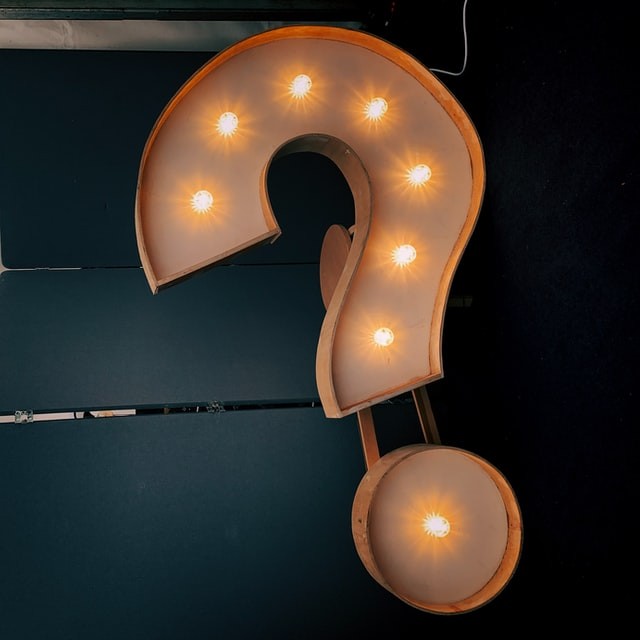
"What I want to know is, where are the women?" asked Rep. Carolyn Maloney (D-N.Y.) before walking out on an all-male opening panel in a 2012 congressional hearing on contraception coverage in Obamacare. "I look at this panel and I don't see one single individual representing the tens of millions of women across the country. . ."
Fast forward to 2020, and Maloney’s question still resonates. President Trump announced his “Opening Our Country Council” last week -- with 220 men and a paltry 20 women. Of the 16 Business and Industry categories ranging from Agriculture to Transportation (along with a single Thought Leader group tacked on), 41% have zero females. The largest roster (Health Care) has 27 men and 2 lone women. None made the list in the second highest group, Food and Beverage. Oh, but women’s representation is highest in the Defense category at 40%. Sounds pretty good – until you realize it’s the smallest group, with only 5 members total.
Most obvious “anyone but the girl” pick is LPGA Commissioner Michael Whan, chosen to represent the nation’s premier women’s golf organization in the Sports category. Trump bypassed LPGA Board Chair Diane Gulyas, a former senior executive at DuPont, in favor of Whan, an employee with a courtesy board appointment. Further stacking the deck in favor of the boys, the Construction/Labor/Workforce category includes five “men’s unions” like the Teamsters and Building Trades (with all male reps, natch) while snubbing the nation’s largest union, the female-dominated National Education Association and its President Lily Eskelsen García.
But enough about the numbers. As the so-called industry titans on the Council would say, let’s get to the bottom line. Ok here it is: In terms of women’s representation, the Trump Administration sucks, and the new Council is no exception.
Anyone who’s surprised by this pitiful performance just hasn’t been paying attention. Except for the Ubiquitous Darling Ivanka, women are mighty scarce in Trumpland overall.
The cabinet consists of 19 men and 4 women. When the president announced the White House Task Force on Conronavirus on January 20, the all-male cast featured a dozen white guys. It took a month for him to add Dr. Deborah Birx, who held the female fort alone for another 30 days until Seema Verna was tacked on along with two African American men. Birx continues to be the token woman in the midst of a phalanx of white guys on TV, trying to explain Trump’s inept bungling of the crisis. Verna went before the cameras briefly in March but has been mostly AWOL since.
Trump toadies will undoubtedly say the near-invisibility of women just reflects reality. After all the “Opening Our Country Council” is mostly about business, and men dominate the highest perches in corporate America. So what? The “not enough qualified women” excuse went out with disco and pet rocks.
Besides, there’s a different reality we ought to be paying attention to. Thanks to the Trumpster’s criminal downplaying the coronavirus early on, research led by Northwestern University shows the crisis is hitting women particularly hard. They’re more likely to lose their already lower-paying jobs, and struggle with child care as kids are sent home from school. And the New York Times reports domestic violence hotlines are lighting up with significant upticks in abuse cases as families remain on lockdown.
So to get back to the original question: “Where are the women?” Right now they’re out of work, stuck at home worrying about how to feed families, getting the hell beat out of them, or risking their lives on the front lines in hospitals trying to stop the virus.
But let’s hope come November the women will remember and be somewhere else – pissed off and lined up at the polls.
______________________________________
A slightly different version of this piece appeared in Ms. magazine online.
#womensvoicesmedia
#womensvoices

In my book “moderate Taliban” ranks right up there with “organic vienna sausage” as an oxymoron. But the President seems to be reaching out to the so-called moderate militias in Afghanistan in talking about how to end the violence and fix the unending mess started by W and left no better by Obama. Trump fleshed out his blueprint for gaining a peace on Friday, when he announced plans to bring home 5,000 more American troops as the front edge of what he says will be a conditions-based withdrawal over 14 months.
Women’s groups, both in the U.S. and Afghanistan, want to make sure any shifts in policy don’t further harm women and girls. Despite both the Bush and Obama administration’s claims to the contrary, females have been set back — way back—since 2001. Most are once again in the burqua, and girls are being attacked with acid for the crime of going to school. Women are often deprived of food, and have been kicked out of bread lines by the Taliban.
This is not a new concern. As far back as 2009 Dr. Sima Samar, chairperson of the Afghanistan Independent Human Rights Commission, was making the rounds on Capitol Hill to sound the alarm. “I do not believe there are any moderate Taliban,” she said at the time. “The U.S. must not provide support for those who have terrorized women and girls and violated their rights.”
Underscoring the point that women’s rights are human rights and not subject to so-called cultural norms, Afghanistan has ratified the universal women’s human rights treaty known as CEDAW (the U.S. has not), and the Afghan constitution has basic protections for women. The challenge is bringing culture and practice, still under the grip of Taliban oppression, in line with the law.
So far it’s not happening and there’s no reason to think that will change with the so-called peace agreement. Violence has continued to escalate since the pullout was first announced at the end of 2016. Along with the women’s groups, women in the Senate are worried that the Trump withdrawal will result in more – not fewer - setbacks for women, since women’s rights have not been on the agenda for the talks. Case in point: it was announced with great fanfare in April of last year that women would be included in the Taliban delegation. One day later the Taliban made it clear they had no such intention. “We still have a clear-cut policy that we wouldn’t allow women to represent us in any capacity or work publicly when we come into power” said one Afghanistan-based commander told NBC News.
During the same month, girls’ schools were firebombed in western Afghanistan, and officials were told to fire all the male teachers because girls shouldn’t be taught by men. Though the Taliban in control of the area denied responsibility, graffiti left behind on a nearby wall read “long live the Islamic Emirate” – the Taliban’s name for their movement.
It no surprise that the U.S. is sacrificing women for yet another ego trip by our narcissist president. Let’s hope female voters remember in November.
Read more about the U.S. and global women’s rights here: