
READ THIS CAREFULLY.
Then remember it every time you think
About how you are going to VOTE.
READ THIS CAREFULLY.
Then remember it every time you think
About how you are going to VOTE.

Resource Library
As we work to bring you feminist news and information, we access many sites to corroborate our information; to get different perspectives on the issues; and to broaden our knowledge and approach. If you have not fully explored our site, you may not be aware of our Resource Library, the vehicle for sharing the sources of our information with you.
New sites will be added as we find and vet them. New categories will be added as the need presents itself. Please use it freely and share it, whenever and wherever you wish. The more we educate ourselves, the more powerful we become as activists and voters, while expanding the size, the scope , and the power of our organizations.
Additionally, many of these sites offer additional services such as: (1) Help with problems you may be experiencing and (2) Opportunities to get involved in the causes you care about so you can become a part of the “solution”. We hope you will be so inspired
Here is a look at two of our library posts. The wide difference in the work they do gives you an idea of the variety of subjects we cover with our entries.
ARBOR DAY FOUNDATION https://arborday.org
The Arbor Day Foundation is a non-profit organization dedicated to planting trees and promoting the importance of trees in our environment. The foundation has been working since 1972 to plant and protect trees around the world, and their efforts have had a tremendous impact on reforestation efforts. Here’s how the Arbor Day Foundation is helping to reforest the world. READ MORE https://womensvoicesmedia.org/index.php?blog=12&p=1106&more=1
SOUTHERN POVERTY LAW CENTER (SPLC) www.splcenter.org
The SPLC is a catalyst for racial justice in the South and beyond, working in partnership with communities to dismantle white supremacy, strengthen intersectional movements, and advance the human rights of all people.
REMEMBER: these are only two of many. Explore!

EDITOR'S COMMENTARY: Rabid white supremacist are hell bent on banning books and manipulating school curriculums so that their version of history and what they believe is good or bad, right or wrong is all our young people will be allowed to learn. "Woke" has become a dirty word to them because it denotes those who are educated & informed.
For all the above reasons and more, we decided to post to social media this listing from the Resource Library on www.womensvoicesmedia.org to provide you with an excellent resource for all aspects of the history of civil rights in America. Please, set aside some time to educate yourself and/or to refresh your memory. Don't allow the fascists to deprive you from other rights: the right to read what you want and the right to be informed.
https://library.law.howard.edu/civilrightshistory/intro
A Brief History of Civil Rights in the United States
This guide offers a history of various movements by citizens in the United States to gain political and social freedom and equality. It highlights resources available through HUSL Library and HU Libraries, as well as a selection freely accessible Internet resources with a focus on authoritative content from civil rights organizations and government entities.
Civil Rights versus Human Rights
What is the difference between a civil right and a human right? Simply put, human rights are rights one acquires by being alive. Civil rights are rights that one obtains by being a legal member of a certain political state. There are obviously several liberties that overlap between these two categories, but the breakdown of rights between human and civil is roughly as follows:
Human rights include:
Civil rights within the United States include:
It is important to note that civil rights will change based on where a person claims citizenship because civil rights are, in essence, an agreement between the citizen and the nation or state that the citizen lives within. From an international perspective, international organizations and courts are not as likely to intervene and take action to enforce a nation's violation of its own civil rights, but are more likely to respond to human rights violations. While human rights should be universal in all countries, civil rights will vary greatly from one nation to the next. No nation may rightfully deprive a person of a human right, but different nations can grant or deny different civil rights. Thus, civil rights struggles tend to occur at local or national levels and not at the international level. At the international stage, we focus on the violation of human rights.
This guide will focus on the civil rights that various groups have fought for within the United States. While some of these rights, like the right to education, certainly overlap with human rights, we treat them as civil rights in most academic conversations. Typically, the reason used to justify a right to equal education or another human right is grounded in a civil right of due process or equal protection.
As Charles Hamilton Houston stated:
A lawyer’s either a social engineer or … a parasite on society … A social engineer [is] a highly skilled, perceptive, sensitive lawyer who [understands] the Constitution of the United States and [knows] how to explore its uses in the solving of problems of local communities and in bettering conditions of the underprivileged citizens.
Howard University School of Law is dedicated to producing “social engineers” and has proven track record of success. The words of Charles Hamilton Houston are alive everyday in the work taking place at The Mecca's law school. Learn more about Social Justice issues here.
Over the summer of 2019, Kristina Alayan in her capacity as HUSL Library Director communicated with her former Georgetown Law Library guide collaborators and with the assistance of Victoria Capatosto, Research and Instruction Librarian at HUSL Library, transferred a copy of their original guide to HUSL Library for independent development. HUSL Library's edition of the guide is accessible through our website, where you’re currently viewing it.
The following law librarians at Georgetown Law Library created the original guide that was the basis for HUSL Library’s version:
The Georgetown Law Library's original guide is available here:https://guides.ll.georgetown.edu/civilrights.
Victoria Capatosto oversees the development of HUSL Library's edition of the guide with assistance from LIS graduate student interns and law students working at HUSL Library.
EDITOR'S COMMENTARY: Rabid white supremacist are hell bent on banning books and manipulating school curriculums so that their version of history and what they believe is good or bad, right or wrong is all our young people will be allowed to learn. "Woke" has become a dirty word to them because it denotes those who are educated & informed.
For all the above reasons and more, we decided to post to social media this listing from the Resource Library on www.womensvoicesmedia.org to provide you with an excellent resource for all aspects of the history of civil rights in America. Please, set aside some time to educate yourself and/or to refresh your memory. Don't allow the fascists to deprive you from other rights: the right to read what you want and the right to be informed.
https://library.law.howard.edu/civilrightshistory/intro
A Brief History of Civil Rights in the United States
This guide offers a history of various movements by citizens in the United States to gain political and social freedom and equality. It highlights resources available through HUSL Library and HU Libraries, as well as a selection freely accessible Internet resources with a focus on authoritative content from civil rights organizations and government entities.
Civil Rights versus Human Rights
What is the difference between a civil right and a human right? Simply put, human rights are rights one acquires by being alive. Civil rights are rights that one obtains by being a legal member of a certain political state. There are obviously several liberties that overlap between these two categories, but the breakdown of rights between human and civil is roughly as follows:
Human rights include:
Civil rights within the United States include:
It is important to note that civil rights will change based on where a person claims citizenship because civil rights are, in essence, an agreement between the citizen and the nation or state that the citizen lives within. From an international perspective, international organizations and courts are not as likely to intervene and take action to enforce a nation's violation of its own civil rights, but are more likely to respond to human rights violations. While human rights should be universal in all countries, civil rights will vary greatly from one nation to the next. No nation may rightfully deprive a person of a human right, but different nations can grant or deny different civil rights. Thus, civil rights struggles tend to occur at local or national levels and not at the international level. At the international stage, we focus on the violation of human rights.
This guide will focus on the civil rights that various groups have fought for within the United States. While some of these rights, like the right to education, certainly overlap with human rights, we treat them as civil rights in most academic conversations. Typically, the reason used to justify a right to equal education or another human right is grounded in a civil right of due process or equal protection.
As Charles Hamilton Houston stated:
A lawyer’s either a social engineer or … a parasite on society … A social engineer [is] a highly skilled, perceptive, sensitive lawyer who [understands] the Constitution of the United States and [knows] how to explore its uses in the solving of problems of local communities and in bettering conditions of the underprivileged citizens.
Howard University School of Law is dedicated to producing “social engineers” and has proven track record of success. The words of Charles Hamilton Houston are alive everyday in the work taking place at The Mecca's law school. Learn more about Social Justice issues here.
Over the summer of 2019, Kristina Alayan in her capacity as HUSL Library Director communicated with her former Georgetown Law Library guide collaborators and with the assistance of Victoria Capatosto, Research and Instruction Librarian at HUSL Library, transferred a copy of their original guide to HUSL Library for independent development. HUSL Library's edition of the guide is accessible through our website, where you’re currently viewing it.
The following law librarians at Georgetown Law Library created the original guide that was the basis for HUSL Library’s version:
The Georgetown Law Library's original guide is available here: https://guides.ll.georgetown.edu/civilrights.
Victoria Capatosto oversees the development of HUSL Library's edition of the guide with assistance from LIS graduate student interns and law students working at HUSL Library.
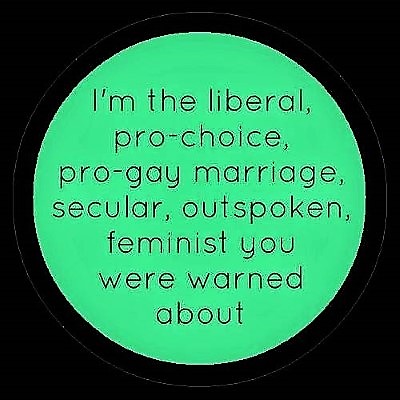
Part of the failures of the Civil Rights Movement and the Women’s Rights Movement is our failure to recognize the “intersectionality” of our various oppression, marginalization, and issues.
Early last year womensvoicesmedia.org posted a video explaining in detail the importance of understanding “intersectionality” and using it as a framework for our collective efforts.
Quoting from that previous post: “Intersectionality helps us to understand that while all women are subject to the wage gap, some women are affected even more harshly due to their race. Another instance where intersectionality applies is cases of LGBTQ murders - people of color and transgender people are more likely to be victims than cisgender people. These are just two examples of why intersectionality matters. To truly bring about change that is meaningful for all, everyone's voice needs to be at the table.”
Occasionally, we are questioned as to why the subject of a particular post would be considered a “feminist” issue. My answer to this is twofold.
Please, avail yourself of the opportunity to look at the aforementioned video at https://womensvoicesmedia.org/index.php/intersectionality?blog=11
I believe it will open your eyes to understanding the importance of “intersectionality”. It most certainly opened my eyes.