HomeYour VoiceHerStoryYour MultimediaResource LibraryAbout WVMCode of ConductRegisterLog in


  • Latest Post
  • Post index
  • Archives
  • Categories
  • Latest comments
  • Contact
  • Post Something
  • 1
  • ...
  • 73
  • 74
  • 75
  • ...
  • 76
  • ...
  • 77
  • 78
  • 79
  • ...
  • 80
  • ...
  • 81
  • 82
  • 83
  • ...
  • 167

REPRODUCTIVE JUSTICE & GUN VIOLENCE

REPRODUCTIVE JUSTICE & GUN VIOLENCE
Posted by jj on Jun 08, 2022 in News, Reproductive Rights, Violence, Health and Safety

Ponder the undeniable connection between reproductive justice and gun violence.  Those same politicians who wield their power to deny women reproductive justice in the name of being pro-life will do nothing to save the lives of children lost to gun violence.

  • The politicians who care more about NRA donations than the lives of children are the same politicians who vote against abortion access. They are not pro-life; they are pro-violence, pro-terror and anti-family.
  • Reproductive justice is about accessible abortion as well as the right to raise children in safe, healthy communities. It’s the ability to parent in peace, without fear that your child will be gunned down in school or on the street, without fear that your baby will go hungry from lack of formula. To truly achieve reproductive justice we need common sense gun reform.
  • Pro-terror politicians whose pockets are lined with NRA money want to force pregnant people to give birth and subject our families to horrific violence and trauma. Abortion is a human right. Education is a human right. A future is a human right. Reproductive justice is the answer.

Read more »

Leave a comment

"FAMILY FRIENDLY" CORPORATIONS - NOT SO FRIENDLY AFTER ALL

"FAMILY FRIENDLY" CORPORATIONS - NOT SO FRIENDLY AFTER ALL
Posted by jj on Jun 06, 2022 in News, Reproductive Rights, Health and Safety
"FAMILY FRIENDLY" CORPORATIONS - NOT SO FRIENDLY AFTER ALL

Corporations are profiting from our communities and then using that money to fund politicians who are determined to deny our rights and health care.  They and others are doing it in Florida and are most certainly  doing it in other states.

FLORIDIANS FOR REPRODUCTIVE RIGHTS (FRF) has launched a campaign to fight back.  #AbortionInjusticeInc intends to hold politicians and their corporate funders accountable by educating the public as to what they are doing and urging every eligible citizen to register and VOTE!

Leave a comment

JUNE – LGBTQ+ PRIDE MONTH

JUNE – LGBTQ+ PRIDE MONTH
Posted by jj on Jun 02, 2022 in Intro
JUNE – LGBTQ+ PRIDE MONTH

Let’s begin our commemoration of this month by learning about its’ beginning and the traditions that have become a part of it.

The following is documentation from the Library of Congress.

Lesbian, Gay, Bisexual, Transgender and Queer (LGBTQ) Pride Month is currently celebrated each year in the month of June to honor the 1969 Stonewall Uprising in Manhattan. The Stonewall Uprising was a tipping point for the Gay Liberation Movement in the United States. In the United States the last Sunday in June was initially celebrated as "Gay Pride Day," but the actual day was flexible. In major cities across the nation the "day" soon grew to encompass a month-long series of events. Today, celebrations include pride parades, picnics, parties, workshops, symposia and concerts, and LGBTQ Pride Month events attract millions of participants around the world. Memorials are held during this month for those members of the community who have been lost to hate crimes or HIV/AIDS. The purpose of the commemorative month is to recognize the impact that lesbian, gay, bisexual and transgender individuals have had on history locally, nationally, and internationally.

.In 1994, a coalition of education-based organizations in the United States designated October as LGBT History Month. In 1995, a resolution passed by the General Assembly of the National Education Association included LGBT History Month within a list of commemorative months. National Coming Out Day (October 11), as well as the first "March on Washington" in 1979, are commemorated in the LGBTQ community during LGBT History Month.

Annual LGBTQ+ Pride Traditions

The first Pride march in New York City was held on June 28, 1970, on the one-year anniversary of the Stonewall Uprising. Primary sources available at the Library of Congress provide detailed information about how this first Pride march was planned and the reasons why activists felt so strongly that it should exist. Looking through the Lili Vincenz and Frank Kameny Papers in the Library’s Manuscript Division, researchers can find planning documents, correspondence, flyers, ephemera and more from the first Pride marches in 1970. This, the first U.S. Gay Pride Week and March, was meant to give the community a chance to gather together to "...commemorate the Christopher Street Uprisings of last summer in which thousands of homosexuals went to the streets to demonstrate against centuries of abuse ... from government hostility to employment and housing discrimination, Mafia control of Gay bars, and anti-Homosexual laws" (Christopher Street Liberation Day Committee Fliers, Franklin Kameny Papers). The concept behind the initial Pride march came from members of the Eastern Regional Conference of Homophile Organizations (ERCHO), who had been organizing an annual July 4th demonstration (1965-1969) known as the "Reminder Day Pickets," at Independence Hall in Philadelphia. At the ERCHO Conference in November 1969, the 13 homophile organizations in attendance voted to pass a resolution to organize a national annual demonstration, to be called Christopher Street Liberation Day.

As members of the Mattachine Society of Washington, Frank Kameny and Lilli Vincenz participated in the discussion, planning, and promotion of the first Pride along with activists in New York City and other homophile groups belonging to ERCHO.

By all estimates, there were three to five thousand marchers at the inaugural Pride in New York City, and today marchers in New York City number in the millions. Since 1970, LGBTQ+ people have continued to gather together in June to march with Pride and demonstrate for equal rights.

Photo by Emily Webster on Unsplash

Leave a comment

The History of The Rainbow Flag

The History of The Rainbow Flag
Posted by jj on Jun 02, 2022 in Background, Equal Representation, Social Justice
The History of The Rainbow Flag

Up until 1978 the pink triangle had been the symbol for the gay movement.  But it represented a dark past.  Adolph Hitler had created the pink triangle during World War II as a stigma on homosexuals.  It was a tool of Nazi oppression.

Artie Bressan Jr., a filmmaker, and Cleve Jones, a writer, pressed their friend and artist Gilbert Baker to design a new, empowering symbol for the movement.  Bressan and Jones had suggested this to Baker several times but Baker brushed them off.  That is until 1976 when he observed how important and symbolic the American flag was for the Bicentennial celebrations.  The flag was everywhere, printed on thousands of different items.  That was when he started to think seriously about designing the flag for the gay community.

Later, at the Winterland Ballroom, Baker observed how all the dancers were like a swirl of color and light.  That’s when the idea of the rainbow came to him.  A rainbow flag seemed like the natural choice.  The rainbow came from the earliest history as a symbol of hope.  It is found in the Bible and in the history of the Chinese, Egyptians, and Native Americans.

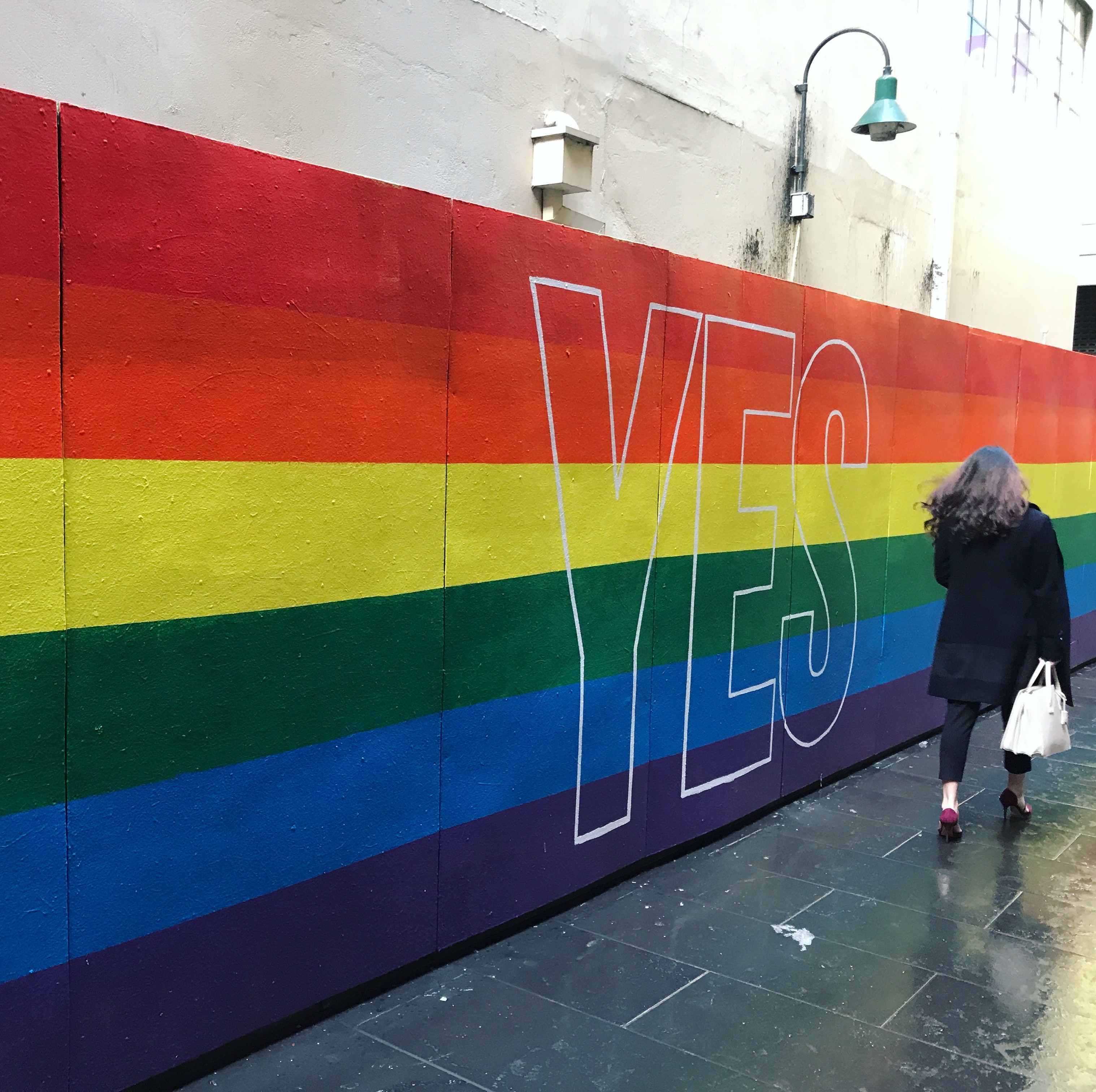
Baker’s creation, the rainbow pride flag, was first flown at the San Francisco Gay Freedom Day Parade in June 1978.   The flag originally had eight stripes but over the two years following its’ creation, the design was changed to its’ current, 6-stripe version.  It still assigns a meaning to each color: red for life, orange for healing, yellow for sunlight, green for nature, blue for harmony and purple for spirit.   Baker did not copyright the design because he wanted it to belong to everyone.

The flag has become a symbol of the LGBTQ+ movement, not only in the U.S., but around the world.

Leave a comment

A FOUNDER OF THE NEW URBANIST MOVEMENT

A FOUNDER OF THE NEW URBANIST MOVEMENT
Posted by jj on May 31, 2022 in Women Not Categorized, Background
A  FOUNDER  OF  THE NEW  URBANIST  MOVEMENT

Jane Jacobs  (1916-2006)

American and Canadian writer and activist Jane Jacobs transformed the field of urban planning with her writing about American cities and her grass-roots organizing. She led resistance to the wholesale replacement of urban communities with high rise buildings and the loss of community to expressways. Along with Lewis Mumford, she is considered a founder of the New Urbanist movement.

Jacobs saw cities as living ecosystems. She took a systemic look at all the elements of a city, looking at them not just individually, but as parts of an interconnected system. She supported bottom-up community planning, relying on the wisdom of those who lived in the neighborhoods to know what would best suit the location. She preferred mixed-use neighborhoods to separate residential and commercial functions and fought conventional wisdom against high-density building, believing that well-planned high density did not necessarily mean overcrowding. She also believed in preserving or transforming old buildings where possible, rather than tearing them down and replacing them.

Early Life

Jane Jacobs was born Jane Butzner on May 4, 1916. Her mother, Bess Robison Butzner, was a teacher and nurse. Her father, John Decker Butzner, was a physician. They were a Jewish family in the predominantly Roman Catholic city of Scranton, Pennsylvania.

Jane attended Scranton High School and, after graduation, worked for a local newspaper.

New York

In 1935, Jane and her sister Betty moved to Brooklyn, New York. But Jane was endlessly attracted to the streets of Greenwich Village and moved to the neighborhood, with her sister, shortly after. 

When she moved to New York City, Jane began working as a secretary and writer, with a particular interest in writing about the city itself. She studied at Columbia for two years and then left for a job with Iron Age magazine. Her other places of employment included the Office of War Information and the U.S. State Department.

In 1944, she married Robert Hyde Jacobs, Jr, an architect working on airplane design during the war. After the war, he returned to his career in architecture, and she to writing. They bought a house in Greenwich Village and started a backyard garden.

Still working for the U.S. State Department, Jane Jacobs became a target of suspicion in the McCarthyism purge of communists in the department. Though she had been actively anti-communist, her support of unions brought her under suspicion. Her written response to the Loyalty Security Board defended free speech and the protection of extremist ideas.

Challenging the Consensus on Urban Planning

In 1952, Jane Jacobs began working at Architectural Forum, after the publication she’d been writing for before moving to Washington. She continued to write articles about urban planning projects and later served as the associate editor. After investigating and reporting on several urban development projects in Philadelphia and East Harlem, she came to believe that much of the common consensus on urban planning exhibited little compassion for the people involved, especially African Americans. She observed that “revitalization” often came at the expense of the community. 

In 1956, Jacobs was asked to substitute for another Architectural Forum writer and give a lecture at Harvard. She talked about her observations on East Harlem, and the importance of “strips of chaos” over “our concept of urban order.” 

The speech was well-received, and she was asked to write for Fortune magazine. She used that occasion to write “Downtown Is for People” criticizing Parks Commissioner Robert Moses for his approach to redevelopment in New York City, which she believed neglected the needs of the community by focusing too heavily on concepts like scale, order, and efficiency.

In 1958, Jacobs received a large grant from The Rockefeller Foundation to study city planning. She linked up with the New School in New York, and after three years, published the book for which she is most renowned, The Death and Life of Great American Cities.

She was denounced for this by many who were in the city planning field, often with gender-specific insults, minimizing her credibility. She was criticized for not including an analysis of race, and for not opposing all gentrification.

Greenwich Village

Jacobs became an activist working against the plans from Robert Moses to tear down existing buildings in Greenwich Village and build high rises. She generally opposed top-down decision-making, as practiced by "master builders" like Moses. She warned against overexpansion of New York University. She opposed the proposed expressway that would have connected two bridges to Brooklyn with the Holland Tunnel, displacing much housing and many businesses in Washington Square Park and the West Village. This would have destroyed Washington Square Park, and preserving the park became a focus of activism. She was arrested during one demonstration. These campaigns were turnaround points in removing Moses from power and changing the direction of city planning.

Toronto

After her arrest, the Jacobs family moved to Toronto in 1968 and received Canadian citizenship. There, she became involved in stopping an expressway and rebuilding neighborhoods on a more community-friendly plan. She became a Canadian citizen and continued her work in lobbying and activism to question conventional city planning ideas.

Jane Jacobs died in 2006 in Toronto. Her family asked that she be remembered “by reading her books and implementing her ideas.”

Summary of Ideas in The Death and Life of Great American Cities

In the introduction, Jacobs makes quite clear her intention:

"This book is an attack on current city planning and rebuilding. It is also, and mostly, an attempt to introduce new principles of city planning and rebuilding, different and even opposite from those now taught in everything from schools of architecture and planning to Sunday supplements and women's magazines. My attack is not based on quibbles about rebuilding methods or hair-splitting about fashions in design. It is an attack, rather, on the principles and aims that have shaped modern, orthodox city planning and rebuilding."

Jacobs observes such commonplace realities about cities as the functions of sidewalks to tease out the answers to questions, including what makes for safety and what does not, what distinguishes parks that are "marvelous" from those that attract vice, why slums resist change, how downtowns shift their centers. She also makes clear that her focus is "great cities" and especially their "inner areas" and that her principles may not apply to suburbs or towns or small cities.

She outlines the history of city planning and how America got to the principles in place with those charged with making change in cities, especially after World War II. She particularly argued against Decentrists who sought to decentralize populations and against followers of architect Le Corbusier, whose "Radiant City" idea favored high-rise buildings surrounded by parks -- high-rise buildings for commercial purposes, high-rise buildings for luxury living, and high-rise low-income projects.

Jacobs argues that conventional urban renewal has harmed city life. Many theories of "urban renewal" seemed to assume that living in the city was undesirable. Jacobs argues that these planners ignored the intuition and experience of those actually living in the cities, who were often the most vocal opponents of the "evisceration" of their neighborhoods. Planners put expressways through neighborhoods, ruining their natural ecosystems. The way that low-income housing was introduced was, she showed, often creating even more unsafe neighborhoods where hopelessness ruled.

A key principle for Jacobs is diversity, what she calls "a most intricate and close-grained diversity of uses." The benefit of diversity is mutual economic and social support. She advocated that there were four principles to create diversity:

  1. The neighborhood should include a mixture of uses or functions. Rather than separating into separate areas the commercial, industrial, residential, and cultural spaces, Jacobs advocated for intermixing these.
  2. Blocks should be short. This would make promote walking to get to other parts of the neighborhood (and buildings with other functions), and it would also promote people interacting.
  3. Neighborhoods should contain a mixture of older and newer buildings. Older buildings might need renovation and renewal, but should not simply be razed to make room for new buildings, as old buildings made for a more continuous character of the neighborhood. Her work led to more focus on historical preservation.
  4. A sufficiently dense population, she argued, contrary to the conventional wisdom, created safety and creativity, and also created more opportunities for human interaction. Denser neighborhoods created "eyes on the street" more than separating and isolating people would.

All four conditions, she argued, must be present, for adequate diversity. Each city might have different ways of expressing the principles, but all were needed.

Jane Jacobs' Later Writings

Jane Jacobs wrote six other books, but her first book remained the center of her reputation and her ideas. Her later works were:

  • The Economy of Cities. 1969.
  • The Question of Separatism: Quebec and the Struggle Over Sovereignty. 1980.
  • Cities and the Wealth of Nations. 1984.
  • Systems of Survival. 1992.
  • The Nature of Economies. 2000.
  • Dark Age Ahead. 2004.

Selected Quotes

“We expect too much of new buildings, and too little of ourselves.”

“…that the sight of people attracts still other people, is something that city planners and city architectural designers seem to find incomprehensible. They operate on the premise that city people seek the sight of emptiness, obvious order and quiet. Nothing could be less true. The presences of great numbers of people gathered together in cities should not only be frankly accepted as a physical fact – they should also be enjoyed as an asset and their presence celebrated.”

“To seek "causes" of poverty in this way is to enter an intellectual dead end because poverty has no causes. Only prosperity has causes.”

“There is no logic that can be superimposed on the city; people make it, and it is to them, not buildings, that we must fit our plans.”

By    Jone Johnson Lewis       ThoughtCo..

  •  
  • Updated on August 14, 2019
  •  

 CITATION

Lewis, Jone Johnson. "Jane Jacobs: New Urbanist Who Transformed City Planning." ThoughtCo, Aug. 27, 2020, thoughtco.com/jane-jacobs-biography-4154171.

 

Leave a comment
  • 1
  • ...
  • 73
  • 74
  • 75
  • ...
  • 76
  • ...
  • 77
  • 78
  • 79
  • ...
  • 80
  • ...
  • 81
  • 82
  • 83
  • ...
  • 167

Women's Voices Media

Women's thought, women's opinions, women's facts presented in a feminist point of view. We endorse works that present in an empirical and logical style.

Search

Categories

Women's Voices Media

  • Editor Byline
  • Home Page
  • Intro
  • Newsworthy

Your Voice

  • Background
  • ERA and CEDAW
  • Economic Justice
  • Education
  • Elections
  • Environment
  • Equal Representation
  • Health and Safety
  • Intersectional Issues
  • Intersectional Issues
  • Intro
  • Judicial System
  • My Voice
  • Politics & Elections
  • Reproductive Rights
  • Social Justice
  • Tech
  • Violence

HerStory

  • Background
  • Intersectional Issues
  • Social Justice
  • Women In Education
  • Women In Politics
  • Women In Science, Technology, & Math (STEM)
  • Women In Sports
  • Women In the Arts
  • Women In the Law
  • Women Not Categorized
  • Women in Business
  • Women's Health & Reproductive Rights
  • Womens Rights

Your Multimedia

  • Art
  • Background
  • Events
  • Intersectional Issues
  • Just Interesting
  • News
  • People
  • Welcome

Women's Resource Library

  • Current News
  • Diverse / Uncategorized
  • ERA and CEDAW
    • CEDAW
    • ERA
  • Environment
    • Air / Atmospheric Polution
    • Alternate Power Sources
    • Climate Change
    • Destruction of Forests and Habitats
    • Sustainability
    • Water Resources
      • Fracking
      • Waste Disposal
  • Equal Representation
    • In Business and Corporations
    • In Education (K-20)
    • In Government
    • In Law Enforcement
    • In Sports
    • In the Justice System
    • Science, Technology, Engineering, and Math (STEM)
  • Equality and Justice
    • Ableism
    • Ageism
    • Child Care
    • Economic Equality
    • Homelessness
    • LGBTQA Discrimination
    • Poverty and Hunger
    • Racism
    • Sexism
  • Gender Studies
  • General Science
  • Girls & Young Women
  • Health and Safety
    • HIV / AIDS
    • Health Insurance
    • Maternal and Infant Care
    • Medical Research
    • Paid Sick and Parental Leave
    • Pregnancy Accommodations
    • Sex Transmitted Diseases
    • Substance Addiction and Abuse
      • Opioid Crisis
      • Physician Over-prescription
  • Herstory
  • Independant Media
  • Politics
  • Reproductive Rights
    • Abortion Rights
      • Roe v. Wade
    • Contraception
  • The Arts
  • Violence
    • Ableism
    • Child Abuse
    • Date Rape
    • Domestic Violence
    • Elder Abuse
    • Genital Mutilation
    • Gun Safety and Control
    • Harrassment
    • LGBTQA - Abuse and Assault
    • Racism
    • Rape / Assault
    • Sex Trafficking / Sex Slavery
    • Women In Prison
  • World Issues

XML Feeds

  • RSS 2.0: Posts
  • Atom: Posts
What is RSS?

Women's Voices Media
This collection 2026 by Janice Jochum
Copyright 2019 United Activision Media, LLC
This work is licensed under a Creative Commons Attribution-NonCommercial 4.0 International License.
• Contact • Help • Community CMS

CMS + email marketing
Cookies are required to enable core site functionality.