HomeYour VoiceHerStoryYour MultimediaResource LibraryAbout WVMCode of ConductRegisterLog in


  • Latest Post
  • Post index
  • Archives
  • Categories
  • Latest comments
  • Contact
  • Post Something
  • 1
  • ...
  • 139
  • 140
  • 141
  • ...
  • 142
  • ...
  • 143
  • 144
  • 145
  • ...
  • 146
  • ...
  • 147
  • 148
  • 149
  • ...
  • 167

DON’T LET THEM DESTROY OUR DEMOCRACY!

DON’T LET THEM DESTROY OUR DEMOCRACY!
Posted by 2ndnature on Mar 11, 2020 in Editor Byline
DON’T LET THEM DESTROY OUR DEMOCRACY!

The Kochs have used their corporation Koch Industries, its capital and networks of right-wing organizations to dominate the Republican Party for decades.  These networks have pooled hundreds of millions dollars every election cycle in support of candidates who support extreme conservative policies. They have created more than 600 offshore subsidiaries as tax shelters while funneling millions into state and federal elections to elect the most extreme candidates up and down the ballot.  This is an example of the most extreme corporate greed and abuse of our democracy.

So what are you looking at now?  This is a list of some of the most familiar Koch products and brands.

-American Greetings (took heavy Koch investment, upwards of $200 million)
-Angel Soft
-Angel Soft Ultra
-Brawny paper towels
-Dixie products
-Insulair cups
-Mardis Gras napkins
-Perfect Touch cups, paper products
-Quilted Northern
-Sparkle paper towels
-Vanity Fair napkins & paper towels
-Zee Napkins

-Georgia-Pacific Office products
-Spectrum paper
-Georgia-Pacific's enMotion paper towel dispenser
-Georgia-Pacific's engineered lumber

INVISTA Brands
-INVISTA’s PET polymer is used in oxygen-sensitive packaging for food and beverages.
-ADI-PURE® Adipic Acid
-ANTRON® Carpet Fiber
-C12™ Intermediates
-COMFOREL® Fiber
-COOLMAX® Fabric
-CORDURA® Fabric
-DACRON® Fiberfill
-DYTEK® Idea Intermediates
-FLEXISOLV® Solvent Solutions
-LYCRA® Fiber
-LYCRA HyFit® Fiber
-OXYCLEAR® Barrier Resin
-POLYCLEAR® PET
-POLYSHIELD® Resin
-SENZAA™ Additive
-STAINMASTER® Carpet
-SUPPLEX® Fabric
-SUPRIVA™ Fiber
-TACTEL® Fiber
-TECGEN® Garments
-TERATE® Polyols
-TERATHANE® Polyether Glycol
-TERRIN™ Polyols
-THERMOLITE® Fabric
-TORZEN® PA66 Resin

Koch Fertilizer Company's AGROTAIN® nitrogen stabilizer fertilizer products are used around the world to improve nitrogen efficiency and enhance crop productions.

The magnitude of how much these products pervade our lives is difficult to wrap your head around.  Additionally the fact that the many millions the Kochs make from our purchases of their products is used against us by their working against the Affordable Care Act, the expansion of Medicaid, and state’s efforts to pass legislation to address climate change.  A major effort is being made by them and their networks to destroy unions while getting big tax cuts for the wealthy and corporations.

It is not for me to tell you what to spend your money on but you might want to think more carefully about it next time you make purchases for yourself and your household.

And for goodness sakes DON’T FORGET TO VOTE!  YOUR VOTE IS YOUR VOICE!
Leave a comment

Conservatives and Liberals Do Think Differently

Conservatives and Liberals Do Think Differently
Posted by admin on Mar 10, 2020 in Intro

Research shows different ways of solving everyday problems linked to political ideology

  • Liberals more likely than conservatives to use ‘Aha!’ strategy to solve problems
  • People don’t consciously choose an insight versus analytic approach in their thinking
  • Thinking defaults automatically to particular approach of problem solving

EVANSTON, Ill. --- Big differences in the ways conservatives and liberals think about solving the nation’s most pressing problems couldn’t be more apparent during this presidential election cycle.

But political ideas aside, people who hold conservative versus liberal perspectives appear to differ in everyday thinking processes and problem solving, according to research from Northwestern University and the Rehabilitation Institute of Chicago (RIC).

When solving short (non-political) verbal problems in an experiment, liberals were more likely than conservatives to achieve solutions with a sudden insight or “Aha!” In contrast, both groups achieved roughly an equal number of solutions through gradual, analytical processing.

Different from instinctive or gut reactions, insight problem solving occurs when after working on a problem for awhile and maybe feeling stuck, a solution unexpectedly emerges into consciousness in an ‘Aha!’ moment. The problem is suddenly seen in a new light, often surprising the solvers who are typically unaware of how the reorganization of their thought processes occurred.

Insight solutions contrast with methodical and analytical problem solving, which involve a gradual approach toward the solution and awareness of the steps involved.

“This view is consistent with similar results from other labs across behavioral, neuroscientific and genetic studies, which converge in showing that conservatives have more structured and persistent cognitive styles,” said Carola Salvi, lead author of the study and a postdoctoral fellow in cognitive psychology at Northwestern and RIC.

“Liberals have a less structured and more flexible cognitive style, according to those studies. Our research indicates that cognitive differences in people with different political orientations also are apparent in a task that some consider to be convergent thinking: finding a single solution to a problem,” Salvi said. 

Given previous findings relating political orientation with cognitive styles, the researchers hypothesized that liberals and conservatives would preferentially employ different processes when tackling problems that could be solved using either an analytical or insight approach. 

“It’s not that there’s a different capacity to solve problems,” stressed Mark Beeman, senior author of the study and professor and chair of psychology at Northwestern. “It’s more about which processes people end up engaging in to solve the problem.”

And it’s not about preferences, said Jordan Grafman, co-author of the study and professor in physical medicine and rehabilitation at Northwestern University Feinberg School of Medicine and director of brain injury research at RIC.

“People may default automatically to a particular approach out of habit or predisposition, but they are not consciously choosing to solve a problem one way or the other,” Grafman said.

Approximately 130 Northwestern students were randomly assigned to the study. Those whose survey responses demonstrated a particular political ideology were ultimately divided into either a liberal or conservative group and balanced for age and ethnicity. A third group of students who scored “neutral” were excluded from the analysis. 

To test their hypothesis, the researchers used a well-known task in the problem-solving literature -- the Compound Remote Associate (CRA) problems. These problems can be solved through either insight or analytic processes with participants reporting how they solved each problem. Each problem consisted of the simultaneous presentation of three words, each of which could form a compound word or phrase with the solution word. For example: pine/crab/sauce – the solution word is APPLE.

Past research has demonstrated that different mental processes and distinct brain regions are involved when people report solving these problems with insight, versus when solving analytically.

“Liberals tended more than conservatives to use insight to solve verbal problems in which you have to ‘think outside the box,’” Salvi said.

In life you often use both approaches, Salvi noted.

“Everyday life presents us with a variety of scenarios where we are asked to solve problems analytically, others only with a spark of insight, most of them can be solved either way,” Salvi said. “In this last case, liberals are more likely to achieve the solution with an ‘Aha!’ moment, whereas conservatives’ problem solving approach does not prefer one style or the other.” 

Retrieved From: https://news.northwestern.edu/stories/2016/03/political-insight-republicans-democrats-conservatives-liberals-think-differently
March 15, 2016 | By Hilary Hurd Anyaso

Leave a comment

NURSES NEWEST PROBLEM: THE YOUNG EATING THE OLD

NURSES NEWEST PROBLEM: THE YOUNG EATING THE OLD
Posted by jj on Mar 06, 2020 in Home Page, My Voice
NURSES NEWEST PROBLEM: THE YOUNG EATING THE OLD

 1976, we couldn’t wait to be nurses. Our starched white dresses with the nurse caps and stripes symbolized our graduation status as we were called one by one to receive our diploma and a rose.

We took an oath to care for the sick, to be professional, to critically think, to respect doctors and to respect patients and family members.

And to respect each other.

It was the age before computers. We learned how to calculate IV fluids in drops per hour and drops per minute. We had large folders that contained algorithms for sepsis, or myocardial infarctions or code blues. We had a three-fold flow sheet that we would manually document on. Threefold front and back. Blood pressures every 15 minutes and the pressors to coincide with the blood pressure. Everything was manually written from labs to a patient’s chart to MDs handwriting new orders — and endless charting of everything that happened to the patient in the ICU or CCU. We knew everything we charted had to be precise as it was always a potential for legal matters.

The handheld calculator had just come out on the market. It was the newest invention: $85 for a handheld calculator. So we were thrilled that we could now plug in some numbers to get an accurate drip rate for IVs or calculate dosages in an instant.

We were associate-degree and diploma nurses. And only the “elite” would earn a BSN.

We didn’t have breaks; they didn’t exist. We just kept working until it was time to go.

You worked the shifts your manager told you to. There was no compromising. You just did what you were told to do. We were the new pioneers in this field of nursing, and we were quite proud of ourselves.

Some older nurses did not communicate well with younger nurses.

Sometimes it was bullying the young. Or harassing or degrading a younger nurse who was just learning.

And the newly coined phrase appeared:

“The old eating their young.”

And the phrase stuck. Unfortunately.

And there was nowhere to turn. The managers turned their heads away. Sometimes the hazing was so bad that nurses would resign and even find a new career.

The nurses we couldn’t wait to be were riddled with harassment and ridicule.

And instead of holding each other up, we slowly destroyed each other.

Fast forward to the year 2000.

We older nurses are counting the years we can say goodbye to this long, hard, relentless career. This career that afforded our family vacations and a house and car and nice clothes and college for the kids.

This career that challenged us in the gut as we watched people live longer or die faster. As we said our goodbyes to our patients, we grew to love, and we’d gulp buckets of tears when it was over. Our last goodbyes to patients we loved.

We slowly evolved painstakingly learning the computer. And the computer was foreign to us. We were “special” and slow and didn’t adapt as well as the younger nurses did. These younger ones started computers in their home, in kindergarten and throughout the rest of their young lives.

Though they sported lots of energy, they walked faster than us, and they now had medical protocols and procedures right at their fingertips — instant knowledge.

But what the young ones didn’t know was that we were pioneers. We’re the ones with years and years of knowledge and experience and wisdom. And thus, the cycle of bullying was reinvented.

I’ve been a manager of an emergency department, I’ve been first assist to the surgeon, I’ve been a staff nurse and a charge nurse in ICU. And I’ve endured over 30 years in nursing. I have to continue working three more years before I can financially retire.

My sadness comes in when I hear the young men and women in this nursing career start the harassment.

“Where’s your hearing aid?”

“Are you STILL working?”

“Where’s your walker with the tennis balls?”

And then there’s a laugh.

But it’s not funny.

It’s sad and degrading.

It compromises our integrity, worth and our camaraderie. And instead of working together — we tear each other apart.

This is the hardest part of nursing.

I know it’s not everywhere, but it does exist.

And so now the coin has flipped.

The young eating the old.

Are we strong enough to stop this?

Are we strong enough to encourage positive work ethics and behaviors and to learn from the new and learn from the old?

Can this profession be saved?

It’s up to us.

All of us.

Respect.

Educate.

Enrich.

Empower.

We came here for a reason. Let’s not destroy ourselves.

Debbie Moore-Black is a nurse who blogs at Do Not Resuscitate


#womensvoicesmedia


Leave a comment

For The 1st Time, Architecture's Most Prestigious Prize Is Awarded To 2 Women

For The 1st Time, Architecture's Most Prestigious Prize Is Awarded To 2 Women
Posted by admin on Mar 04, 2020 in Women In Science, Technology, & Math (STEM)
For The 1st Time, Architecture's Most Prestigious Prize Is Awarded To 2 Women

Pritzker Prize.com Laureates 2020
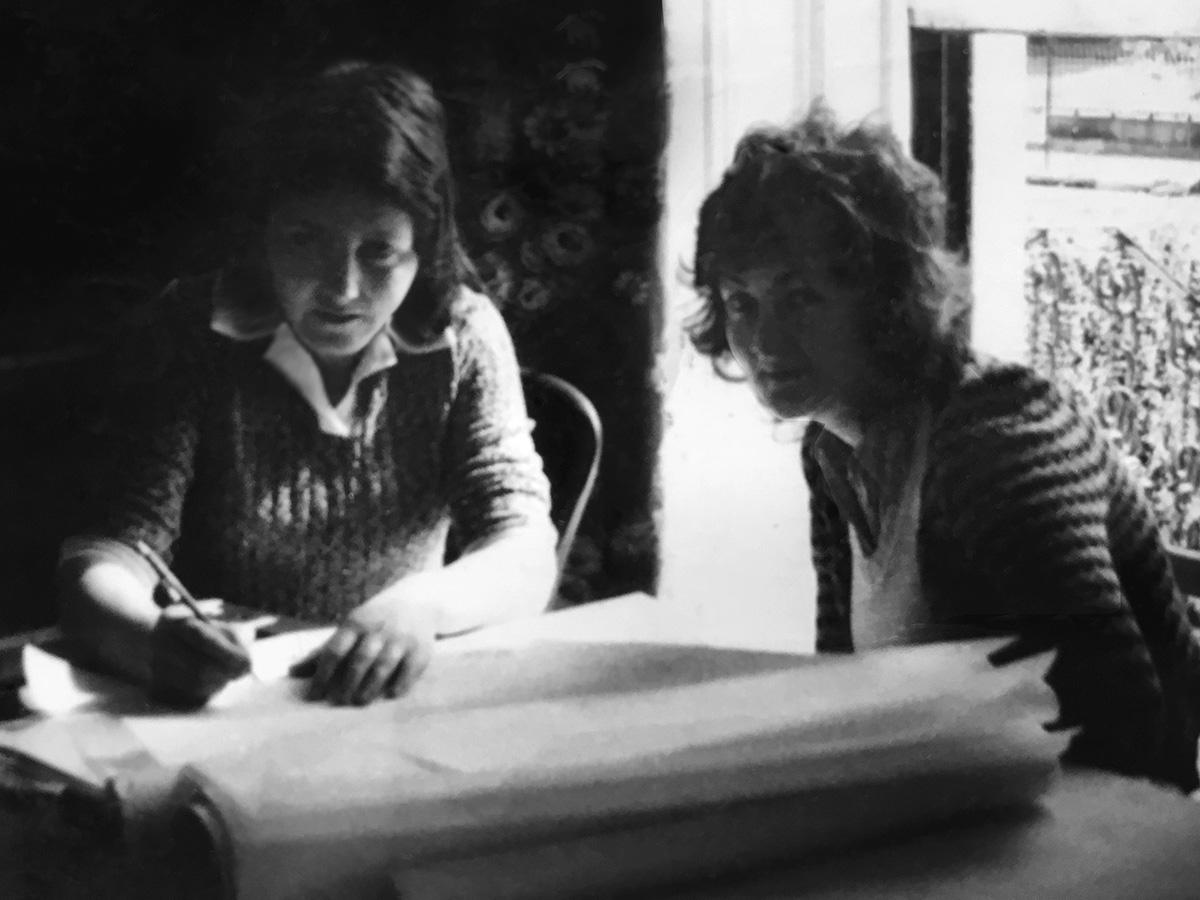
Yvonne Farrell (1951) and Shelley McNamara (1952) met during their collegiate studies at the School of Architecture at University College Dublin (UCD). They studied under rationalist architects who had newly arrived to challenge the preexisting thought and culture of the institution. Upon graduating in 1976, they were each offered the unique opportunity to teach at UCD, where they continued to educate until 2006, and were appointed as adjunct professors in 2015. “Teaching for us has always been a parallel reality,” comments Farrell. “And it’s a way of trying to distill our experience and gift it to other generations coming along so that they actually play a role in the growing of that culture. So it’s a two way thing, we learn from students and hopefully students learn from us.”

Yvonne Farrell and Shelley McNamara
Shelley McNamara and Yvonne Farrell while students at UCD, 1974

In 1978, Farrell and McNamara, along with three others, established Grafton Architects, named after the street of their original office to prioritize the existence of place, rather than individuals. Significant projects have included North King Street Housing (Dublin, Ireland 2000); Urban Institute of Ireland, University College Dublin (Dublin, Ireland 2002); Solstice Arts Centre (Navan, Ireland 2007); Loreto Community School (Milford, Ireland 2006); Offices for the Department of Finance (Dublin, Ireland 2009); and Medical School, University of Limerick (Limerick, Ireland 2012).

Reflecting on their childhoods, McNamara recalls, “My awakening to the experience of architecture was a visit as a child to an enormous 18th-century house on the beautiful main street of the city of Limerick where my aunt lived. Her husband had a beautiful mahogany lined pharmacy shop on the ground floor, and she ran a little Montessori school in a room over the entrance hall. This aroused a sense of wonder as to what a house could be and I remember vividly the sensation of space and light, which was an absolute revelation to me.”

Medical School, University of Limerick
Medical School, University of Limerick, photo courtesy of Dennis Gilbert


Institut Mines Télécom
Institut Mines Télécom, photo courtesy of Alexandre Soria

Farrell shares, “One of my earliest memories is of lying on my back on a cushion on the floor underneath the baby grand piano we had at home. While my mother played the piano above me, I remember being aware of the wonderful space filled with music under that walnut instrument. I grew up in Tullamore, Co. Offaly, Ireland—a town of streets and squares, stone warehouses, crafted houses and a canal that cut a wonderful line into the landscape. An oak forest at the edge of the town had a carpet of bluebells every spring. Nature felt very close.”

Of the five original partners, only Farrell and McNamara stayed. Their first international commission away from their native Ireland transpired 25 years later, with Universita Luigi Bocconi in Milan (Milan, Italy 2008), which was awarded World Building of the Year at the 2008 inaugural World Architectural Festival in Barcelona. Other international projects have since followed, with tantamount acclamation from the architectural community. University Campus UTEC Lima (Lima, Peru 2015) was awarded the inaugural RIBA International Prize 2016 by the Royal Institute of British Architects (RIBA). Institut Mines Télécom (Paris, France 2019) and Université Toulouse 1 Capitole, School of Economics (Toulouse, France 2019) were recently completed.

Universita Luigi Bocconi
Universita Luigi Bocconi, photo courtesy of Alexandre Soria

They are Fellows of The Royal Institute of the Architects of Ireland and International Honorary Fellows of RIBA. They have previously held the Kenzo Tange chair at the Harvard Graduate School of Design (2010) and the Louis Kahn chair at Yale University (2011) and have taught at institutions including École Polytechnique Fédérale de Lausanne and Accademia di Architettura di Mendrisio, and lectured internationally.

Grafton Architects was the recipient of the 2012 Biennale di Venezia Silver Lion Award for the exhibition, Architecture as New Geography. Farrell and McNamara were appointed as 2018 co-curators for the 16th International Architecture Exhibition, la Biennale di Venezia, with the theme FREESPACE. They were awarded the RIAI James Gandon Medal for Lifetime Achievement in Architecture by the RIAI in 2019 and the RIBA Royal Gold Medal in 2020.

Leave a comment

Moderate Taliban an Oxymoron

Moderate Taliban an Oxymoron
Posted by marthaburk on Mar 02, 2020 in Violence, ERA and CEDAW
Moderate Taliban an Oxymoron

In my book “moderate Taliban” ranks right up there with “organic vienna sausage” as an oxymoron.  But the President seems to be reaching out to the so-called moderate militias in Afghanistan in talking about how to end the violence and fix the unending mess started by W and left no better by Obama. Trump fleshed out his blueprint for gaining a peace on Friday, when he announced plans to bring home 5,000 more American troops as the front edge of what he says will be a conditions-based withdrawal over 14 months.

Women’s groups, both in the U.S. and Afghanistan, want to make sure any shifts in policy don’t further harm women and girls.  Despite both the Bush and Obama administration’s claims to the contrary, females have been set back — way back—since 2001.  Most are once again in the burqua, and girls are being attacked with acid for the crime of going to school. Women are often deprived of food, and have been kicked out of bread lines by the Taliban.

This is not a new concern. As far back as 2009 Dr. Sima Samar, chairperson of the Afghanistan Independent Human Rights Commission, was making the  rounds on Capitol Hill to sound the alarm. “I do not believe there are any moderate Taliban,” she said at the time. “The U.S. must not provide support for those who have terrorized women and girls and violated their rights.”

Underscoring the point that women’s rights are human rights and not subject to so-called cultural norms, Afghanistan has ratified the universal women’s human rights treaty known as CEDAW (the U.S. has not), and the Afghan constitution has basic protections for women.  The challenge is bringing culture and practice, still under the grip of  Taliban oppression, in line with the law.

So far it’s not happening and there’s no reason to think that will change with the so-called peace agreement. Violence has continued to escalate since the pullout was first announced at the end of 2016.  Along with the women’s groups, women in the Senate are worried that the Trump withdrawal will result in more – not fewer - setbacks for women, since women’s rights have not been on the agenda for the talks. Case in point: it was announced with great fanfare in April of last year that women would be included in the Taliban delegation. One day later the Taliban made it clear they had no such intention. “We still have a clear-cut policy that we wouldn’t allow women to represent us in any capacity or work publicly when we come into power” said one Afghanistan-based commander told NBC News.

During the same month, girls’ schools were firebombed in western Afghanistan, and officials were told to fire all the male teachers because girls shouldn’t be taught by men. Though the Taliban in control of the area denied responsibility, graffiti left behind on a nearby wall read “long live the Islamic Emirate” – the Taliban’s name for their movement.

It no surprise that the U.S. is sacrificing women for yet another ego trip by our narcissist president. Let’s hope female voters remember in November.

Read more about the U.S. and global women’s rights here:

Your Voice, Your Vote 2020-2021

Leave a comment
  • 1
  • ...
  • 139
  • 140
  • 141
  • ...
  • 142
  • ...
  • 143
  • 144
  • 145
  • ...
  • 146
  • ...
  • 147
  • 148
  • 149
  • ...
  • 167

Women's Voices Media

Women's thought, women's opinions, women's facts presented in a feminist point of view. We endorse works that present in an empirical and logical style.

Search

Categories

Women's Voices Media

  • Editor Byline
  • Home Page
  • Intro
  • Newsworthy

Your Voice

  • Background
  • ERA and CEDAW
  • Economic Justice
  • Education
  • Elections
  • Environment
  • Equal Representation
  • Health and Safety
  • Intersectional Issues
  • Intersectional Issues
  • Intro
  • Judicial System
  • My Voice
  • Politics & Elections
  • Reproductive Rights
  • Social Justice
  • Tech
  • Violence

HerStory

  • Background
  • Intersectional Issues
  • Social Justice
  • Women In Education
  • Women In Politics
  • Women In Science, Technology, & Math (STEM)
  • Women In Sports
  • Women In the Arts
  • Women In the Law
  • Women Not Categorized
  • Women in Business
  • Women's Health & Reproductive Rights
  • Womens Rights

Your Multimedia

  • Art
  • Background
  • Events
  • Intersectional Issues
  • Just Interesting
  • News
  • People
  • Welcome

Women's Resource Library

  • Current News
  • Diverse / Uncategorized
  • ERA and CEDAW
    • CEDAW
    • ERA
  • Environment
    • Air / Atmospheric Polution
    • Alternate Power Sources
    • Climate Change
    • Destruction of Forests and Habitats
    • Sustainability
    • Water Resources
      • Fracking
      • Waste Disposal
  • Equal Representation
    • In Business and Corporations
    • In Education (K-20)
    • In Government
    • In Law Enforcement
    • In Sports
    • In the Justice System
    • Science, Technology, Engineering, and Math (STEM)
  • Equality and Justice
    • Ableism
    • Ageism
    • Child Care
    • Economic Equality
    • Homelessness
    • LGBTQA Discrimination
    • Poverty and Hunger
    • Racism
    • Sexism
  • Gender Studies
  • General Science
  • Girls & Young Women
  • Health and Safety
    • HIV / AIDS
    • Health Insurance
    • Maternal and Infant Care
    • Medical Research
    • Paid Sick and Parental Leave
    • Pregnancy Accommodations
    • Sex Transmitted Diseases
    • Substance Addiction and Abuse
      • Opioid Crisis
      • Physician Over-prescription
  • Herstory
  • Independant Media
  • Politics
  • Reproductive Rights
    • Abortion Rights
      • Roe v. Wade
    • Contraception
  • The Arts
  • Violence
    • Ableism
    • Child Abuse
    • Date Rape
    • Domestic Violence
    • Elder Abuse
    • Genital Mutilation
    • Gun Safety and Control
    • Harrassment
    • LGBTQA - Abuse and Assault
    • Racism
    • Rape / Assault
    • Sex Trafficking / Sex Slavery
    • Women In Prison
  • World Issues

XML Feeds

  • RSS 2.0: Posts
  • Atom: Posts
What is RSS?

Women's Voices Media
This collection 2026 by Janice Jochum
Copyright 2019 United Activision Media, LLC
This work is licensed under a Creative Commons Attribution-NonCommercial 4.0 International License.
• Contact • Help • Blog software

Open Source CMS
Cookies are required to enable core site functionality.