HomeYour VoiceHerStoryYour MultimediaResource LibraryAbout WVMCode of ConductRegisterLog in


  • Latest Post
  • Post index
  • Archives
  • Categories
  • Latest comments
  • Contact
  • Post Something
  • 1
  • ...
  • 114
  • 115
  • 116
  • ...
  • 117
  • ...
  • 118
  • 119
  • 120
  • ...
  • 121
  • ...
  • 122
  • 123
  • 124
  • ...
  • 167

ONE OF THE WORLD'S RICHEST SELF-MADE WOMEN

ONE OF THE WORLD'S RICHEST SELF-MADE WOMEN
Posted by jj on May 26, 2021 in Women Not Categorized, Background
ONE OF THE WORLD'S RICHEST SELF-MADE WOMEN

Toni Ko, a first-generation South Korean immigrant, made a name for herself in the business world as the founder of NYX Cosmetics and now helps fund and develop other women-run brands. Thanks to her work ethic and business savvy, Ko has been named one of Forbes magazine’s Richest Self-Made Women. 

Born in 1973, Ko moved to California from Dageu, South Korea with her family in 1986 when she was 13 years old. She did not speak English and described it as a very difficult situation, but credits the challenge with building her character and fostering her resilient nature. As a teenager, she learned the ins and outs of business working for her family’s perfume and cosmetics retail store after school and on weekends. Ko describes her mother, Elaine, as a “fantastic businesswoman.” The store did well and expanded to multiple locations. When she was 20, the family business turned to wholesale distribution. Ko gained experience managing accounts and selling to retailers, rather than directly to consumers. At the same time, Ko took note of the stark difference in quality between the inexpensive cosmetics brands she could afford and the high-end makeup brands to which she aspired. In 1999, at the age of 25, Ko leveraged her passion for makeup and her firsthand knowledge of the beauty supply industry to create her own line of department-store-quality cosmetics for drugstore prices, NYX Cosmetics. 

Ko started NYX with $250,000 in seed money from her parents. It began as a one-woman operation but Ko quickly grew the company through her savvy use of social media, recruiting influencers to tout her products and spur word-of-mouth promotion. NYX started with small product line of makeup pencils, but garnered $2 million in revenue during its first year. Ko named the company after the Greek goddess Nyx, a female personification of the night, powerful enough that even Zeus feared her. 

As NYX became a global brand under her leadership, Ko garnered recognition for her achievements in the industry. Ko earned the Lifetime Achievement Award from the Beauty Bus Foundation in 2013; the Entrepreneur of the Year award from the Asian Business Association in 2014; and the Leadership Award from the National Association of Women Business Owners, Los Angeles chapter, that same year. NYX was named the WWD Beauty Inc. Brand of the Year in 2013, an achievement Ko cites as one of her proudest moments in the beauty industry. NYX soon gained the attention of L’Oreal, which purchased the company in 2014 for a reported $500 million. At the time, NYX boasted worldwide distribution and a yearly revenue well over $100 million.  

In 2014, Ko started the Toni Ko Foundation. It supports organizations that care for children in need as well as those that focus on women’s empowerment. She sees financial independence as the key to liberation for women around the world and is dedicated to increasing the number of female business executives and entrepreneurs. Toward that end, Ko invests in women-owned businesses through her venture capital firm, Butter Ventures. Butter Ventures has invested in women-run companies such as digital signage software company Enplug, CBD brand Sagely, and feminine care wellness startup Rael.  

After a brief retirement, Ko decided to get back into the entrepreneurial game herself. Subject to a five-year non-compete agreement with L’Oreal that prevented her from launching any cosmetics lines, Ko looked to other industries. She recognized a gap in sunglasses offerings between high-end designer products and inexpensive store brands, one similar to the gap that she capitalized on in the cosmetics industry. Ko launched her sunglasses line, Thomas James LA (previously known as Perverse), in 2016. Priced between $30-$60 per pair, Thomas James LA frames are intended to be more stylish than store brands, but more affordable than designer sunglasses. Ko initially tried to establish a strong brick-and-mortar retail presence for the company, but the stores were not successful and Ko pivoted the line to focus on e-commerce. Despite this setback, Ko has described the effort as a valuable learning experience. 

In July 2019, once she was free to reenter the cosmetics industry, Ko founded Bespoke Beauty Brands, LLC. Bespoke is an incubator company that helps develop and launch beauty and wellness brands in partnership with influencers and entrepreneurs. Each product line is carefully curated to tailor to the individual’s specific brand. Bespoke’s first brand was a collaboration with Kim Chi, a finalist on season eight of RuPaul’s Drag Race, called Kim Chi Chic Beauty.  

Ko continues to be an inspiration to female entrepreneurs. Her advice to women is: “Stand your ground! Don’t let people, your surroundings, or events intimidate you. Speak up, speak loudly, and be demanding of what you want.” 


Mariana Brandman, NWHM Predoctoral Fellow in Women's History | 2020-2022

MLA – Brandman, Mariana. “Toni Ko.” National Women’s History Museum, 2021. Date accessed. 

Chicago – Brandman, Mariana. “Toni Ko.” National Women’s History Museum. 2021. www.womenshistory.org/education-resources/biographies/toni-ko 

“Toni Ko Accepts 2016 Women Making History Award.” National Women’s History Museum. October 11, 2016.   

Photo Credit: The National Women's History Museum by Getty Images | Todd Williamson


Leave a comment

FIRST LADY OF PHYSICS

FIRST LADY OF PHYSICS
Posted by jj on May 24, 2021 in Background, Women In Science, Technology, & Math (STEM)
FIRST LADY OF PHYSICS

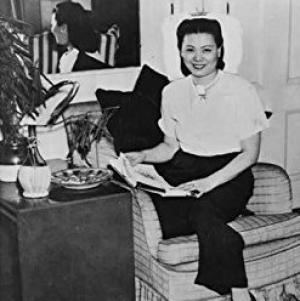
Chien-Shiung Wu  (1912-1997)

Chien-Shiung Wu was born May 31, 1912, in a small fishing village just north of Shanghai, China, the second of three siblings.  Her father was an engineer; her mother a teacher.  Both her parents valued education and encouraged her to follow her passions.  Although it was not common for girls to be educated during this time, Wu got her early education at the Mingde Women's Vocational Continuing School, a school started by her father who believed strongly that girls should receive an education..  Instead of playing outside like other children Wu spent her time listening to the newly-invented radio for knowledge and pleasure.  She also enjoyed Chinese classics, poetry and western literature.

At the age of ten Wu moved from her hometown to go to the Suzhou Women's Normal School No. 2, which was a boarding school with classes for training teachers as well as for regular high school.  The subjects in science slowly became a passion for Wu.  In 1929, she graduated at the top of her class and was admitted to National Central University in Nanjing.  Because government regulations required college students to work as a teacher for one year before beginning college courses, Wu spent her year  teaching at a public school in Shanghai.

In 1934, Wu graduated from the University with a degree in physics.  After graduation she became a researcher at the Institute of Physics of the Academia Sinica.  Her supervisor  Gu Jing-Wei, a female professor who had earned her PhD in the U.S., encouraged Wu to do the same.  With the financial help of her uncle, Wu Zhou-Zhi, she sailed to the U.S. where she enrolled in the University of California Berkley in 1936.  In 1940, Dr. Chien-Shiung Wu graduated with a PhD in physics.  She was elected to Phi Beta Kappa.

While she was studying at Berkley  Dr.  Wu met  Luke Chia-Liu Yaun, whom she married May 30, 1942.  They then moved to the east coast where Dr. Wu taught physics at Smith College in North Hampton, Massachusetts and at Princeton University in New Jersey.  She was the first woman to be hired as faculty in the Physics Department at Princeton.  Shortly afterward Dr.  Wu took a job at Columbia University in New York City and joined the Manhattan Project's Substitute Alloy Materials (SAM) Laboratories..  Project researchers were working on the creation of the atomic bomb.  Dr. Wu's research included improving Geiger counters for the detection of radiation and the enrichment of uranium in large quantities.  Like most physicists in the Project  Dr. Wu distanced herself  from it in later years because of its' destructive outcome.

After the end of World War II, Dr. Wu accepted a position as an associate research professor at Columbia where she would remain for the rest of her career.  In 1952 she became an associate professor, making her the first tenured physics professor at the university.  Dr. Wu became a full professor in 1958 and was named the Michael I. Pupin Professor of Physics in 1973.  Her discoveries were important in physics but even crossed over into biology and medicine.  Her contributions became important to certain studies on the molecular changes in red blood cells that cause sickle cell anemia.  Dr. Wu was considered to be the top experimental physicist in the world.  She also became renowned for her promotion of teaching STEM to all students regardless of gender.

While the list of  Dr. Wu's honors and accolades  is pages long, she never received the Nobel Prize.  Many in the scientific world believe this is the greatest mistake ever made by the Nobel committee.

Dr. Wu died February 16, 1997, in New York City.  In accordance with her wishes, her ashes were buried in the courtyard of the school founded by her father and which she attended as a girl.


Photo courtesy of the Smithsonian Institution


Leave a comment

A LEGACY OF LIFE IN JAPANESE INTERNMENT CAMPS

A LEGACY OF LIFE IN JAPANESE INTERNMENT CAMPS
Posted by jj on May 17, 2021 in Women In the Arts
A LEGACY OF LIFE  IN JAPANESE INTERNMENT CAMPS

War internee and artist, Miné Okubo is well known for her representations of daily life and humanity. She is most famous for her drawings depicting Japanese and Japanese American internment during World War II.

Born on June 12, 1912, Miné Okubo was Japanese American and grew up in Riverside, California. Her parents were both born in Japan, but came to the United States in 1904 to represent their country at the St. Louis Exposition of Arts and Crafts. Okubo’s father was a scholar and her mother was a calligrapher who graduated with an honors degree from the Tokyo Art Institute. However, in the US, Okubo’s father worked first at a candy shop, and then as a gardener and landscaper. Her mother was a housewife and had little time for her art work. However, her mother encouraged Okubo to pursue her interest in art.

Okubo attended Riverside Junior College in 1931. She gained a scholarship to study art at the University of California Berkeley and graduated with a Bachelor of Arts degree in art in 1935. Okubo continued studying at Berkeley and completed a Master of Arts degree in art and anthropology the following year. While attending university, Okubo held a series of different jobs to earn a living. She worked as a seamstress, maid, farm laborer, and tutor.

Okubo’s excellence in art earned her Berkeley’s distinguished honor, the Bertha Taussig Traveling Art Fellowship. The award was given to her so that she could study, travel, and paint in Europe for a two-year period. She received the award in 1938. During the fellowship, she studied in Paris under artist Fernand Léger. However, in September 1939, war broke out in Europe. Okubo, who was in Switzerland at the time, was stranded. But eventually she was able to obtain a pass through France, which enabled her to board the last ship leaving Bordeaux for the United States. Okubo’s return to America meant that she could not complete the last six months of her fellowship.

After Okubo came back to the United States, she began working with the Works Progress Administration’s Federal Art Project. In this role, Okubo worked on a number of mural projects, including those at the Oakland Hospitality House and Fort Ord. During the period 1940-1941, she also curated two exhibitions at the San Francisco Museum of Modern Art, which showcased the artwork that she produced while studying in Europe.

December 7, 1941, changed the course of MinéOkubo’s life and the lives of the entire Japanese and Japanese American communities living in the United States. President Franklin Delano Roosevelt issued Executive Order 9066 in 1942, which banned people of Japanese descent from living on the West Coast. Okubo and her family were forced to vacate their home and were separated for relocation. Okubo and another brother were sent to the Tanforan relocation center, a former racetrack, in San Bruno, California. They shared a 20’ x 9’ horse stall that smelled of manure, and they were forced to sleep on sacks made of hay. They were later transferred to the Topaz internment camp in Utah.

Despite the difficult living conditions, Okubo continued to pursue her art. In conjunction with Berkeley art professor Chiura Obata and other fellow artists, who were also detained, Okubo helped to found the Tanforan Art School and later the Topaz Art School. At both locations, Okubo taught art lessons to children, adults, and senior citizens. She worked as an illustrator for the Topaz Times. Okubo also helped produce Trek, a literary magazine that was created at Topaz. She drew the covers for the magazine and acted as its art editor.

In 1944, Fortune magazine noticed Okubo’s drawings in Trek and asked her to come to New York City to work as one of their illustrators. She agreed and was able to leave the internment camp to take up residence in New York City. Her first assignment for Fortune was to provide illustration for an article they were writing on Japan.

While Okubo was in the internment camp, she made over 2,000 drawings in charcoal, watercolor, pen, and ink, depicting her everyday experiences. Often these drawings showed her observations of women and children in the camp. After the war ended, she was encouraged to compile her drawings into a book. In 1946, her book, entitled Citizen 13660 was published. It contained 206 drawings from her time in the camps. It was the first published account of the experience from an internee. The title of the book refers to the number assigned to Okubo by the US government during her internment period.

Okubo worked as a freelance and commercial artist until 1951, when she became a full-time painter. She produced a number of illustrations for newspapers and magazines, including Time, Life, and The New York Times. She also provided drawings to accompany children’s books such as Where the Carp Banners Fly by Grace W. McGavran, Ten Against the Storm by Marianna Nugent Prichard, and The Seven Stars by Toru Matsumoto. From 1951 to 1952, Okubo moved to California to work as an art lecturer at UC Berkley, before returning to New York City.

In 1981, the Commission on Wartime Relocation and Internment of Civilians was created to seek an apology and restitution for the injustices carried out against Japanese and Japanese American communities by the US government during the war. Okubo appeared before the committee and testified about her experiences and how her artwork connected with internment. Congress passed the Civil Liberties Act of 1988 to recognize the illegal removal of people of Japanese ancestry from their homes in World War II. Internees were also awarded financial compensation in the amount of $20,000. Okubo used the money to pay off debts.

In 1984, Okubo’s book Citizen 13660 won the American Book Award. In 1991, Okubo’s work was recognized with an award from the National Women’s Caucus of Art. She continued painting until her death in 2001.

By Dr. Kelly A. Spring | 2017

MLA – Spring, Kelly. "Mine Okubo." National Women's History Museum. National Women's History Museum, 2017. Date accessed.

Chicago- Spring, Kelly. "Mine Okubo" National Women's History Museum. 2017. www.womenshistory.org/education-resources/biographies/mine-okubo.

PHOTO: Library of Congress 


Leave a comment

THE LAST QUEEN OF HAWAII

THE LAST QUEEN OF HAWAII
Posted by jj on May 14, 2021 in Women Not Categorized, Background
THE LAST QUEEN OF HAWAII

QUEEN LILI'UOKALA   (1838-1917)

Growing up in a royal family, Queen Lili‘uokalani was trained to be a monarch. Even though becoming queen was probably not a surprise to her, she may not have known that she would also become the last sovereign monarch of the Kingdom of Hawaii. Unfortunately, she was only able to reign for three years because the United States overthrew the Hawaiian monarchy. However, Lili‘uokalani published her side of the story in a memoir that became the only autobiography written by a Hawaiian monarch.

Queen Lili‘uokalani was born on September 2, 1838 in Hawaii to a wealthy and high-class family. Her full birth name was Lydia Lili‘u Loloku Walania Wewehi Kamaka‘eha. According to Hawaiian customs, Lili‘uokalani was adopted by extended members of her family. She started attending the Royal School and learned English at the age of four. Lili‘uokalani and all of her classmates were seen as contenders to one day take the Hawaiian throne. In addition, she was often surrounded by royalty because her mother was an advisor to the King of Hawaii. After finishing her exams at the Royal School in 1853, Lili‘uokalani traveled with the royal court and was sometimes referred to as the “the highest unmarried woman in the Kingdom.” However this changed by 1860, when Lili‘uokalani and American royal aide named John Owen Dominis got engaged. The couple got married two years later, but Lili‘uokalani wrote in her memoir that they had an unhappy marriage. They never had children together, but Lili‘uokalani adopted three children, while Dominis had a child with one of her servants.

Lili‘uokalani and her family remained in the inner circle of the royal court and frequently worked on charity projects with the king and queen. In 1872, the King of Hawaii died without naming a successor. This king was the last of the Kamehameha kings, so according to the Hawaiian constitution, a new king would be elected by the legislature. King Lunalilo became the next royal to take the throne until 1874. Unfortunately, he also died without naming a successor, a year after becoming king. Lili‘uokalani’s brother David Kalākaua was elected as the next King of Hawaii and won against the former Queen Emma (wife to Kamehameha IV). Supporters of Queen Emma protested the results of this election, and many of them had to be imprisoned. This was only the beginning of the political unrest. While Lili‘uokalani’s brother was the king, settlers and sugar planters from the United States wanted to control more of Hawaii. They used their power and influence to force Kalākaua to sign a new constitution that took most of the power away from the monarchy. By the time Kalākaua died in 1891, royal officials had very little power.

When Lili‘uokalani’s brother died, she was the next rightful heir to the Hawaiian throne. On January 29, 1891, Lili‘uokalani was sworn in as queen. One of her main goals was to reestablish the power and sovereignty of the monarchy that her brother had to give up. First, she successfully fought for the resignation of her brother’s former staff. When they initially refused, she took it to the Hawaii Supreme Court, and they ruled in her favor. She also restored her supporters to positions that they lost due to the political changes. Lili‘uokalani’s next step was to re-write the constitution and restore the monarchy to its former glory. Unfortunately, this posed a threat to American businessmen, so they organized a coup d'état and overthrew Queen Lili‘uokalani. Although she tried for several years to regain her throne through the United States court systems, Americans had a different plan in mind. With the Queen overthrown, the militia was able to seize Hawaii and it was officially annexed as a territory to the United States in July of 1898.

That same year, Lili‘uokalani published her memoir entitled Hawaii’s Story by Hawaii’s Queen, which became the only autobiography written by a Hawaiian monarch. She discusses several monumental events including her rise to the throne, the overthrow of the monarchy, and her arrest and trial in 1895 for suspected treason. She spent the rest of her life fighting for native Hawaiians to regain power and autonomy over their land. On November 11, 1917, Queen Lili‘uokalani died in her bed at age seventy-nine.

MLA – Alexander, Kerri Lee. “Queen Lili‘uokalani.” National Women’s History Museum, 2020. Date accessed.

Chicago – Alexander, Kerri Lee. “Queen Lili‘uokalani.” National Women’s History Museum. 2020. www.womenshistory.org/education-resources/biographies/queen- liliuokalani.

Photo: Library of Congress

Leave a comment

She Was A Visionary & She Persisted

She Was A Visionary & She Persisted
Posted by jj on May 12, 2021 in Background, Women In Politics
She Was A Visionary & She Persisted

PATSY MINK (1927-2002)

In 1959 when Hawaii became a U.S. State, Patsy Mink knew she wanted to run for a position in government. Little did she know, she would become the first woman of color elected to the U.S. House of Representatives and the first Asian-American woman to serve in Congress. In addition to writing bills like Title IX, the Early Childhood Education Act, and the Women's Educational Equity Act, Mink was the first Asian-American to run for U.S. President.

Patsy Matsu Takemoto was born on December 6, 1927 in Paia, Hawaii. One of two children, her father, Suematsu Takemoto was a civil engineer. When she was a junior at Maui High School, she won her first election as class president. She graduated in 1944 as the valedictorian. After graduation, she went on to attend Wilson College in Pennsylvania and the University of Nebraska but transferred after facing racial discrimination. All students of color were not allowed to live in the same dorms as white students. In addition, Mink was diagnosed with a thyroid condition that needed surgery. She decided to move to Honolulu to finish her schooling at the University of Hawaii with hopes of becoming a doctor. At her new school, she became a member of the varsity debate team, and was elected president of the Pre-Medicine Students Club. She graduated in 1948 with majors in zoology and chemistry. She applied to several medical schools after graduating but none of her applications were accepted. Instead, Mink decided to apply to law school and was accepted at the University of Chicago Law School.

While at the University of Chicago, she met John Mink playing the card game bridge at the International House. The two married and remained in Chicago. Patsy graduated from Law School in 1951 but kept her job at the University of Chicago Law School library. The next year, they moved to Hawaii after having their daughter Gwendolyn. Gwendolyn would grow up to be an author and advocate for women’s issues. While in Hawaii, Patsy Mink registered for the bar exam to be able to practice law in the territory. Unfortunately, even after she passed, Mink was unable to find a job because of her interracial marriage. She decided to start her own practice instead and founded the Oahu Young Democrats in 1954. She became the first Japanese-American woman to practice law in her home state of Hawaii. Mink also worked as a private attorney for the House of Representatives in that territory. When Hawaii became a state in 1959, Mink immediately began campaigning to be elected as a congresswoman. Although Mink’s first attempt was unsuccessful, she returned to politics in 1962 when she won a seat in the Hawaii State Senate. She continued to campaign for a seat in the U.S. Congress even after the Democratic party decided to support another candidate.

In 1964, a second position was created in the U.S. House of Representatives. With the help of her husband and several unpaid volunteers, Mink won a seat in the U.S. House of Representatives, making her the first Asian-American woman to serve in Congress. As a congresswoman, Mink fought for gender and racial equality, affordable childcare, bilingual education, and became a supporter of Title IX. She was one of the authors and sponsors of the Title IX law that stated that “No person in the United States shall, on the basis of sex, be excluded from participation in, be denied the benefits of, or be subjected to discrimination under any education program or activity receiving Federal financial assistance.”[1] While she worked in Washington, D.C., she also traveled back to Hawaii every other week to make sure she was connected to the issues and concerns of the Hawaiian people. She successfully served on many committees while in congress including; the Committee on Education and Labor, Committee on Interior and Insular Affairs, and the Budget Committee. Through these committees, she was able to voice the concerns of groups that were discriminated against. In 1974, she was able to pass the Women’s Educational Equity Act to promote gender equality in schools.

Recognized for her work, Mink was asked by the Oregon Democrats to run for United States President with the support of their party. Their focus on the anti-war movement attracted Mink, and she decided to run for president. Unfortunately, she only received 2 percent of the vote. After this, Mink remained active in politics and served as the president of the Americans for Democratic Action. She also served as Assistant Secretary of State for Oceans and International Environmental and Scientific Affairs. In 1990, Mink was reelected to Congress and served six terms in the House of Representatives. During this time she also formed the Congressional Asian Pacific American Caucus. In August of 2002, Mink was hospitalized for pneumonia. A month later, Patsy Mink died in Honolulu, Hawaii. Due to the upcoming election, her name was still on the ballot in November even though she passed away a month before. She won the election by a landslide but was replaced by Ed Case. After her death, the Title IX law was renamed the Patsy T. Mink Equal Opportunity in Education Act.

[1] US Department of Education. "Title IX and Sex Discrimination."
September 25, 2018. https://www2.ed.gov/about/offices/list/ocr/docs/tix_dis.html

  • Library of Congress "Other Resources on Patsy T. Mink." Patsy T. Mink Resources (Manuscript Reading Room, Library of Congress). March 09, 2015. https://www.loc.gov/rr/mss/mink/other-mink.html.
  • National Women's Hall of Fame. "Mink, Patsy Takemoto." Accessed August 19, 2019. https://www.womenofthehall.org/inductee/patsy-takemoto-mink/.
  • US House of Representatives: History, Art & Archives. "MINK, Patsy Takemoto." Accessed August 19, 2019. https://history.house.gov/People/detail/18329#bibliography.
  • US Department of Education. "Title IX and Sex Discrimination." September 25, 2018. https://www2.ed.gov/about/offices/list/ocr/docs/tix_dis.html.

PHOTO: Library of Congress. https://www.loc.gov/rr/mss/mink/mink-about.html. 


Leave a comment
  • 1
  • ...
  • 114
  • 115
  • 116
  • ...
  • 117
  • ...
  • 118
  • 119
  • 120
  • ...
  • 121
  • ...
  • 122
  • 123
  • 124
  • ...
  • 167

Women's Voices Media

Women's thought, women's opinions, women's facts presented in a feminist point of view. We endorse works that present in an empirical and logical style.

Search

Categories

Women's Voices Media

  • Editor Byline
  • Home Page
  • Intro
  • Newsworthy

Your Voice

  • Background
  • ERA and CEDAW
  • Economic Justice
  • Education
  • Elections
  • Environment
  • Equal Representation
  • Health and Safety
  • Intersectional Issues
  • Intersectional Issues
  • Intro
  • Judicial System
  • My Voice
  • Politics & Elections
  • Reproductive Rights
  • Social Justice
  • Tech
  • Violence

HerStory

  • Background
  • Intersectional Issues
  • Social Justice
  • Women In Education
  • Women In Politics
  • Women In Science, Technology, & Math (STEM)
  • Women In Sports
  • Women In the Arts
  • Women In the Law
  • Women Not Categorized
  • Women in Business
  • Women's Health & Reproductive Rights
  • Womens Rights

Your Multimedia

  • Art
  • Background
  • Events
  • Intersectional Issues
  • Just Interesting
  • News
  • People
  • Welcome

Women's Resource Library

  • Current News
  • Diverse / Uncategorized
  • ERA and CEDAW
    • CEDAW
    • ERA
  • Environment
    • Air / Atmospheric Polution
    • Alternate Power Sources
    • Climate Change
    • Destruction of Forests and Habitats
    • Sustainability
    • Water Resources
      • Fracking
      • Waste Disposal
  • Equal Representation
    • In Business and Corporations
    • In Education (K-20)
    • In Government
    • In Law Enforcement
    • In Sports
    • In the Justice System
    • Science, Technology, Engineering, and Math (STEM)
  • Equality and Justice
    • Ableism
    • Ageism
    • Child Care
    • Economic Equality
    • Homelessness
    • LGBTQA Discrimination
    • Poverty and Hunger
    • Racism
    • Sexism
  • Gender Studies
  • General Science
  • Girls & Young Women
  • Health and Safety
    • HIV / AIDS
    • Health Insurance
    • Maternal and Infant Care
    • Medical Research
    • Paid Sick and Parental Leave
    • Pregnancy Accommodations
    • Sex Transmitted Diseases
    • Substance Addiction and Abuse
      • Opioid Crisis
      • Physician Over-prescription
  • Herstory
  • Independant Media
  • Politics
  • Reproductive Rights
    • Abortion Rights
      • Roe v. Wade
    • Contraception
  • The Arts
  • Violence
    • Ableism
    • Child Abuse
    • Date Rape
    • Domestic Violence
    • Elder Abuse
    • Genital Mutilation
    • Gun Safety and Control
    • Harrassment
    • LGBTQA - Abuse and Assault
    • Racism
    • Rape / Assault
    • Sex Trafficking / Sex Slavery
    • Women In Prison
  • World Issues

XML Feeds

  • RSS 2.0: Posts
  • Atom: Posts
More on RSS

Women's Voices Media
This collection 2026 by Janice Jochum
Copyright 2019 United Activision Media, LLC
This work is licensed under a Creative Commons Attribution-NonCommercial 4.0 International License.
• Contact • Help • PHP framework

powered by b2evolution CMS
Cookies are required to enable core site functionality.