HomeYour VoiceHerStoryYour MultimediaResource LibraryAbout WVMCode of ConductRegisterLog in


  • Latest Post
  • Post index
  • Archives
  • Categories
  • Latest comments
  • Contact
  • Post Something
  • 1
  • ...
  • 90
  • 91
  • 92
  • ...
  • 93
  • ...
  • 94
  • 95
  • 96
  • ...
  • 97
  • ...
  • 98
  • 99
  • 100
  • ...
  • 167

LIBRARIANS UNITED AGAINST BOOK BANNING

LIBRARIANS UNITED AGAINST BOOK BANNING
Posted by jj on Dec 09, 2021 in Newsworthy
LIBRARIANS UNITED AGAINST BOOK BANNING

Attempts to keep books out of school libraries aren’t new, but there has been a recent increase in political challenges to literature.

            “Gender Queer”.  “Sex Is a Funny Word”. “The Hate U Give”.

These are just a few of the hundreds of books targeted for banning amid a revived movement to limit student’s access to literature about race, sex, and gender and to challenge curricula that broach these topics. In October, the American Library Association’s (ALA) Office for Intellectual Freedom announced that it recorded 60 percent more challenges to books in September 2021 than it had recorded during the same month last year. 

Across the country — from Florida to California — efforts to censor books and give parents more say in what their kids read have intensified. The discussion has shown up in political campaigns, as in Republican Glenn Youngkin’s campaign ad in Virginia featuring a mother who objected to her son reading Toni Morrison’s “Beloved.” Texas politicians, including Gov. Greg Abbott and state Rep. Matt Krause, plan to monitor school book collections. And in Wyoming and Washington, community members have demanded that library and school personnel be prosecuted for exposing youth to “obscene” literature.  

As books for youth are increasingly scrutinized, some librarians are resisting. They’re ignoring lawmakers’ requests to compile lists of books in their libraries that touch on race, gender, and sexuality issues. They’re defending their book collection policies in the wake of legal threats, and, in some cases, they’re resigning in protest. Libraries stock a wide range of books to meet the needs of diverse readers, librarians say, and young people need to see their experiences represented in literature — all the more so if they belong to groups that have been historically overlooked in publishing. 

Angie Manfredi, who has been a librarian since 2007, said that the larger implication of the book banning movement is that some individuals want all books about African-American and LGBTQ+ people removed. They don’t want their children to learn about the experiences of underrepresented groups, including their struggles for equality, she said. 

The movement’s goal is to “get people scared…that their kids are reading books that say queer people have a right to exist,” Manfredi said. “People need to understand it’s not ‘How to Be an Anti-Racist,’” she continued, referring to the bestseller by Ibram X. Kendi. “It’s Black people exist. It’s not ‘This Book Is Gay’ by Juno Dawson. It’s gay people.

Deborah Caldwell-Stone, director of the ALA’s Office for Intellectual Freedom, said the backlash against many of these books is part of a “cynical campaign” by groups who object to civil liberties for LGBTQ+ people. They’ve characterized all books related to the LGBTQ+ experience as inappropriate for minors, which she calls a “total misrepresentation.” 

“Book censorship has been with us for decades,” she added. In fact, some of the books that schools districts have recently banned, such as Margaret Atwood’s “The Handmaid’s Tale,” have faced censorship for many years. First published in 1985, the novel explores women’s rights, sexuality, and sexual assault in a dystopian society.

“We can go back to the efforts in the 1950s under McCarthy to erase anything to do with socialism or communism from our society,” Caldwell-Stone said. “In the 1990s, there was a real effort by some groups to get rid of what they called secular humanism in public schools and public libraries. And now we’re seeing a rising effort to erase materials dealing with the Black American experience or the experiences of transgender people.”


Manfredi left her librarian job in Iowa in August, fearful that she could no longer say that race and gender bias exist while working in a state that banned critical race theory, an academic framework that posits that racism isn’t just about personal prejudice but about institutions and policies. It also prohibits trainings in state institutions that oppose the concept of colorblindness, or that people  “should not attempt to treat others without respect to race or sex.”

Manfredi said the law, which went into effect July 1, would’ve prevented her from performing her job adequately, as she trained other librarians in her role at the State Library of Iowa. Implicit bias and racism in publishing often came up during these sessions, she said.

“In a training about storytime, I have to be able to say, ‘The statistics tell us that more books every year for children are published about trucks and cartoon animals than about Native Americans, and we need to look at why that is and what we can do as librarians to change that dynamic,’” Manfredi said. “‘So, I’m going to tell you about some books to share in storytime that aren’t about trucks and that can help you get over your implicit bias.’”

Now that she has left the State Library of Iowa, Manfredi is preparing to serve as a substitute school librarian in New Mexico. But she’s also encouraging fellow librarians to take steps to defend their book collections in a political climate that’s seen Iowa school board candidates vow to expose students who check out LGBTQ+-related books. 

She advises librarians to become deeply familiar with the books in their collections, develop a detailed plan for responding to complaints and memorize their collection development policies. These policies are the foundation for how libraries select, collect and maintain their books; they also include protocols for responding to concerns about books. 

In Texas, librarians are already taking these steps as policymakers and parents stoke outrage about children reading books related to gender, sexuality and race.  

Pointing to books by LGBTQ+ authors such as “Gender Queer” by Maia Kobabe and “In the Dream House” by Carmen Maria Machado, Gov. Greg Abbott last week instructed the Texas Education Agency, Texas State Library and Archives Commission, and State Board of Education to devise guidelines to prevent children from accessing “overtly sexual” literature in schools. The move follows state Rep. Matt Krause’s October 25 letter to the Texas Education Agency and select superintendents asking whether schools have copies of 850 books that he explained “might make students feel discomfort, guilt, anguish, or any other form of psychological distress because of their race or sex.” A Dallas Morning News analysis of the list found that 97 of the first 100 books Krause targeted were written by women, people of color, and LGTBQ+ authors. Krause is also asking schools to identify any books they own that discuss race or sex. 

Jill Bellomy, the chair for the Texas Association of School Librarians and the lead librarian for the Highland Park Independent School District in Amarillo, Texas, said recent efforts to “silence the voices” of authors “is very disheartening for us and hard to deal with.”

“We completely understand that a parent would have the right to decide what their child reads,” Bellomy said. “But our problem always is when a parent decides that they think they need to decide what’s best for every child in that school or that district. So, when we start seeing this restricting of access to material, it’s very concerning.”

Bellomy said that her district has not received Krause’s letter but calls his request “very difficult to meet,” especially as librarians aim to include a wide array of books in their collections and staffing shortages in schools give teacher-librarians a limited amount of time to complete such a lengthy task. Although the Fort Worth Independent School District said that it would comply with Krause’s request, other school districts, such as Austin ISD and Dallas ISD, said that they would not. Texas House Democrats have told school districts that they have no obligation to respond to the letter, which listed a November 12 deadline. 

Bellomy said that Krause’s effort is also unnecessary.

“If a student or a parent does want to challenge a book, which is totally their right, we have a whole procedure to go through to do that,” she said. “And so it concerns us when they’re not going through these procedures, and they’re calling for instant removal of a book or lists of books.”

Although the process to remove books varies slightly from one school district to another, the protocol is roughly the same statewide, Bellomy said. Typically, complainants are first asked if they read the entire book or select passages of it. If they had read the whole book, they would then fill out a form explaining their problems with the material, and from there, a committee of administrators, faculty members and, sometimes, students would meet to discuss the book and review the concerns. Next, the committee would recommend keeping or removing the book, a decision school administrators or school board members would ultimately uphold or reverse. 

Bellomy wants the public to know not only that they have the right to challenge books but also that librarians carefully curate the materials in the library. In addition to the selection procedures and policies they have in place, librarians consult professionally reviewed journals to decide which books to acquire for different grade levels.

Some librarians have become so demoralized by the book banning movement that they’re considering leaving the profession, Bellomy said. But others, she added, are writing to their state representatives, enlisting the support of parents opposed to censorship and organizing social media campaigns about the importance of diverse books. 

“Some of us are feeling galvanized and that this is our time to speak up,” she said. “We’re going to fight to protect those collections and make sure our kids have access to books where they see themselves and they see others and hopefully are growing in empathy because that’s why we do what we do.”

School libraries aren’t the only ones experiencing outcry about their collections. Since the summer, Campbell County Public Library in Gillette, Wyoming, has faced protests from community members who object to it hiring a transgender magician to perform for youth and to its collection of LGBTQ+ books for teens. Community members also oppose its books about witchcraft and addiction, and a pastor took issue with the titles “How Do You Make a Baby,” “Doing It” and “Sex Is a Funny Word.” 

In October, two residents filed a complaint with the Campbell County sheriff’s office accusing the library’s board and staff of violating obscenity laws. The special prosecutor appointed to the case declined to pursue charges.

The Wyoming Library Association’s president, Jeff Collins, finds it “unbelievable” that Campbell County Public Library was accused of providing “materials that are obscene or harmful to minors.” He urges parents to discuss with children which reading materials are appropriate for their households but opposes efforts to limit what the entire community reads.

Public libraries are designed to be “welcoming and inclusive institutions that serve everyone in the community,” he said. “So libraries have a responsibility to avoid bias and to ensure that the materials and the programs they offer represent diverse views and encompass all topics of interest throughout the community."

Nadra Nittle

Education reporter

Published by The 19th

November 16, 2021, 6:00 a.m. ET

The Resource Library on  womensvoicesmedia.org provides you with sources of information and help on this and many other issues, concerns and interests by, for and about women.


Leave a comment

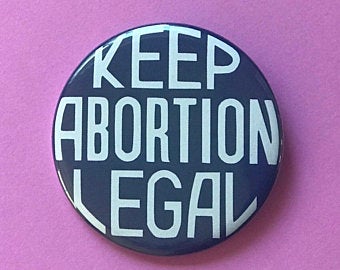
Supreme Court considers whether to reverse Roe v. Wade

Supreme Court considers whether to reverse Roe v. Wade
Posted by admin on Dec 01, 2021 in Newsworthy
Supreme Court considers whether to reverse Roe v. Wade
J. Scott Applewhite/APAn epic argument at the U.S. Supreme Court on Wednesday: At issue is whether to reverse the court's nearly half-century-old Roe v. Wade decision and subsequent decisions declaring that women have a constitutional right to terminate a pregnancy.Click the link below to listen to the arguments live beginning at 10 a.m. ET.
Until now, all the court's abortion decisions have upheld Roe's central framework — that women have a constitutional right to an abortion in the first two trimesters of pregnancy when a fetus is unable to survive outside the womb, until roughly between 22 and 24 weeks.

But Mississippi's law bans abortion after 15 weeks. A separate law enacted a year later would ban abortions after six weeks, and while the six-week ban is not at stake in this case, the state is now asking the Supreme Court to reverse all of its prior abortion decisions and to return the abortion question to the states.

This Supreme Court is more conservative

This is not the first time the court has been asked to reverse Roe. The last major challenge to abortion rights was in 1992 in a case called Planned Parenthood v. Casey. So it's worth listening to what three justices said back then in reaffirming what they called "the central holding of Roe."

Justice Sandra Day O'Connor spoke first from the bench: "Our obligation is to define liberty of all, not to mandate our own moral code."

Justice Anthony Kennedy was next: "Our cases recognize the right of the individual, married or single, to be free from unwarranted governmental intrusion into matters so fundamentally affecting a person as the decision whether to bear or beget a child."

And last was Justice David Souter: "The factual premises on which it rests are no different today from those on which the ruling rested initially ... so to overrule in the absence of the most compelling reason ... would subvert the court's legitimacy beyond any serious question."

Those justices, all appointed by Republican presidents, were centrist conservatives, but today's Supreme Court supermajority of six justices, without exception, are all dramatically more conservative, and all have records opposing abortion rights.


In this case, Mississippi contends that Roe and Casey were egregiously wrong and undemocratic rulings. State Attorney General Lynn Fitch told the Explicitly Pro-Life podcast that abortion "needs to be given back to the states. The unelected judiciary don't need to be making those decisions for us. ... We all elect our legislators ... and then you know what? They're accountable."

But lawyer Julie Rikelman of the Center for Reproductive Rights will tell the justices that's wrong.

"The very essence of a constitutional right is that it is not up to the legislatures. ... It's a right that we all have [that] the legislators cannot take away from us," she said in an interview with NPR.

Rikelman says she agrees that in the Casey decision, the court allowed states to regulate abortion to further a state's interest in life, but she adds that because abortion is a constitutional right, the one thing a state cannot do is ban a woman's right to an abortion prior to fetal viability, the point when the life of the fetus, now able to survive outside the womb, takes precedence in most instances.

Mississippi's only abortion clinic doesn't perform abortions past 16 weeks, which is earlier than clinics in most other states, but is still later than the 15-week ban. Clinic personnel say that this is "because all of the other restrictions that Mississippi has in place ... make it incredibly difficult for the clinic to provide care after that point."

How risky is it?

Mississippi says it put its 15-week ban into place, in part, because abortions are more dangerous later in pregnancy. Not so, says American Medical Association President Gerald Harmon: "We know that the risk of death during or after childbirth is substantially more than the risk of death ... from an abortion," he says.

Abortion-rights advocate Rikelman points to dramatic statistics in Mississippi, compiled by the state's Department of Health. "In Mississippi, it is 75 times more deadly for a person to carry a pregnancy to term than to have an abortion," she says.

For abortion opponents, however, there are moral issues involved. Lawyer Charles Cooper, who filed a brief siding with the state, points to "new scientific facts" about fetal development.

He cites "discoveries of when a fetus ... begins to form the physiology of a human with fingers and toes and appendages."

"It can make a sucking sound all before viability when an unborn child can begin to feel pain," he says. "These are all ... legitimate interest issues and scientific realities ... that the people of the state are perfectly entitled to take into consideration."

But those are not all scientific realities, according to a brief filed by the American Medical Association, the American College of Obstetricians and Gynecologists, other specialists in obstetrics and neonatology, and just about every major medical group in the United States. They dispute the notion of fetal pain pre-viability, asserting that the neural pathways in the brain that are required to feel pain have simply not developed before 24 weeks' gestation.

While some of Wednesday's argument may involve that question, the justices will largely focus on Roe and Casey, whether there is a constitutional right to abortion, and whether, after nearly a half-century and many decisions upholding the core of Roe, the court should reverse itself.

"There's rarely been, in American jurisprudence, a decision as widely criticized as wrong, and even egregiously wrong, as Roe v. Wade," Cooper said in an interview with NPR.

He argues that Roe is as wrong as the court's 1896 Plessy v. Ferguson decision, which upheld racial segregation — a decision that took more than a half-century to reverse. "The justices of the court take an oath to protect and defend the constitution, not their precedents," Cooper maintains.

Supreme Court justices seem to tilt toward abortion providers in Texas

What the Constitution says

The text, history and tradition of the 14th Amendment do not support any right to abortion, Cooper argues. How could it, he asks, when at the time the amendment was ratified in 1868, 30 out of 37 states banned abortion?

But Rikelman replies that the 14th Amendment is focused on "life after birth," and others have noted that its text guarantees rights to those "born or naturalized" in the United States.

She argues that under the amendment's "explicit protection for liberty," the court has protected marriage, contraception and intimate relationships, even though those words are not in the Constitution, "just as it has protected the ability to make basic decisions about our bodies for over 100 years."

"What's critical to remember," she contends, "is that the court has long said that a woman's liberty interests are unique when it comes to pregnancy. Her body and health are deeply affected by pregnancy, as is the course of her life, her ability to work, go to school and to prosper."

A brief filed by Texas Right to Life counters by declaring that "women can control their reproductive lives without access to abortion; they can do so by refraining from sexual intercourse. The only time abortion is needed to ensure women's ability to control their reproductive lives is when a pregnancy results from non-consensual behavior as in cases of rape, or when a pregnancy is endangering her life."

As Cooper sees it, if the court overturns Roe, even without explicitly saying so, the country will return to its natural order of things, as the Founders had intended.

"Issues that go to the moral, social and political values of people are decided by the people within their states," he says. "That's our system of federalism."

Rikelman, however, counters that such a decision would result "in chaos."

"If the court does overrule Roe and say that bans on abortion before viability are fair game ... about half the states in the country would be poised to either ban abortion entirely or ban it at extremely early points in pregnancy," she observes.

A decision in the case is expected by summer.

Leave a comment

Indigenous Women Rising

Indigenous Women Rising
Posted by jj on Nov 28, 2021 in Health and Safety

https://www.iwrising.org/

Women Rising is committed to honoring Native & Indigenous People’s inherent right to equitable and culturally safe health options through accessible health education, resources, and advocacy.

UNETHICAL HUMAN COALITION'S STICKY FINGERS

UNETHICAL HUMAN COALITION'S STICKY FINGERS
Posted by jj on Nov 28, 2021 in Reproductive Rights
UNETHICAL HUMAN COALITION'S STICKY FINGERS

Remember what we told you earlier about fake clinics getting tax dollars?  Well, the women from reproaction.org in North Carolina brought this to our attention.  Yet another  example of a dastardly organization grabbing all the tax dollars their repugnant law makers will dole out to them.

Welcome to the November edition of the #BadFaithMedicine Breakdown! Each month, we chronicle our recent activities to call out anti-abortion fake clinics and their efforts to push #BadFaithMedicine.

Latest Updates:

Anti-abortion fake clinic of the month? You guessed it! Human Coalition:

We’ve covered them before, but it bears more attention. As you might have heard, Human Coalition has roughly nine million dollars earmarked for them in the North Carolina state budget, which was signed into law last week. [1] That’s right, Human Coalition is getting millions to supposedly fund the statewide expansion of their “Continuum of Care” program which they claim is intended to “support childbirth as an alternative to abortion.” [2] To be abundantly clear, childbirth is NOT an alternative to abortion.

In fact, we know that having an abortion is safer than childbirth. [3, 4] North Carolina’s maternal mortality rate ranks thirty out of the fifty states, the infant mortality rate is 6.8 deaths per 1000, and both are more likely to affect birthing people and infants of color, particularly Black and Indigenous folks. [5, 6]

And rather than investing in the communities suffering because of their own inability to see beyond their pockets, bias, and power, politicians KNOWINGLY invested millions into a program that could put even more birthing people in North Carolina at risk. In fact, according to the News & Observer, "If the $9 million in the 2021-2022 House budget currently proposed for [anti-abortion fake clinics] were instead given to Family Planning Medicaid services, that money would provide actual health services to 75,000 women of reproductive age in North Carolina." [7] That’s damning.

It is clear the priorities of the North Carolina state leaders are not to the people who they claim to serve. We deserve more and we deserve better.

Don’t forget to checkout our fake clinic database to make sure you stay away from #BadFaithMedicine.

In Solidarity,

Tenaja Henson, 
reproaction@reproaction.org

Campaign Coordinator
Based in Greensboro, NC

Sources:

1. https://governor.nc.gov/news/press-releases/2021/11/18/governor-cooper-signs-budget-and-two-bills-law
2. https://www.northcarolinahealthnews.org/
3. https://www.reuters.com/article/us-abortion/abortion-safer-than-giving-birth-study-idUSTRE80M2BS20120123
4 .https://journals.lww.com
5. https://ncpolicywatch.com/2020

6.https://ncchild.org/2021

7. https://www.newsobserver.com/opinion/article253854813.html#storylink=cpy

Leave a comment

The National Indigenous Women's Resource Center

The National Indigenous Women's Resource Center
Posted by jj on Nov 28, 2021 in Rape / Assault, Domestic Violence, Elder Abuse, Child Abuse

https://niwrc.org

The National Indigenous Women’s Resource Center, Inc. (NIWRC) is a Native-led nonprofit organization dedicated to ending violence against Native women and children. The NIWRC provides national leadership in ending gender-based violence in tribal communities by lifting up the collective voices of grassroots advocates and offering culturally grounded resources, technical assistance and training, and policy development to strengthen tribal sovereignty. Our staff and board of directors consist of Native women from throughout the United States with extensive experience and commitment to ending violence against Native women and their children. NIWRC's staff bring decades of expertise in building the grassroots movement to increase tribal responses to domestic violence and increase safety for Native women.


  • 1
  • ...
  • 90
  • 91
  • 92
  • ...
  • 93
  • ...
  • 94
  • 95
  • 96
  • ...
  • 97
  • ...
  • 98
  • 99
  • 100
  • ...
  • 167

Women's Voices Media

Women's thought, women's opinions, women's facts presented in a feminist point of view. We endorse works that present in an empirical and logical style.

Search

Categories

Women's Voices Media

  • Editor Byline
  • Home Page
  • Intro
  • Newsworthy

Your Voice

  • Background
  • ERA and CEDAW
  • Economic Justice
  • Education
  • Elections
  • Environment
  • Equal Representation
  • Health and Safety
  • Intersectional Issues
  • Intersectional Issues
  • Intro
  • Judicial System
  • My Voice
  • Politics & Elections
  • Reproductive Rights
  • Social Justice
  • Tech
  • Violence

HerStory

  • Background
  • Intersectional Issues
  • Social Justice
  • Women In Education
  • Women In Politics
  • Women In Science, Technology, & Math (STEM)
  • Women In Sports
  • Women In the Arts
  • Women In the Law
  • Women Not Categorized
  • Women in Business
  • Women's Health & Reproductive Rights
  • Womens Rights

Your Multimedia

  • Art
  • Background
  • Events
  • Intersectional Issues
  • Just Interesting
  • News
  • People
  • Welcome

Women's Resource Library

  • Current News
  • Diverse / Uncategorized
  • ERA and CEDAW
    • CEDAW
    • ERA
  • Environment
    • Air / Atmospheric Polution
    • Alternate Power Sources
    • Climate Change
    • Destruction of Forests and Habitats
    • Sustainability
    • Water Resources
      • Fracking
      • Waste Disposal
  • Equal Representation
    • In Business and Corporations
    • In Education (K-20)
    • In Government
    • In Law Enforcement
    • In Sports
    • In the Justice System
    • Science, Technology, Engineering, and Math (STEM)
  • Equality and Justice
    • Ableism
    • Ageism
    • Child Care
    • Economic Equality
    • Homelessness
    • LGBTQA Discrimination
    • Poverty and Hunger
    • Racism
    • Sexism
  • Gender Studies
  • General Science
  • Girls & Young Women
  • Health and Safety
    • HIV / AIDS
    • Health Insurance
    • Maternal and Infant Care
    • Medical Research
    • Paid Sick and Parental Leave
    • Pregnancy Accommodations
    • Sex Transmitted Diseases
    • Substance Addiction and Abuse
      • Opioid Crisis
      • Physician Over-prescription
  • Herstory
  • Independant Media
  • Politics
  • Reproductive Rights
    • Abortion Rights
      • Roe v. Wade
    • Contraception
  • The Arts
  • Violence
    • Ableism
    • Child Abuse
    • Date Rape
    • Domestic Violence
    • Elder Abuse
    • Genital Mutilation
    • Gun Safety and Control
    • Harrassment
    • LGBTQA - Abuse and Assault
    • Racism
    • Rape / Assault
    • Sex Trafficking / Sex Slavery
    • Women In Prison
  • World Issues

XML Feeds

  • RSS 2.0: Posts
  • Atom: Posts
What is RSS?

Women's Voices Media
This collection 2026 by Janice Jochum
Copyright 2019 United Activision Media, LLC
This work is licensed under a Creative Commons Attribution-NonCommercial 4.0 International License.
• Contact • Help • Community CMS

Multiblog engine
Cookies are required to enable core site functionality.