HomeYour VoiceHerStoryYour MultimediaResource LibraryAbout WVMCode of ConductRegisterLog in


  • Latest Post
  • Post index
  • Archives
  • Categories
  • Latest comments
  • Contact
  • Post Something
  • 1
  • ...
  • 51
  • 52
  • 53
  • ...
  • 54
  • ...
  • 55
  • 56
  • 57
  • ...
  • 58
  • ...
  • 59
  • 60
  • 61
  • ...
  • 167

THE FAIRNESS PROJECT GETS LEFT-LEANING POLICIES PASSED IN RED STATES

THE FAIRNESS PROJECT GETS LEFT-LEANING POLICIES PASSED IN RED STATES
Posted by jj on Mar 12, 2023 in Newsworthy, Social Justice
THE FAIRNESS PROJECT GETS LEFT-LEANING POLICIES PASSED IN RED STATES

How?  You may ask.  The answer is simple – ballot measures – but the execution takes careful planning, hard work and financing.

According to Wikipedia: The Fairness Project is a United States 501(c)(4) charitable organization created in October 2015. They promote general economic and social justice throughout the US by the use of ballot measures to circumvent deadlocks in law changes by the legislative and executive branches of government. They act as a national body by supporting state organizations and campaigns with targeted funding rather than by direct campaigning. They support the gathering of signatures to meet the variable requirements to trigger ballots in states and then aid the campaigns with early financial backing, strategic advice, and various campaign tools.

The Project seeks to raise state minimum wages, both through stepped annual increases and through elimination of the tip credit exemption. It has expanded Medicaid coverage and provided funding in the most expensive ballot campaigns ever fought. Usually alongside their other campaigns, the Fairness Project has supported improving paid sick leave coverage. Following Dobbs v. Jackson Women's Health Organization, the Project has also supported legalizing abortion via statewide ballot initiatives. The Project has supported 17 proposals in total, of which 16 have passed. Concerns have arisen about the lack of transparency of non-state organizations like the Fairness Project influencing local decisions.

The following is the March 6, 2023, media release from The Fairness Project, proudly explaining who they are and what they do.

Fairness Project Featured on NPR’s ‘All Things Considered’

Washington, DC — On Friday, the Fairness Project was featured on NPR’s flagship news show, All Things Considered, which highlighted the nonpartisan nonprofit’s record of winning ballot measure campaigns on progressive issues in red and purple states. Since its founding in 2016, the Fairness Project has won over 30 ballot measure campaigns to advance economic and social justice in 17 states, including passing Medicaid expansion in seven states and raising the minimum wage in nine.

LISTEN: This group gets left-leaning policies passed in red states. How? Ballot measures

“The Fairness Project is the brainchild of a large health care workers’ union in California. It helps fund ballot measures for traditionally left-of-center issues and it provides extensive research into what messages will sway the largest number of voters. [Executive Director Kelly] Hall says, for example, to make a Trump voter feel good about expanding Medicaid coverage: ‘Folks who can separate this issue from their partisan identity are the people who get us over the finish line in these conservative states.’

“And they’ve won a lot. With the Fairness Project’s support, campaigns to raise the minimum wage and expand Medicaid have won not just in Missouri, but in nine red or purple states. Now they’re taking on abortion rights .The group also worked on a ballot measure in Michigan last year which codified access to reproductive health care, including abortion. They’re exploring more of these measures for 2024.”

Last year, the Fairness Project won eight ballot measure campaigns: defending reproductive rights in Michigan and Vermont; raising the minimum wage to $15 in Nebraska; expanding Medicaid to 40,000 low-income South Dakotans; reining in predatory medical debt collectors in Arizona; increasing civilian oversight of the Los Angeles County Sheriff; and defending direct democracy in Arkansas and South Dakota. Since 2016 the Fairness Project has won a total of 31 campaigns in 17 states across the country.

Continue reading and listening on NPR here.


IS YOUR STATE NEXT FOR THIS IMPORTANT WORK?


EDITORS NOTE:  See the Resource Library on womensvoicesmedia.org.  It provides information and help on this and many other issues, concerns, and interests by, for and about women.


Leave a comment

FIRST NATIVE AMERICAN/AFRICAN AMERICAN WOMAN PILOT

FIRST NATIVE AMERICAN/AFRICAN AMERICAN WOMAN PILOT
Posted by jj on Mar 08, 2023 in Home Page, Women Not Categorized
FIRST NATIVE AMERICAN/AFRICAN AMERICAN WOMAN PILOT

Bessie Coleman (1892-1926) soared across the sky as the first African American, and the first Native American woman pilot. Known for performing flying tricks, Coleman’s nicknames were; “Brave Bessie,” “Queen Bess,” and “The Only Race Aviatrix in the World.” Her goal was to encourage women and African Americans to reach their dreams. Unfortunately, her career ended with a tragic plane crash, but her life continues to inspire people around the world.

Born in Atlanta, Texas on January 26, 1892, Bessie Coleman had twelve brothers and sisters. Her mother, Susan Coleman, was an African American maid, and her father George Coleman was a sharecroppper of mixed Native American and African American descent. In 1901, her father decided to move back to Oklahoma to try to escape discrimination. Bessie’s mother decided not to go with him. Instead, the rest of the family stayed in Waxahachie, Texas. Bessie grew up helping her mother pick cotton and wash laundry to earn extra money. By the time she was eighteen, she saved enough money to attend the Colored Agricultural and Normal University (now Langston University) in Langston, Oklahoma. She dropped out of college after only one semester because she could not afford to attend.

At age 23, Coleman went to live with her brothers in Chicago. She went to the Burnham School of Beauty Culture in 1915 and became a manicurist in a local barbershop. Meanwhile, her brothers served in the military during World War I and came home with stories from their time in France. Her brother John teased her because French women were allowed to learn how to fly airplanes and Bessie could not. This made Bessie want to become a pilot. She applied to many flight schools across the country, but no school would take her because she was both African American and a woman. Famous African American newspaper publisher, Robert Abbott told her to move to France where she could learn how to fly. She began taking French classes at night because her application to flight schools needed to be written in French.

Finally, Coleman was accepted at the Caudron Brothers' School of Aviation in Le Crotoy, France. She received her international pilot’s license on June 15, 1921 from the Fédération Aéronautique Internationale. Coleman’s dream was to own a plane and to open her own flight school. She gave speeches and showed films of her air tricks in churches, theaters, and schools to earn money. She refused to speak anywhere that was segregated or discriminated against African Americans. In 1922, she performed the first public flight by an African American woman. She was famous for doing “loop-the-loops” and making the shape of an “8” in an airplane. People were fascinated by her performances and she became more popular both in the United States and in Europe. She toured the country giving flight lessons, performing in flight shows, and she encouraged African Americans and women to learn how to fly.

Only two years into her flight career, Coleman survived her first major airplane accident. In February of 1923, her airplane engine suddenly stopped working and she crashed. She was badly hurt in the accident and suffered a broken leg, a few cracked ribs, and cuts on her face. Thankfully, Coleman was able to fully heal from her injuries. This accident did not stop her from flying. She went back to performing dangerous air tricks in 1925. Her hard work helped her to save up enough money to purchase her own plane, a Jenny – JN-4 with an OX-5 engine. Soon she returned to her hometown in Texas to perform for a large crowd. Because Texas was still segregated, the managers planned to create two separate entrances for African Americans and white people to get into the stadium. Coleman refused to perform unless there was only one gate for everyone to use. After many meetings, the managers agreed to have one gate, but people would still have to sit in segregated sections of the stadium. She agreed to perform and became famous for standing up for her beliefs.

On April 30, 1926, Bessie Coleman took a test flight with a mechanic named William Wills. Wills was piloting the plane, as Coleman sat in the passenger seat. At about 3,000 feet in the air, a loose wrench got stuck in the engine of the aircraft. Wills was no longer able to control the steering wheel and the plane flipped over. Unfortunately, Coleman was not wearing a seatbelt. Airplanes at the time did not have a roof or any protection. Coleman immediately fell out of the open plane and died. Wills crashed the aircraft a few feet away from Coleman’s body and also died. Her death was heartbreaking for thousands of people. Famous activist Ida B. Wells-Barnett performed the funeral service to honor Coleman in Chicago. In 1931, the Challenger Pilots’ Association of Chicago started a tradition of flying over Coleman’s grave every year. By 1977, African American women pilots formed the Bessie Coleman Aviators Club. In 1995, the “Bessie Coleman Stamp” was made to remember all of her accomplishments.

By Kerri Lee Alexander, NWHM Fellow | 2018

APA: Alexander, K.L. (2018). Bessie Coleman. Retrieved from https://www.womenshistory.org/education-resources/biographies/bessie-coleman

Chicago: Alexander, Kerri Lee. "Bessie Coleman." National Women's History Museum. 2018. https://www.womenshistory.org/education-resources/biographies/bessie-coleman.

MLA: Alexander, Kerri Lee. "Bessie Coleman." National Women's History Museum. https://www.womenshistory.org/education-resources/biographies/bessie-coleman. Accessed [date]. 

Works Cited

  • "Coleman, Bessie." National Aviation Hall of Fame. 2006. Accessed September 18, 2018.
  • "Fly Girls: Bessie Coleman." PBS. 1999. Accessed September 18, 2018.
  • Onkst, David H. "Women in History: Bessie Coleman." Natural Resources Conservation Service. Accessed September 18, 2018.
  • Rudd, Thelma. "Bessie Coleman. Yesterday, Today and Tomorrow." The Official Website of Bessie Coleman. 2018. Accessed September 18, 2018.
Leave a comment

"DON"T BE LADYLIKE" said MOTHER JONES

"DON"T BE LADYLIKE" said MOTHER JONES
Posted by jj on Mar 05, 2023 in Women Not Categorized, Background, Social Justice
"DON"T  BE  LADYLIKE" said MOTHER JONES

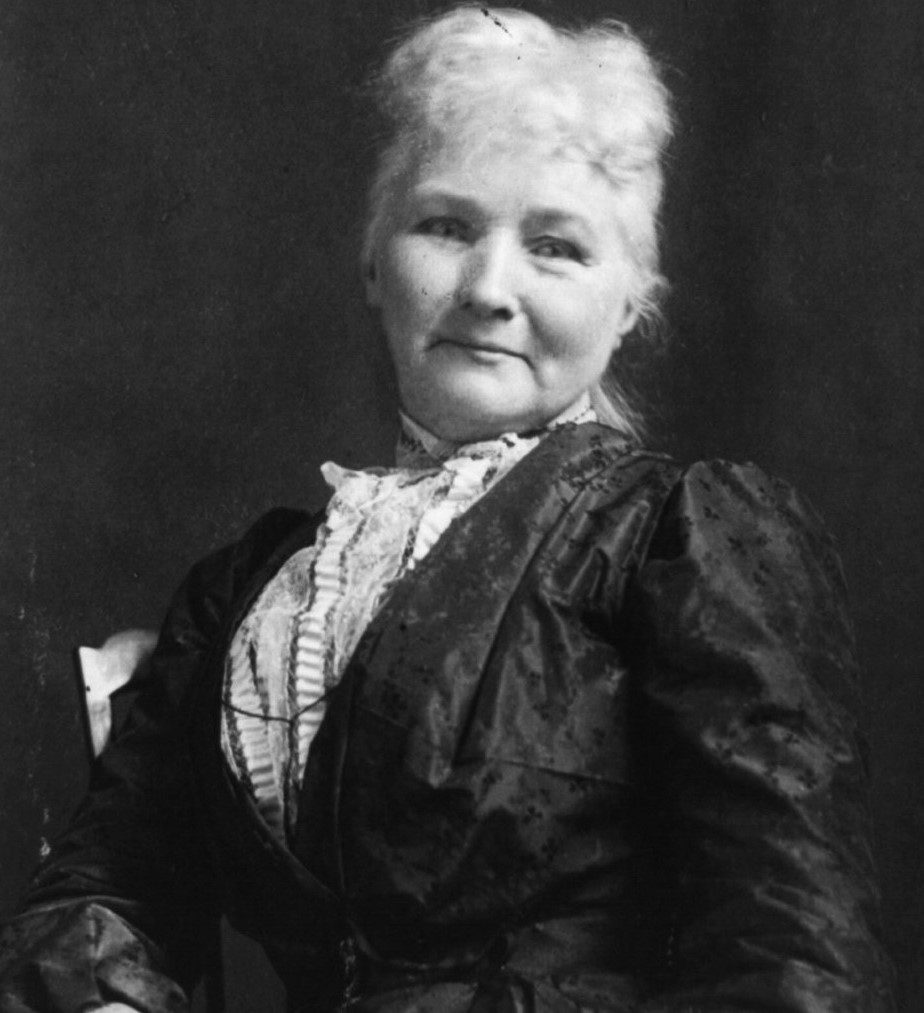
MOTHER JONES (1837 – 1930)


"Whatever the fight, don't be ladylike."These are the words of the woman Teddy Roosevelt once called "the most dangerous woman in America" - when she was 87 years old.

Mary Harris Jones, or "Mother Jones", was born May 1, 1837, to tenant farmers Richard Harris and Ellen Cotter Harris in Cork, Ireland. . Fleeing the horrors of the potato famine, her family resettled in Toronto when she was just 10 years old. She trained to be a seamstress and a teacher. Her training as a teacher led first to a position in a convent in Monroe, Michigan, then in Chicago and finally in Memphis Tennessee, where, on the eve of the Civil War, she married George E. Jones, a union foundry worker and started a family.

But in 1867, a yellow fever epidemic swept through the city, taking the lives of her husband and all four children. A widow at 30, she moved back to Chicago and built a successful dressmaking business — only to lose everything in the Great Chicago Fire of 1871. Jones then threw herself into the city's bustling labor movement, where she worked in obscurity for the next 20 years. By the turn of the century, she emerged as a charismatic speaker and one of the country's leading labor organizers, co-founding the Industrial Workers of the World (IWW).

She traveled the country to wherever there was labor struggle, sometimes evading company security by wading the riverbed into town, earning her the nickname "The Miner's Angel." She used storytelling, the Bible, humor, and even coarse language to reach a crowd. She said: "I asked a man in prison once how he happened to be there and he said he had stolen a pair of shoes. I said, if he had stolen a railroad, he would be a United States Senator." Jones also had little patience for hesitation, volunteering to lead a strike "if there were no men present."

By the age of 60 Jones had created the persona of Mother Jones. She claimed to be older than she was and began wearing outdated, black dresses. She referred to the male workers for whom she advocated as “her boys”.

A passionate critic of child labor, she organized a children's march from Philadelphia to the home of Theodore Roosevelt in Oyster Bay, New York with banners reading, "We want to go to school and not the mines!" At the age of 88, she published a first-person account of her time in the labor movement called The Autobiography of Mother Jones (1925).

She died in Silver Springs, Maryland, on November 30,1930, at the age of 93 and is buried in a miners' cemetery in Mt. Olive, Illinois.

MOTHER JONES, the magazine, was first published in 1976. It was, of course, named after Mary Harris Jones, also known as Mother Jones, the Irish-American trade union activist, socialist advocate, and avid opponent of child labor.

For more about Mother Jones go to  to  www.motherjones.com/about    You can read a more extensive biography of this remarkable woman.

Leave a comment

WOMEN'S HISTORY MONTH: "CELEBRATING WOMEN WHO TELL OUR STORIES"

WOMEN'S HISTORY MONTH: "CELEBRATING WOMEN WHO TELL OUR STORIES"
Posted by jj on Mar 04, 2023 in Women Not Categorized, Background, Womens Rights
WOMEN'S HISTORY MONTH: "CELEBRATING  WOMEN  WHO  TELL  OUR STORIES"

Top: Toni Morrison, Maxine Hong Kingston, Jovita Idar, Maya Angelou
Middle: Gerda Lerner, Gloria Steinem, Winona La Duke, Lillian Hellman
Bottom: Betty Soskin, Willa Cather, Gertrude Stein, Marjory Stoneman Douglas ​


The National Women’s History Alliance, which spearheaded the movement for MARCH being declared National Women’s History Month, has announced the women’s history theme for 2023, “Celebrating Women Who Tell Our Stories.”

Throughout 2023, the NWHA will encourage recognition of women, past and present, who have been active in all forms of media and storytelling including print, radio, TV, stage, screen, blogs, podcasts, and more. The timely theme honors women in every community who have devoted their lives and talents to producing art, pursuing truth, and reflecting the human condition decade after decade.

From the earliest storytellers through pioneering journalists, our experiences have been captured by a wide variety of artists and teachers.  These include authors, songwriters, scholars, playwrights, performers, and grandmothers throughout time. Women have long been instrumental in passing on our heritage in word and in print to communicate the lessons of those who came before us. Women’s stories, and the larger human story, expand our understanding and strengthen our connections with each other.

As in previous years, the Alliance, which is centered in Santa Rosa, California, will encourage local communities throughout the country to use the year’s theme to guide their own celebrations.  The NWHA will popularize national efforts through on-line celebrations, a special magazine and thematic products that recognize and honor these brave, accomplished and influential women who told – and continue to tell – our stories.  Today and over the years ahead, their dedication and shared desire to give voice to the voiceless are critical to keeping us informed, entertained and aware.


For more stories of remarkable women, see HERSTORY on womensvoicesmedia.org

Leave a comment

ARIANNA ROSENBLUTH CHANGED the WORLD BEFORE LEAVING SCIENCE BEHIND

ARIANNA ROSENBLUTH CHANGED the WORLD BEFORE LEAVING SCIENCE BEHIND
Posted by jj on Mar 02, 2023 in Background, Women In Science, Technology, & Math (STEM)
ARIANNA ROSENBLUTH CHANGED the WORLD BEFORE LEAVING SCIENCE BEHIND

FLASH  OF  GENIUS


  By Anastasiia Carrie


 A few years ago, Jean Rosenbluth was visiting her mother at a nursing home in Pasadena. The occasion was a holiday party, and Jean and her husband were seated with her mother and another couple. It came up in conversation that the man sharing the table was a history of science professor, specializing in physics.

“Oh, my mother was a physicist,” Jean said as she introduced her mother. “This is Arianna Rosenbluth.”

The professor was stunned. “Wait, the Arianna Rosenbluth?” Arianna smiled shyly and kept eating her lemon meringue pie.

Arianna Wright Rosenbluth, who received a master’s degree in physics from Radcliffe College in 1947, was one of five scientists who created the revolutionary Metropolis algorithm—the first practical implementation of what are now known as the Markov Chain Monte Carlo methods, go-to tools for solving large, complex mathematical and engineering problems.

Over the years, these methods have been used to simulate both quantum physics and markets, predict genetic predisposition to certain illnesses, forecast the outcomes of political conflicts, and model the spread of infectious diseases. It was Rosenbluth who found a way to get early computers to use the Markov Chain method, creating a blueprint that others followed.

“Arianna’s impact would last for a long time,” says Xihong Lin, a professor of biostatistics at the Harvard T.H. Chan School of Public Health, who used Markov Chain Monte Carlo methods to analyze a large set of COVID-19 data from Wuhan and to calculate the infectiousness of the virus. The methods have also helped specialists evaluate the effectiveness of quarantine and stay-at-home measures.

“Without Rosenbluth, I don’t think the field of Markov Chain Monte Carlo would go that far,” says Lin, referring to the role of the Radcliffe-trained scientist in enabling wide use of the tool across disciplines. “Implementation is critically important. That’s why her contribution is a landmark and really should be emphasized—should be honored.”

The paper that Rosenbluth coauthored—along with her then-husband, Marshall Rosenbluth, Edward and Augusta Teller, and Nicholas Metropolis—was published in 1953, but the algorithm’s origin story remained a mystery for five decades. In 2003, Marshall shared his memory of the achievement during a conference celebrating its 50th anniversary. The researchers developed the tool to illuminate how atoms rearranged themselves as solids melted, he said. Marshall did most of the conceptual work, and Arianna translated their idea into a computer algorithm—a task that required a fundamental understanding of physics and computer science, and also creativity.

By all accounts, Rosenbluth, who died of COVID-19 complications in December at age 93, was brilliant. She earned her PhD in physics at Harvard at 21 and in her short career worked under two physicists who went on to earn Nobel Prizes. And yet she effectively quit science in her late 20s, leaving her job at the Los Alamos Scientific Laboratory to be a stay-at-home mother. She rarely spoke about her time in the lab—although she sometimes mentioned to her children how irritating it was that her ideas were overlooked because she was a woman trying to make it in a male-dominated field. Other times, she would lovingly describe MANIAC I—the Los Alamos machine that she used for computing the Metropolis algorithm.

“She was ahead of her time,” says Pierre E. Jacob, the John L. Loeb Associate Professor of the Natural Sciences and a professor of statistics in the Harvard Faculty of Arts and Sciences, whose work involves Markov chains and probability modeling. In his syllabus, he renamed the Metropolis algorithm the Rosenbluth algorithm after reading about Arianna’s death.

“Better late than never,” he says.

Star on the Rise

Growing up in Houston, Arianna Wright was a mystery to her parents.

“Her mom and dad had this genius child, and they kind of didn’t know what to do with her,” says Mary Rosenbluth, one of Arianna’s four children. Leffie (Woods) Wright was confused by her quiet and introspective daughter, who didn’t care for fashion and rules but loved reading, especially fantasy books like L. Frank Baum’s Wizard of Oz series. Mary recalls a newspaper article among her mother’s things that described Arianna as a child genius.

“It kind of struck me,” she says. “Here’s this girl growing up in suburban Houston, and she was just so different from everybody else.”

Arianna received a full-ride scholarship to Rice Institute (now Rice University) in Houston and took a bus to her classes. She earned her bachelor’s when she was 18, with honors in physics and mathematics. During her college days, she fenced against men as well as women, winning city and state championships. She qualified for the Summer Olympics in 1944, but World War II led to the cancellation of the games. She qualified again four years later but couldn’t afford to travel to London.

At Harvard, Arianna was rejected by one potential advisor because he didn’t take female PhD students, says Alan Rosenbluth, Arianna’s oldest child and a retired physicist. That was not uncommon. “Women were discouraged every step of the way,” says Margaret W. Rossiter, a Cornell historian of women in science. But Arianna forged ahead, in 1949 becoming just the fifth woman to earn a PhD in physics from Harvard.

She accepted a postdoctoral fellowship funded by the Atomic Energy Commission to study at Stanford University, where she met Marshall at a tea party. He valued intelligence in people above all, says Mary, and Arianna was clearly very intelligent. They married in 1951 and moved to Los Alamos, the national laboratory in New Mexico that was established during World War II to develop the first atomic bomb.

Los Alamos and Family Life

At Los Alamos, Arianna became adept at using MANIAC I, a big, fragile, and hard-to-operate machine that belonged to the first generation of computers. Computational jobs at the time were considered clerical and usually held by women. Arianna stood out.

“She had an exceptional background,” says James E. Gubernatis, a retired Los Alamos physicist who has written several articles about the history of the Metropolis algorithm. “Very few people knew how to code these machines, and fewer had PhDs.”

As Arianna developed the skills to operate MANIAC I, she worked closely with scientists to translate their ideas into something a computer could execute. Her gifts were complex and rare. To make these old machines do anything useful, says Nicholas Lewis, a historian at Los Alamos, one needed to be creative. “It’s really a testament to just how smart and inventive people like Arianna Rosenbluth had to be to get useful physics out of these very primitive machines.”

In 1952, Arianna verified analytic calculations for the first full-scale test of a thermonuclear bomb—a project on which Los Alamos was concentrating much of its energy and resources. A year later, she collaborated with Marshall, the Tellers, and Metropolis on “Equation of State Calculations by Fast Computing Machines,” published in the Journal of Chemical Physics. The groundbreaking innovation at the heart of the work became known by the name of the contributor who just happened to be the first listed, says Gubernatis. The authors of the paper moved on and never used the algorithm again. Arianna became pregnant with Alan and quit her job. When an opportunity opened up for Marshall in San Diego, the couple left Los Alamos in the past.

“Here was obviously a very talented individual who didn’t really have the kind of career where that talent could be displayed,” says Gubernatis. “Unfortunately, that was the way things were at that particular time.”

Years later, when the family lived in Princeton, New Jersey, Arianna did independent research on mathematical knots. When Alan asked her if she wanted to publish her work, she said no—the thrill of solving a problem was enough. Mary remembers her mother as a voracious reader whose life of the mind extended to penetrating insights on the fiction of J. D. Salinger. “I guess we didn’t realize when we were growing up with her just how brilliant she was,” she says. “Just way above our heads.”

After her divorce from Marshall, in 1978, Arianna moved back to California, where she lived close to Jean.

“In a sense, she was a victim of the era that she was born into,” Jean says. “Women just didn’t work after they had a family. I think my mother really loved her work, and having to give it up was a big blow for her. As much as she loved her family, I think she really missed her work. I think as a result, none of us children were that close to her growing up, simply because she was not the world’s happiest person at that time.”

Still, Arianna seemed content in her later years. She read, traveled, and enjoyed birdwatching. When her health started to decline, she moved to assisted living. The letters and diaries Jean found while packing up her mother’s house went into the trash, as Arianna had instructed.  "Some people would probably kill me, but that’s what she wanted.”  She also found notebooks filled with math problems and computer codes from the independent research Arianna had done over the years. Some of those Jean kept.

Anastasiia Carrier is a New York–based freelance journalist and a recent graduate from the Columbia University Graduate School of Journalism.

 Published in Harvard’s Radcliffe Magazine, May, 20, 2021

For more stories of remarkable women, see HERSTORY on womensvoicesmedia.org

Leave a comment
  • 1
  • ...
  • 51
  • 52
  • 53
  • ...
  • 54
  • ...
  • 55
  • 56
  • 57
  • ...
  • 58
  • ...
  • 59
  • 60
  • 61
  • ...
  • 167

Women's Voices Media

Women's thought, women's opinions, women's facts presented in a feminist point of view. We endorse works that present in an empirical and logical style.

Search

Categories

Women's Voices Media

  • Editor Byline
  • Home Page
  • Intro
  • Newsworthy

Your Voice

  • Background
  • ERA and CEDAW
  • Economic Justice
  • Education
  • Elections
  • Environment
  • Equal Representation
  • Health and Safety
  • Intersectional Issues
  • Intersectional Issues
  • Intro
  • Judicial System
  • My Voice
  • Politics & Elections
  • Reproductive Rights
  • Social Justice
  • Tech
  • Violence

HerStory

  • Background
  • Intersectional Issues
  • Social Justice
  • Women In Education
  • Women In Politics
  • Women In Science, Technology, & Math (STEM)
  • Women In Sports
  • Women In the Arts
  • Women In the Law
  • Women Not Categorized
  • Women in Business
  • Women's Health & Reproductive Rights
  • Womens Rights

Your Multimedia

  • Art
  • Background
  • Events
  • Intersectional Issues
  • Just Interesting
  • News
  • People
  • Welcome

Women's Resource Library

  • Current News
  • Diverse / Uncategorized
  • ERA and CEDAW
    • CEDAW
    • ERA
  • Environment
    • Air / Atmospheric Polution
    • Alternate Power Sources
    • Climate Change
    • Destruction of Forests and Habitats
    • Sustainability
    • Water Resources
      • Fracking
      • Waste Disposal
  • Equal Representation
    • In Business and Corporations
    • In Education (K-20)
    • In Government
    • In Law Enforcement
    • In Sports
    • In the Justice System
    • Science, Technology, Engineering, and Math (STEM)
  • Equality and Justice
    • Ableism
    • Ageism
    • Child Care
    • Economic Equality
    • Homelessness
    • LGBTQA Discrimination
    • Poverty and Hunger
    • Racism
    • Sexism
  • Gender Studies
  • General Science
  • Girls & Young Women
  • Health and Safety
    • HIV / AIDS
    • Health Insurance
    • Maternal and Infant Care
    • Medical Research
    • Paid Sick and Parental Leave
    • Pregnancy Accommodations
    • Sex Transmitted Diseases
    • Substance Addiction and Abuse
      • Opioid Crisis
      • Physician Over-prescription
  • Herstory
  • Independant Media
  • Politics
  • Reproductive Rights
    • Abortion Rights
      • Roe v. Wade
    • Contraception
  • The Arts
  • Violence
    • Ableism
    • Child Abuse
    • Date Rape
    • Domestic Violence
    • Elder Abuse
    • Genital Mutilation
    • Gun Safety and Control
    • Harrassment
    • LGBTQA - Abuse and Assault
    • Racism
    • Rape / Assault
    • Sex Trafficking / Sex Slavery
    • Women In Prison
  • World Issues

XML Feeds

  • RSS 2.0: Posts
  • Atom: Posts
What is RSS?

Women's Voices Media
This collection 2026 by Janice Jochum
Copyright 2019 United Activision Media, LLC
This work is licensed under a Creative Commons Attribution-NonCommercial 4.0 International License.
• Contact • Help • Multiple blogs solution

CMS + user community
Cookies are required to enable core site functionality.