HomeYour VoiceHerStoryYour MultimediaResource LibraryAbout WVMCode of ConductRegisterLog in


  • Latest Post
  • Post index
  • Archives
  • Categories
  • Latest comments
  • Contact
  • Post Something
  • 1
  • ...
  • 148
  • 149
  • 150
  • ...
  • 151
  • ...
  • 152
  • 153
  • 154
  • ...
  • 155
  • ...
  • 156
  • 157
  • 158
  • ...
  • 167

Empowering Women through Abortion Access (or How to set up an abortion fund)

Empowering Women through Abortion Access (or How to set up an abortion fund)
Posted by jj on Oct 25, 2019 in Editor Byline, Reproductive Rights
Empowering Women through Abortion Access (or How to set up an abortion fund)

Tampa Bay Abortion Fund Board of Directors

Three total strangers met in 2017, aghast at the state of civil rights in this country.  

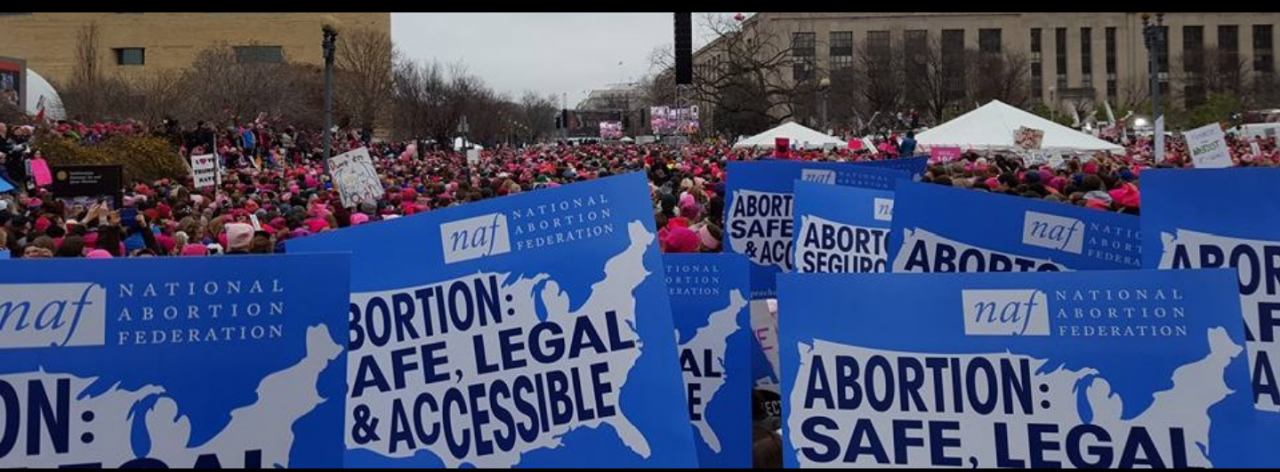
We shared some commonalities - we grew up fighting for civil rights. We marched for equal pay, abortion access, LGBTQ rights, and gender equity in the 1970s, 80’s, 90s, 00s, and, yes, in 2017 after the inauguration of 45.

Nothing much had changed since we started advocating in the 1970s: out of our circle of high school friends, about one in four had an abortion; women earned 64 cents for every dollar a man earned; workplace harassment was commonplace.

Fast forward to our meeting in 2017: white women were making around 80 cents per every dollar a man made (women of color weren’t even close); the me-too movement was around the corner; and our daughters, nieces, and neighbors rights to choose were in even greater peril than ours were in the 70s, despite technology making the procedure safer than removing a wisdom tooth.

So, how did we three go from being civil rights advocates to becoming abortion funders?

We realized after decades of marching, signing petitions, and calling our congress people on the issues we cared about that we needed a new approach. We wanted to have a direct impact on the vulnerable women and girls in our neighborhood. To empower them. To support them.

We decided to directly fund abortions.

We started with writing checks to our neighborhood abortion clinic with donations of $5 to $20 received from our like-minded family, friends and neighbors. In two months, we had raised $1,000 – enough to help a handful of women who could not afford their procedure.

We established a relationship with the women who run the clinic so that they would call when a homeless woman, a battered woman, or a woman with insufficient funds came across their door. No questions asked, no need to know details, we just wrote a check.

Within a couple of months, the administration at the local domestic violence shelters had our phone number. A few months later, our name was on the street and calls started coming in directly from women in need.

Thanks to our small network, we never had to say no to a request. One time we came close – we were down to $495 in our fund and a request for a procedure came in for $675. We were less than $200 short – but that was enough to delay the woman’s procedure.  We started the drive to the clinic – just four miles away - after putting the word out on our Reproductive Health Facebook page that we were short. By the time we arrived at the clinic, we had pledges for the entire amount.

As more women found us, we realized we had to diversify our funding. Dipping into the same pockets of friends, family and neighbors could only get us so far, no matter how much they supported us and a woman’s right to choose. We began presenting our mission at local Rotary meetings, NOW meetings, to like-minded corporate donors and family foundations. We lucked out in finding a passionate volunteer event planner who created some amazing fundraisers

We found a whole new network.

 In one year, we tripled in size.

We three strangers went from helping a handful of women in our neighborhood to funding abortions in three counties, at seven independent clinics and with the support of hundreds in our community – all in less than two years.

If we can do it, so can you.

For more information on the Tampa Bay Abortion Fund’s journey, contact our volunteer media coordinator, Lily Wright, at tampabayabortionfund@gmail.com, 727.314.3956 and follow us on Facebook.com/TBAFund/

Addendum A        2019:

1.  One in four women in the US will or have had an abortion.

2.  77% of people in the US support a woman’s right to choose.

3.  Women most adversely affected by abortion restrictions are
      low income and/or women of color.

4.  60% of abortions are conducted by independent clinics.

Addendum B   Who do we help?

"I'm a single mother of two - a 3-year-old and at the time an 8-month-old. I found out I was pregnant in the beginning of January and felt like I was in an impossible situation. My hands are completely full. I'm mentally, physically and emotionally drained and barely making ends meet. I was faced with making the most difficult decision of my life, a position I never in a million years I thought I would be in, especially since I thought we were being careful. TBAF helped me at my most vulnerable time. When no one else could help me, they did. I will be forever grateful to them and their services." 

Sincerely, CG 2019

Addendum C

Don’t think you can start a fund? So, what CAN you do?

Work with your local clinic/shelter to:

1. Offer transport to a woman day of their procedure.

2. Offer childcare to a women day of their procedure.

3. Collect heating pads, Midol and menstrual pads to give to women post       procedure.

4. Volunteer as an escort at your local clinic.Find your nearest fund and,          well, fund them.   

Leave a comment

The More Things Change!

The More Things Change!
Posted by admin on Oct 21, 2019 in News
The More Things Change!

### The more they stay the same.

Leave a comment

VAWA – Hard Facts Demand Action

VAWA – Hard Facts Demand Action
Posted by 2ndnature on Oct 17, 2019 in Home Page
VAWA – Hard Facts Demand Action

Take the time to read them.  Given the magnitude of the problem, one or more of these statistics probably applies to you.  Even if not, you can recognize the pain and suffering these facts represent.  If you are a victim/survivor, the scars are probably still there.

But the point right now is the legislation we desperately need.  Too many of our legislators either don’t see the need and/or don’t care enough to do anything about it.

Here are the statistics:

  • In the United States, an average of 20 people experience intimate partner physical violence every minute. This equates to more than 10 million abuse victims annually.
  • 1 in 4 women and 1 in 9 men experience severe intimate partner physical violence, intimate partner contact sexual violence, and/or intimate partner stalking with impacts such as injury, fearfulness, post-traumatic stress disorder, use of victim services, contraction of sexually transmitted diseases, etc.2 This is commonly considered “domestic violence”.
  • 1 in 3 women and 1 in 4 men have experienced some form of physical violence by an intimate partner. This includes a range of behaviors and in some cases might not be considered “domestic violence”.
  • 1 in 7 women and 1 in 25 men have been injured by an intimate partner.
  • 1 in 10 women have been raped by an intimate partner. Data is unavailable on male victims.
  • 1 in 7 women and 1 in 18 men have been stalked. Stalking causes the target to fear she/he/they or  someone close to her/him/them will be harmed or killed.
  • On a typical day, domestic violence hotlines nationwide receive over 20,000 calls.
  • An abuser’s access to a firearm increases the risk of intimate partner femicide by 400%.
  • Intimate partner violence accounts for 15% of all violent crime.
  • Intimate partner violence is most common against women between the ages of 18-24.
  • 19% of intimate partner violence involves a weapon.
  • 1 in 7 women and 1 in 25 men have been injured by an intimate partner.
  • 1 in 10 women have been raped by an intimate partner. Data is unavailable on male victims.
  • 1 in 5 women and 1 in 59 men in the United States is raped during his/her lifetime.
  • 9.4% of women in the United States experience intimate partner sexual assault in their lifetimes.
  • 19.3 million women and 5.1 million men in the United States have been stalked.
  • 66.2% of female stalking victims reported stalking by a current or former intimate partner.
  • 1 in 3 female murder victims and 1 in 20 male murder victims are killed by intimate partners. A study of intimate partner homicides found
  • 20% of victims were family members or friends of the abused partner, neighbors, persons who intervened, law enforcement responders, or bystanders.
  • 72% of all murder-suicides are perpetrated by intimate partners.
  • 94% of murder-suicide victims are female.
  • Victims of intimate partner violence are at increased risk of contracting HIV or other STI’s due to forced intercourse and/or prolonged exposure to stress.
  • Intimate partner victimization is correlated with a higher rate of depression and suicidal behavior.
  • Only 34% of people who are injured by intimate partners receive medical care for their injuries.
  • Victims of intimate partner violence lose a total of 8,000,000 million days of paid work each year, the equivalent of 32,000 full-time jobs.
  • Intimate partner violence is estimated to cost the US economy between $5.8 billion and $12.6 billion annually, up to 0.125% of the national gross domestic product.
  • Between 21-60% of victims of intimate partner violence lose their jobs due to reasons stemming from the abuse.
  • Between 2003 and 2008, 142 women were murdered in their workplace by former or current intimate partners. This amounts to 22% of workplace homicides among women.

It took nearly four years to draft and pass but the first Violence Against Women Act, co-authored by Sen. Joe Biden and Rep Louise Slaughter, became law in 1994.  It was the first comprehensive national legislation to deal with violence against women including domestic abuse and sexual assault.  It had widespread bipartisan support and has been reauthorized roughly every five years since.

That is until now.

With bipartisan support the House passed an updated bill in early April of this year.  Sponsored by Rep. Karen Bass (D-CA) and Rep. Brian Fitzpatrick (R-PA), the only Republican sponsor, this updated version expands several tenets of the older bill. It provides additional financial aid for women who have experienced domestic violence to stay in their homes and it increases punishment for cyberbullying.  But it also includes one that the NRA doesn’t like and because of which they tried to block passage in the House.  The bill bans all intimate partners who have been convicted for abuse and stalking from purchasing a firearm.  The NRA failed.

The Republican-controlled Senate has failed to act on the House version.  They have a problem with that part of the House bill the NRA objects to.  So Sen. Diane Feinstein (D-CA) and Sen. Joni Ernst are working on a bipartisan version of the reauthorization.  It is not known if any of the House updates to the legislation will be included.

Given the cold, hard statistics listed above, is there any doubt the provision  banning gun purchases should be included in the bill?  How much more violence are we going to allow in this country?  Apparently the NRA and its’ supporters/protectors think a gun is more important than the life of a woman or child.

It’s time to inundate your Senators with calls, letters and emails: pass the House reauthorization of VAWA.

Statistics from NCADV (National Coalition Against Domestic Violence)
www.ncadv.org      Hotline 1-800-799-SAFE(7233)  or  www.TheHotline.org

  1. Black, M.C., Basile, K.C., Breiding, M.J., Smith, S.G., Walters, M.L., Merrick, M.T., Chen, J. & Stevens, M. (2011). The national intimate partner and sexual violence survey: 2010 summary report. Retrieved from http://www.cdc.gov/violenceprevention/pdf/nisvs_report2010-a.pdf.
  2. National Center for Injury Prevention and Control, Centers for Disease Control and Prevention (n.d.). Infographic based on data from the national intimate partner and sexual violence survey (nisvs): 2010-2012 state report. https://www.cdc.gov/violenceprevention/pdf/NISVS-infographic-2016.pdf
  3. Black, M.C., Basile, K.C., Breiding, M.J., Smith, S.G., Walters, M.L., Merrick, M.T., Chen, J. & Stevens, M. (2011). The national intimate partner and sexual violence survey: 2010 summary report. Retrieved from http://www.cdc.gov/violenceprevention/pdf/nisvs_report2010-a.pdf.
  4. Ibid.
  5. Ibid.
  6. Ibid.
  7. National Network to End Domestic Violence (2017). Domestic violence counts national summary. Retrieved from https://nnedv.org/mdocs-posts/census_2016_handout_national-summary/.
  8. Campbell, J.C., Webster, D., Koziol-McLain, J., Block, C., Campbell, D., Curry, M. A., Gary, F., Glass, N., McFarlane, J., Sachs, C., Sharps, P., Ulrich, Y., Wilt, S., Manganello, J., Xu, X., Schollenberger, J., Frye, V. & Lauphon, K. (2003). Risk factors for femicide in abusive relationships: Results from a multisite case control study. American Journal of Public Health, 93(7), 1089-1097.
  9. Truman, J. L. & Morgan, R. E. (2014). Nonfatal domestic violence, 2003-2012. Retrieved from http://www.bjs.gov/content/pub/pdf/ndv0312.pdf.
  10. Ibid.
  11. Ibid.
  12. Black, M.C., Basile, K.C., Breiding, M.J., Smith, S.G., Walters, M.L., Merrick, M.T., Chen, J. & Stevens, M. (2011). The national intimate partner and sexual violence
  13. Bridges, F.S., Tatum, K. M., & Kunselman, J.C. (2008). Domestic violence statutes and rates of intimate partner and family homicide: A research note. Criminal Justice Policy Review, 19(1), 117-130.
  14. Smith, S., Fowler, K. & Niolon, P. (2014). Intimate partner homicide and corollary victims in 16 states: National violent death reporting system, 2003-2009. American Journal of Public Health, 104(3), 461-466. doi: 10.2105/AJPH.2013.301582.
  15. Violence Policy Center. (2012). American roulette: Murder-suicide in the United States. Retrieved from www.vpc.org/studies/amroul2012.pdf.
  16. Ibid.
  17. World Health Organization (2013). Global and regional estimates of violence against women: Prevalence and health effects of intimate partner violence and non-partner sexual violence. Retrieved from http://apps.who.int/iris/bitstream/10665/85239/1/9789241564625_eng.pdf?ua=1.
  18. Ibid.
  19. Truman, J. L. & Morgan, R. E. (2014). Nonfatal domestic violence, 2003-2012. Retrieved from http://www.bjs.gov/content/pub/pdf/ndv0312.pdf.
  20. Rothman, E., Hathaway, J., Stidsen, A. & de Vries, H. (2007). How employment helps female victims of intimate partner abuse: A qualitative study. Journal of Occupational Health Psychology, 12(2), 136-143. doi: 10.1037/1076-8998.12.2.136.
  21. World Health Organization (2004). The economic dimensions of intimate partner violence. Retrieved from http://apps.who.int/iris/bitstream/10665/42944/1/9241591609.pdf.
  22. Ibid.
  23. Finkelhor, D., Turner, H., Ormrod, R. & Hamby, S. (2011). Children’s exposure to intimate partner violence and other family violence.
Leave a comment

The National Network of Abortion Funds

The National Network of Abortion Funds
Posted by admin on Oct 16, 2019 in Reproductive Rights, Abortion Rights, Roe v. Wade, Contraception

https://abortionfunds.org/need-abortion/#funds
The National Network of Abortion Funds builds power with members to remove financial and logistical barriers to abortion access by centering people who have abortions and organizing at the intersections of racial, economic, and reproductive justice.

Tampa Bay Abortion Fund

Tampa Bay Abortion Fund
Posted by admin on Oct 16, 2019 in Reproductive Rights

https://www.facebook.com/TBAFund/?ref=nf

TBAF has been working with Tampa Bay area reproductive healthcare clinics since April 2018. We believe every person deserves the right to reproductive choice, regardless of their financial means. TBAF is an all volunteer charity and relies solely on donations from the community to fund the program.
We provide:
Financial assistance for procedures
Childcare during treatment
Transportation for treatment
Contraception
  • 1
  • ...
  • 148
  • 149
  • 150
  • ...
  • 151
  • ...
  • 152
  • 153
  • 154
  • ...
  • 155
  • ...
  • 156
  • 157
  • 158
  • ...
  • 167

Women's Voices Media

Women's thought, women's opinions, women's facts presented in a feminist point of view. We endorse works that present in an empirical and logical style.

Search

Categories

Women's Voices Media

  • Editor Byline
  • Home Page
  • Intro
  • Newsworthy

Your Voice

  • Background
  • ERA and CEDAW
  • Economic Justice
  • Education
  • Elections
  • Environment
  • Equal Representation
  • Health and Safety
  • Intersectional Issues
  • Intersectional Issues
  • Intro
  • Judicial System
  • My Voice
  • Politics & Elections
  • Reproductive Rights
  • Social Justice
  • Tech
  • Violence

HerStory

  • Background
  • Intersectional Issues
  • Social Justice
  • Women In Education
  • Women In Politics
  • Women In Science, Technology, & Math (STEM)
  • Women In Sports
  • Women In the Arts
  • Women In the Law
  • Women Not Categorized
  • Women in Business
  • Women's Health & Reproductive Rights
  • Womens Rights

Your Multimedia

  • Art
  • Background
  • Events
  • Intersectional Issues
  • Just Interesting
  • News
  • People
  • Welcome

Women's Resource Library

  • Current News
  • Diverse / Uncategorized
  • ERA and CEDAW
    • CEDAW
    • ERA
  • Environment
    • Air / Atmospheric Polution
    • Alternate Power Sources
    • Climate Change
    • Destruction of Forests and Habitats
    • Sustainability
    • Water Resources
      • Fracking
      • Waste Disposal
  • Equal Representation
    • In Business and Corporations
    • In Education (K-20)
    • In Government
    • In Law Enforcement
    • In Sports
    • In the Justice System
    • Science, Technology, Engineering, and Math (STEM)
  • Equality and Justice
    • Ableism
    • Ageism
    • Child Care
    • Economic Equality
    • Homelessness
    • LGBTQA Discrimination
    • Poverty and Hunger
    • Racism
    • Sexism
  • Gender Studies
  • General Science
  • Girls & Young Women
  • Health and Safety
    • HIV / AIDS
    • Health Insurance
    • Maternal and Infant Care
    • Medical Research
    • Paid Sick and Parental Leave
    • Pregnancy Accommodations
    • Sex Transmitted Diseases
    • Substance Addiction and Abuse
      • Opioid Crisis
      • Physician Over-prescription
  • Herstory
  • Independant Media
  • Politics
  • Reproductive Rights
    • Abortion Rights
      • Roe v. Wade
    • Contraception
  • The Arts
  • Violence
    • Ableism
    • Child Abuse
    • Date Rape
    • Domestic Violence
    • Elder Abuse
    • Genital Mutilation
    • Gun Safety and Control
    • Harrassment
    • LGBTQA - Abuse and Assault
    • Racism
    • Rape / Assault
    • Sex Trafficking / Sex Slavery
    • Women In Prison
  • World Issues

XML Feeds

  • RSS 2.0: Posts
  • Atom: Posts
What is RSS?

Women's Voices Media
This collection 2026 by Janice Jochum
Copyright 2019 United Activision Media, LLC
This work is licensed under a Creative Commons Attribution-NonCommercial 4.0 International License.
• Contact • Help • Blog software

Open Source CMS
Cookies are required to enable core site functionality.