HomeYour VoiceHerStoryYour MultimediaResource LibraryAbout WVMCode of ConductRegisterLog in


  • Latest Post
  • Post index
  • Archives
  • Categories
  • Latest comments
  • Contact
  • Post Something
  • 1
  • ...
  • 146
  • 147
  • 148
  • ...
  • 149
  • ...
  • 150
  • 151
  • 152
  • ...
  • 153
  • ...
  • 154
  • 155
  • 156
  • ...
  • 167

TRADING POST OWNER, INTERPRETER, MEDIATOR

TRADING POST OWNER, INTERPRETER, MEDIATOR
Posted by jj on Dec 17, 2019 in Home Page, Women Not Categorized
TRADING POST OWNER, INTERPRETER, MEDIATOR

Mary Musgrove  (1700? - 1763?)

As the daughter of an English trader and a Native American woman, Mary Musgrove was able to understand many cultures. Her mixed heritage and language skills allowed her to become a negotiator between English and Native American communities. She is most commonly known for playing an important role in the development of Colonial Georgia. She is also known for her business knowledge as a trader and interpreter.

Mary Musgrove was born around 1700 in Coweta, Creek Nation. She was given the name Coosaponakeesa at birth by her Native American mother. Her mother was related to many of the prominent leaders in the community. Her brother was the chief of Coweta. Musgrove grew up learning to speak the Creek language of Muskogee and the cultural traditions of Creek Natives. Musgrove also spent much of her childhood in South Carolina. Her father, Edward Griffin, took her and her younger brother to a small town in South Carolina called Pon Pon when she was about seven years old. In Pon Pon, Musgrove learned English and changed her name to Mary. In 1717, Mary got married to an English trader named John Musgrove. They had three children, but all died very young. Mary and John Musgrove set up a trading post near the Savannah River shortly after they were married where Mary served as a skilled interpreter. Her business caught the attention of General James Oglethorpe, one of Georgia’s charter members. General Oglethorpe hired Musgrove as his primary interpreter. She worked for him from 1733 to 1743. Two years into her work with General Oglethorpe, Mary’s husband John Musgrove died.

At the time of her husband’s death, John Musgrove owned their land in South Carolina. He also owned 500 acres in Georgia that included their trading post, house, and cow pen on Yamacraw Bluff. Due to Georgia laws, Mary was only permitted to hold the land until her oldest son could take over the land as owner. However, all of her sons died. Historian Michael D. Green concludes that Musgrove married her second husband, Jacob Matthews, in 1737 because she was in danger of losing her property. Matthews was one of her indentured servants and was many years younger than she was. Musgrove was then allowed to keep her property. The new couple started another trading post in Mount Venture on the Altamaha River. Musgrove continued to work as an interpreter for General Oglethorpe. She helped maintain peaceful and fair trade relations between the new Georgia Colony and the Creek Nation. During her time in Yamacraw Bluff, she successfully negotiated relations between the Yamacraw Chief, Tomochichi, and the Savannah settlers. Unfortunately, Musgrove’s second husband Matthews died in 1742.

Two years later, Musgrove married Christian missionary Reverend Thomas Bosomworth. This marriage came with a rise in social class. Musgrove and Reverend Bosomworth opened a second trading post on the Altamaha River in 1746. They continued to serve as cultural mediators. Musgrove and her husband traveled to Native American communities with messages from General Oglethorpe and the English King and they would return with the speeches and concerns of the Native American communities. Sometimes, they taught Christian missionaries the Muskogee language to help with their interactions. However, Musgrove and Reverend Bosomworth faced a problem when the Lower Creek Chief Malatchi gave them three islands. These three islands, Ossabaw, Sapelo, and St. Catherines, were known as the “Sea Islands" that belonged to the Creeks. British officials refused to honor Musgrove’s claim to the land. They stated that a nation can only grant land to another nation, not to an individual. Musgrove fought this decision. In 1749, over 200 Creek people went with her to Savanah to petition Georgia officials. When they refused her claim, she went to England to plead her case before the Board of Trade. The Board referred her case back to the Georgia courts. When she arrived back home, Georgia had taken control of her land. Decades later, royal governor Henry Ellis compromised. He granted Musgrove St. Catherines Island and £2,100, when she released her claims to the other two islands. Musgrove continued to serve as a mediator between Georgia and Creek nation until her death on St. Catherines Island around 1763.

By Kerri Lee Alexander, NWHM Fellow | 2018-2019

MLA - Alexander, Kerri Lee.  "Mary Musgrove." National Women's History Museum.  National Women's History Museum, 2019.  Date accessed.

Chicago - Alexander, Kerri Lee.  "Mary Musgrove."  National Women's History Museum.  2019.  www.womenshistory.org/education-resources/biographies/mary-musgrove.

Works Cited
  • Baine, Rodney M. "Myths of Mary Musgrove." The Georgia Historical Quarterly 76, no. 2 (1992): 428-35. http://www.jstor.org/stable/40582545.
  • Frank, Andrew K. "Mary Musgrove (ca. 1700-ca. 1763)." New Georgia Encyclopedia. September 8, 2018. https://www.georgiaencyclopedia.org/articles/history-archaeology/mary-musgrove-ca-1700-ca-1763.
  • Georgia Historical Society. "Mary Musgrove." Accessed January 15, 2019. https://georgiahistory.com/education-outreach/online-exhibits/featured-historical-figures/mary-musgrove/.
  • Perdue, Theda, ed. Sifters: Native American Women’s Lives. Oxford: Oxford University Press, 2001.
  • Photograph:

    Mary Musgrove (ca. 1700 – ca. 1763). GHS Print Collection Georgia Historical Society - https://georgiahistory.com/wp-content/uploads/2013/04/mary-musgrove.jpg


Leave a comment

Mary Church Terrell (1863-1954)

Mary Church Terrell (1863-1954)
Posted by jj on Dec 16, 2019 in Womens Rights
Mary Church Terrell (1863-1954)

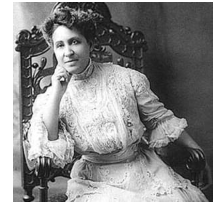
Mary Church Terrell was born Mary Eliza Church on September 23, 1863, in Memphis, Tennessee. Her parents, Robert Reed Church and Louisa Ayers, were both former slaves who became small business owners and a vital part of Memphis’ growing black population. Her father became one of the South’s first African-American millionaires; her mother owned a beauty salon.
Terrell and her brother were taught the values of a good education, hard work and ambition. Using the lessons learned, she went on to Oberlin College, becoming one of the first African-American women to earn a college degree, and then to earn her master’s degree in education.
She taught for two years at Wilburforce College before moving to Washington, DC, to teach at the M Street Colored High School in 1887. It was there that she met Robert Heberton Terrell. They were married in 1891. The Terrells had one daughter and adopted another.
In 1892, when her friend, Thomas Moss, was lynched by whites in Memphis because his business competed with theirs, Terrell joined Ida B. Wells-Barnett in anti-lynching campaigns. She also became involved in the suffrage movement because she understood she belonged “to the only group in the country that has two huge obstacles to surmount…both sex and race.
She actively campaigned for women’s suffrage and for black women’s suffrage. She both spoke and wrote tirelessly to black organizations and mainstream white organizations about suffrage and civil rights. She even picketed the White House with members of the National Woman’s Party.
Among her accomplishments were:
• Co-founder of the National Association of Colored Women (NACW).
• President of NACW from 1896 to 1901.
• A founder and charter member of the National Association for the Advancement of Colored People.
• Co-founder of the College Alumnae Club (later renamed the National Association of University Women).
• Author of her autobiography, “A Colored Woman In A White World”.
• The first African-American woman ever appointed to a school board.
• Served on a committee that investigated police mistreatment of African-Americans.
When, at 86, Terrell was refused service at the John R. Thompson restaurant in Washington, DC, she challenged segregation in public places. In 1953 the Supreme Court ruled that segregation in eating facilities was unconstitutional. She was victorious!
Terrell died in 1954 in Highland Beach, Maryland. She left a remarkable legacy of service to women, both black and white, and to African-Americans.
**

Leave a comment

WHAT IS THE NATIONAL POPULAR VOTE ? (NPV)

WHAT IS THE NATIONAL POPULAR VOTE ? (NPV)
Posted by jj on Dec 06, 2019 in Editor Byline
WHAT IS THE NATIONAL POPULAR VOTE ?   (NPV)

The National Popular Vote (NPV) plan guarantees election of the presidential candidate who receives the most popular votes in all 50 states and the District of Columbia. The NPV plan is a state statute in the form of an interstate compact. It creates an agreement among states to award all of their electoral votes collectively to the presidential candidate who wins the national popular vote. This agreement takes effect only once the participating states together hold a majority of electoral votes (270 of 538)--guaranteeing that the winner of the national popular vote will win an Electoral College majority.

Passing NPV will guarantee election of the national popular vote winner once the compact has been joined by enough states to make it decisive for determining the outcome of future elections. Until that point, a state’s current rules apply.

State legislators have introduced NPV legislation in all 50 states and the District of Columbia. NPV legislation has now been enacted by 11 jurisdictions possessing 165 electoral votes, or 61% of the 270 electoral votes needed to activate the compact. 

Why is this so important?

Take a look at the following excerpt from the website www.nationalpopularvote.com.

The National Popular Vote Interstate Compact will guarantee the Presidency to the candidate who receives the most popular votes across all 50 states and the District of Columbia. The Compact ensures that every vote, in every state, will matter in every presidential election. The Compact is a state-based approach that preserves the Electoral College, state control of elections, and the power of the states to control how the President is elected.

The National Popular Vote bill has been enacted by 16 jurisdictions possessing 196 electoral votes, including 4 small states (DE, HI, RI, VT), 8 medium-sized states (CO, CT, MD, MA, NJ, NM, OR, WA), 3 big states (CA, IL, NY), and the District of Columbia. The bill will take effect when enacted by states with 74 more electoral votes.  The bill has passed at least one chamber in 8 additional states with 75 more electoral votes (AR, AZ, ME, MI, MN, NC, NV, OK).  A total of 3,408 state legislators from all 50 states have endorsed it.

The shortcomings of the current system of electing the President stem from “winner-take-all” laws that have been enacted by state legislatures in 48 states. These laws award all of a state’s electoral votes to the candidate receiving the most popular votes in each state.

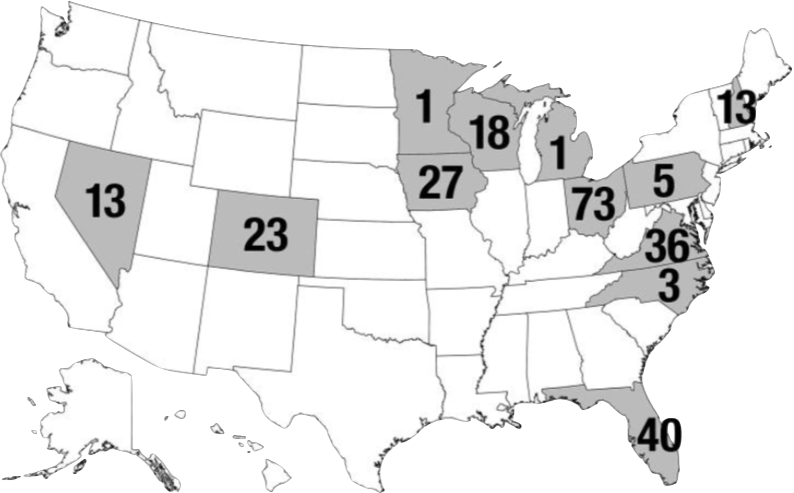
Because of these state winner-take-all statutes, presidential candidates have no reason to pay attention to the issues of concern to voters in states where the statewide outcome is a foregone conclusion. In 2012, as shown on the map, all of the  253 general-election campaign events were in just 12 states, and two-thirds were in just 4 states (Ohio, Florida, Virginia, and Iowa). Thirty-eight states were completely ignored.

Campaign Events in 2012


Leave a comment

Yo-Yo Ma, Alison Krauss - The Wexford Carol (Video)

Yo-Yo Ma, Alison Krauss - The Wexford Carol (Video)
Posted by admin on Dec 05, 2019 in Art

Song: The Wexford Carol
Artist: Yo-Yo Ma; Alison Krauss; Natalie MacMaster
Album: Songs of Joy & Peace
Licensed to YouTube by: SME (on behalf of Sony Classical); Rumblefish (Publishing), CMRRA, and 5 Music Rights Societies


Leave a comment

WMC-Live: A Conversation with Valerie Plame

WMC-Live: A Conversation with Valerie Plame
Posted by admin on Nov 11, 2019 in People

A former career covert CIA operations officer, Valerie Plame worked to protect America’s national security and prevent the proliferation of weapons of mass destruction, in particular, nuclear weapons. During her career with the CIA, Valerie managed top-secret covert programs designed to keep terrorists and rogue nation states from acquiring nuclear weapons. This involved decision making at senior levels, recruiting foreign assets, deploying resources around the world, managing multi-million dollar budgets, briefing US policy-makers, and demonstrating consistently solid judgment in a field where mistakes could prove disastrous. She was also involved in covert cyber operations and counterterrorism efforts.

Valerie sits on the boards of Global Data Security and Starling Trust. She has served on the nonprofit boards of The Ploughshares Fund, Global Zero, the United Way of Santa Fe County, and Postpartum Support International. Valerie is affiliated with the Santa Fe Institute, a trans-disciplinary scientific think tank created by two Nobel Prize winners to address the most compelling and complex problems in the world today.

Valerie has done extensive public speaking throughout the country and internationally on cyber security issues, national security, nuclear proliferation, women in intelligence, and the NSA revelations. She has written for many national publications including Time, Newsweek, CNN, The Daily Beast, and The Huffington Post.

Valerie is the author of The New York Times best-selling memoir Fair Game: My Life as a Spy, My Betrayal by the White House, which was released as a major motion picture of the same name starring Sean Penn and Naomi Watts. Along with Sarah Lovett, she published the well-received fictional spy thrillers Blowback and Burned. Valerie is a proud mother of twins and lives in Santa Fe, New Mexico.

More About: Valerie Plame

Leave a comment
  • 1
  • ...
  • 146
  • 147
  • 148
  • ...
  • 149
  • ...
  • 150
  • 151
  • 152
  • ...
  • 153
  • ...
  • 154
  • 155
  • 156
  • ...
  • 167

Women's Voices Media

Women's thought, women's opinions, women's facts presented in a feminist point of view. We endorse works that present in an empirical and logical style.

Search

Categories

Women's Voices Media

  • Editor Byline
  • Home Page
  • Intro
  • Newsworthy

Your Voice

  • Background
  • ERA and CEDAW
  • Economic Justice
  • Education
  • Elections
  • Environment
  • Equal Representation
  • Health and Safety
  • Intersectional Issues
  • Intersectional Issues
  • Intro
  • Judicial System
  • My Voice
  • Politics & Elections
  • Reproductive Rights
  • Social Justice
  • Tech
  • Violence

HerStory

  • Background
  • Intersectional Issues
  • Social Justice
  • Women In Education
  • Women In Politics
  • Women In Science, Technology, & Math (STEM)
  • Women In Sports
  • Women In the Arts
  • Women In the Law
  • Women Not Categorized
  • Women in Business
  • Women's Health & Reproductive Rights
  • Womens Rights

Your Multimedia

  • Art
  • Background
  • Events
  • Intersectional Issues
  • Just Interesting
  • News
  • People
  • Welcome

Women's Resource Library

  • Current News
  • Diverse / Uncategorized
  • ERA and CEDAW
    • CEDAW
    • ERA
  • Environment
    • Air / Atmospheric Polution
    • Alternate Power Sources
    • Climate Change
    • Destruction of Forests and Habitats
    • Sustainability
    • Water Resources
      • Fracking
      • Waste Disposal
  • Equal Representation
    • In Business and Corporations
    • In Education (K-20)
    • In Government
    • In Law Enforcement
    • In Sports
    • In the Justice System
    • Science, Technology, Engineering, and Math (STEM)
  • Equality and Justice
    • Ableism
    • Ageism
    • Child Care
    • Economic Equality
    • Homelessness
    • LGBTQA Discrimination
    • Poverty and Hunger
    • Racism
    • Sexism
  • Gender Studies
  • General Science
  • Girls & Young Women
  • Health and Safety
    • HIV / AIDS
    • Health Insurance
    • Maternal and Infant Care
    • Medical Research
    • Paid Sick and Parental Leave
    • Pregnancy Accommodations
    • Sex Transmitted Diseases
    • Substance Addiction and Abuse
      • Opioid Crisis
      • Physician Over-prescription
  • Herstory
  • Independant Media
  • Politics
  • Reproductive Rights
    • Abortion Rights
      • Roe v. Wade
    • Contraception
  • The Arts
  • Violence
    • Ableism
    • Child Abuse
    • Date Rape
    • Domestic Violence
    • Elder Abuse
    • Genital Mutilation
    • Gun Safety and Control
    • Harrassment
    • LGBTQA - Abuse and Assault
    • Racism
    • Rape / Assault
    • Sex Trafficking / Sex Slavery
    • Women In Prison
  • World Issues

XML Feeds

  • RSS 2.0: Posts
  • Atom: Posts
What is RSS?

Women's Voices Media
This collection 2026 by Janice Jochum
Copyright 2019 United Activision Media, LLC
This work is licensed under a Creative Commons Attribution-NonCommercial 4.0 International License.
• Contact • Help • Free blog engine

Open Source CMS
Cookies are required to enable core site functionality.