HomeYour VoiceHerStoryYour MultimediaResource LibraryAbout WVMCode of ConductRegisterLog in

  • Latest Post
  • Post index
  • Archives
  • Categories
  • Latest comments
  • Contact
  • About Your Voice
  • Raise Your Voice
  • 1
  • ...
  • 44
  • 45
  • 46
  • ...
  • 47
  • ...
  • 48
  • 49
  • 50
  • ...
  • 51
  • ...
  • 52
  • 53
  • 54
  • ...
  • 65

SOBERING FACTS ABOUT VIOLENCE AGAINST WOMEN

Posted by jj on Oct 27, 2021 in Intro, Violence, Health and Safety
SOBERING FACTS ABOUT VIOLENCE AGAINST WOMEN

More than a black eye: domestic violence does not only include physical violence. Domestic violence is defined as a pattern of abusive or coercive behavior used to gain and maintain power and control over another person. This includes: emotional abuse, financial control, intimidation, pet abuse, sexual coercion and so much more. 

1 in 4 women and 1 in 10 men experienced contact sexual violence, physical violence, and/or stalking by an intimate partner in her/his lifetime (NISVS, 2017).For transgender and gender nonconforming individuals, more than half (54%) experience some form of intimate partner violence, including acts involving coercive control and physical harm (USTS, 2016)

Women with disabilities are more likely to be abused by an intimate partner then able-bodied woman. People with disabilities are more vulnerable to violence and coercion due in part to isolation and denial of human rights (Nosek et al., 2001). Learn more on how you can better advocate for survivors with disabilities.

Victim-blaming attitudes can marginalize a survivor, making it harder to seek services and heal. When engaging in victim-blaming attitudes, society allows people causing harm to commit relationship abuse while avoiding accountability for those actions. “Victim-blaming attitudes prevent society from acknowledging and changing toxic masculinity and rape culture”. – The Center for Relationship Abuse Awareness.

While the deadly intersection of guns and intimate partner violence affects all women, it has a disproportionate impact on Black, American Indian/Alaska Native, and Hispanic women. In addition, people in the LGBTQ community and people with disabilities are highly vulnerable to severe forms of relationship abuse, but there is alarmingly little data on the intersection of firearms and intimate partner violence among these populations.

Identifying domestic violence in immigrant and refugee communities can be difficult because of the fear associated with disclosure, such as deportation, loss of sponsorship, or community backlash. In today’s particularly anti-immigrant climate, it can be especially difficult for an immigrant or refugee survivor to access services.

Rethinking our approach to intimate partner violence (IPV) through a public health framework, replacing the dominant criminalization strategy, the urgency of violence prevention is elevated, and we can intervene before harm occurs, rather than reacting and incarcerating. A public health approach, compels us to closely examine the social determinants of health that drive violence such as poverty and adverse childhood experiences. It urges us to reconsider the cycles of violence many are trapped in, to address the unequal conditions that foster violence, and to revisit, how, if at all, we foster healing from the trauma violence imprints on our minds and bodies.

Intimate partner homicide is one of the homicide subtypes where there are red flags of potential danger prior to the lethal event, and because of that, there is a great opportunity for prevention…there are avenues that we can use to intervene to prevent the occurrence of the lethal event in intimate partner homicides.

Engaging youth in preventative efforts is a key part to ending domestic violence. Giving them an opportunity to be a co-creator of the effort as opposed to a passive participant, reinforces the importance of their voice and their experiences when it comes to a community free of violence.

Communities whose members experience greater prevalence of domestic violence face barriers to participating in prevention and intervention programs and services, including low-income communities, communities of color, immigrant communities, Native American communities, LGBTQ communities, the Deaf and Hard of Hearing community, and communities of people with disabilities.

Leave a comment

HUMAN TRAFFICKING - ANOTHER FORM OF VIOLENCE AGAINST WOMEN

Posted by jj on Oct 19, 2021 in Violence
HUMAN TRAFFICKING - ANOTHER FORM OF VIOLENCE AGAINST WOMEN

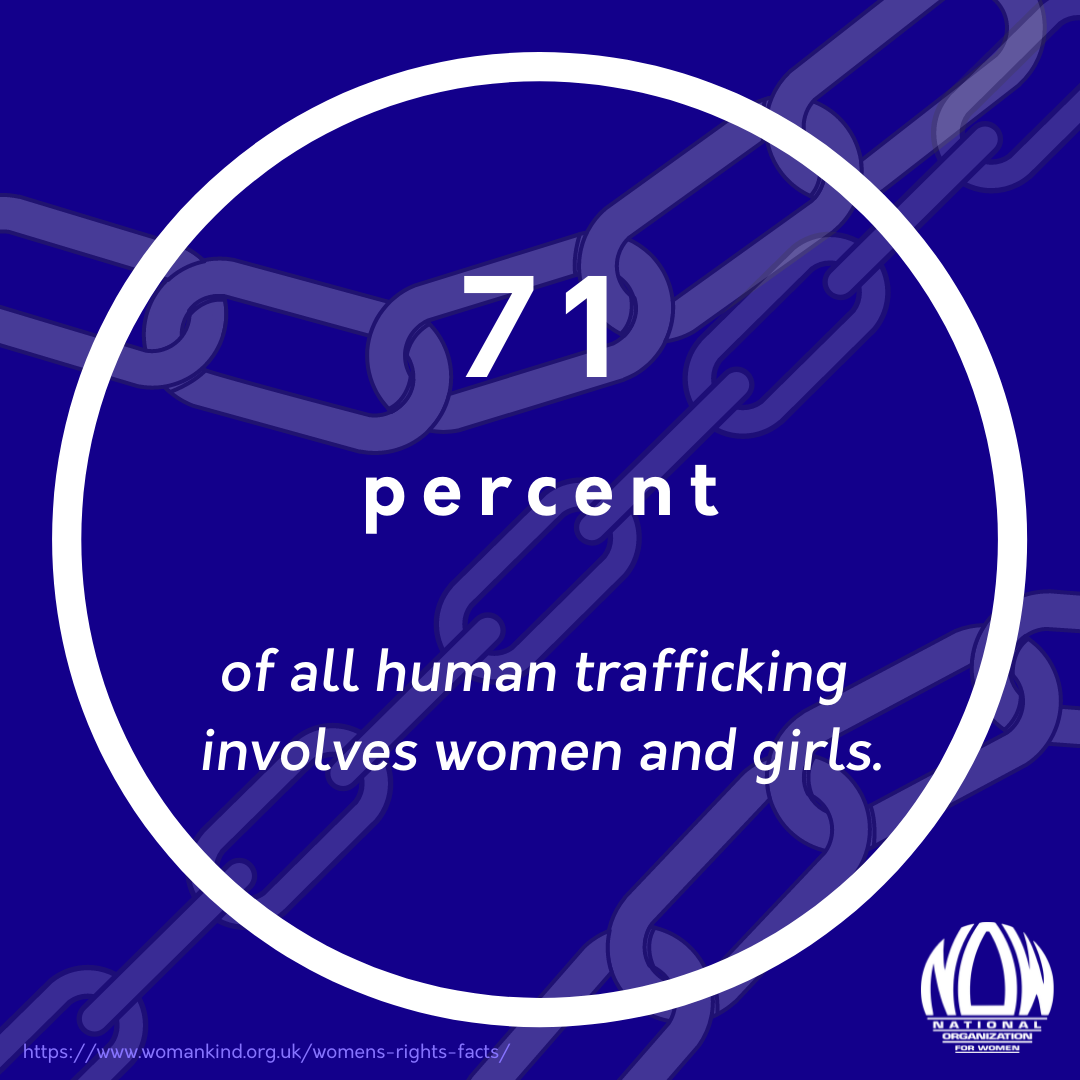
Did you know? 71% of all human trafficking involves women and girls. This is why we need VAWA (Violence  Against  Women  Act).  We need protections in place to end gender-based violence. The National Human Trafficking Hotline (1-888-373-7888) has identified more than 47,000 cases of human trafficking across the United States since the phone lines opened in 2007.

Perhaps you are not aware human trafficking is a pervasive problem spanning all across the United States and indeed all across the world.  Consider this:  Recently law enforcement in 12 states conducted a coordinated sex trafficking bust.  Over 100 were arrested and 47, including 2 minors, were rescued and given medical treatment.

 Learn more about human trafficking and what signs to look for , or if you need help: go to  https://humantraffickinghotline.org/

Leave a comment

HOW DO YOU CELEBRATE BREAST CANCER AWARENESS MONTH?

Posted by jj on Oct 10, 2021 in Intro, Health and Safety
HOW DO YOU CELEBRATE BREAST CANCER AWARENESS MONTH?

It is gratifying, and even fun, to take part in breast cancer runs, attend fundraisers, and write your check to help promote breast cancer awareness and education. But how are you personally celebrating Breast Cancer Awareness Month? Here are ways you can take action for your life and the lives of those you love. Share these suggestions with everyone.

  • Make an appointment for a mammogram if you are over 40
  • Do your monthly breast self-exam
  •  Do your monthly breast self-exam
  • Set up a reminder system for your monthly breast self-exam and yearly mammogram
  • Quit smoking
  • Talk to your kids, siblings, parents and grandparents about your family’s cancer history
  • Schedule a clinical breast exam with your primary care doctor or gynecologist
  • Start an exercise program
  • Pack your kids a healthy lunch (or teach them how to pack their own!)
  • Eat an extra serving of fruits or vegetables at every meal
  • Talk to your sister, best friend, or mom about getting her mammogram (or go together!)
  • Start a garden, for the exercise and fresh organic veggies
  • Reduce your alcohol intake, or cut it out completely
  • Sign up for an exercise class
  • If you are overweight, start a new healthy eating plan and lose weight
  • Talk to your kids about breast cancer risk factors like smoking and alcohol
  • Start a corporate wellness program at your company
  • Reduce your portion sizes if you are overweight
  • Start a daily family walk tradition

And do not forget the third week of October is MALE BREAST CANCER AWARENESS WEEK. The American Cancer Society estimated the number of men diagnosed with breast cancer in 2009 was 1990 and the numbers are increasing. Each year 450 men will die from this disease. While the number of men diagnosed is smaller than for women, a higher percentage of them will die because men are typically diagnosed at a late stage. It is believed this is primarily due to a lack of awareness that men too can develop the disease. As has been proven, early detection is vital to survival.


Leave a comment

ABORTION RESTRICTIONS AS VIOLENCE AGAINST WOMEN

Posted by jj on Oct 09, 2021 in Health and Safety
ABORTION RESTRICTIONS AS VIOLENCE AGAINST WOMEN

In 2011 in the Missouri General Assembly pro-choice Representative Genise Montecillo (D -66) stated about this extremely restrictive abortion bill, “This is just as much about control as rape is about control”. She was absolutely right and it’s time we start recognizing these attacks on choice for what they really are: violence against women.

The statement by Representative Montecillo prompted Paige Sweet of NARAL Pro-Choice Missouri to write an article detailing the link between violence against women and denial of reproductive rights. What follows are excerpts from Ms. Sweet’s article.

Actually, abusers and anti-choice policies (and the politicians who advocate for them) use many of the same oppressive tactics. Just like rape, sexual assault, harassment, and intimate partner violence, laws that limit women’s access to abortion care are all about power and control. They are designed so that state power over a woman’s body supersedes a woman’s own power over her body. It is assumed without question that the ultra-conservative politicians who champion these laws have the right to control women’s bodies - that making laws about women’s reproduction is completely within their professional purview. Violence is used by abusers in much the same way: to take and maintain power and show the victim that the abuser can and will exercise that power. Just as anti-choice politicians believe they have the right to govern women’s bodies, abusers believe they have the right to punish women physically - to keep them in line through bodily force and coercion. In both scenarios, women are deemed stupid children who do not deserve autonomy or control over their own destinies. Why else would they make laws telling us we have to wait 72 hours before an abortion so that we can really think about it?

Just as physical violence (and/or the threat of it) limits women’s ability to participate freely in society, laws restricting abortion access work to ensure that women have no chance of systemic political or economic quality. The reproductive justice movement has long recognized the overlapping oppressions of these types of violence and insisted that they be approached as they intersect, rather than individually. The movement to end violence against women and the pro-choice movement for too long have been acting as if they are challenging separate oppressive forces when actually, those forces are variations of the same thing.

In fact, the research consistently shows that abusers know how to use control over a woman’s reproduction and to further control her life. Not only are violence against women and reproductive freedom linked politically and in power dynamics, but as the following statistics show, they are probably most profoundly linked in women’s actual lives. For example, pregnancy puts women at an elevated risk for intimate partner violence and is associated with poor health outcomes for both mother and child. (There are many theories about why violence often begins or escalates during pregnancy, one of which is that the abuser feels control slipping away and uses violence to regain it. Does that remind you of how we often see an escalation of anti-choice policy proposals when progressives make gains in other areas?) Shockingly, the second leading cause of death of pregnant women in the United States is homicide by an intimate partner –it’s more common than dying from preeclampsia or gestational diabetes. Forty percent of abused women report that their pregnancy was unintended, as compared to only 8% of women who report never experiencing abuse. Additionally, a growing body of research is showing that it’s common for abusive men to sabotage birth control or coerce pregnancy as tactics to maintain power and control,. For example, women who are abused are more likely to report that their partners refuse to wear condoms (71% vs. 43% of women who are not abused). In a study of 474 adolescent mothers on public assistance, 51% reported that their partners sabotaged their birth control. Indeed, these abusive strategies are eerily similar to the anti-choice strategy of taking away access to birth control and abortion for women, especially financially vulnerable women.

These ultra-conservative politicians who believe they are entitled to controlling women’s bodies on a meta-scale are no breaking the law the way batterers are, but they seem to be sharing the same rulebook: give women little or no control over their reproductive decisions (politician: lack of access to birth control and education; abuser: birth control sabotage); coerce women into having children (politician: lack of abortion access; abuser: pregnancy out come coercion); and then leave them without resources or assistance when the children are born (politician: defund state and federal assistance programs and cut back on education funding; abuser: continue abuse and consider inflicting on children as well).

Also essential to the rulebook is knowing how to shame women so that they don’t talk about having had abortions or being abused and/or raped. Actually, our patriarchal culture is truly expert when it comes to shaming women – if it weren’t so harmful, it would be a marvel to witness. Doesn’t matter if you’re to fat, too skinny, don’t work, work too hard, don’t sleep with men, sleep with too many men, don’t wear make-up, talk too loud, have kids, don’t have kids, don’t make enough money, make too much money – shame on you all the same! The stigmas of having been abused or raped and that of having had an abortion are connected. Just as people ask survivors what were they wearing, why they were drinking, why didn’t they fight harder, and why didn’t they “just leave”, women who have had abortions are told they are selfish, looking for the “easy way out”, called sluts, and made to think they are damaged for life. The messages and outcomes are strikingly similar: it’s all your fault, feel bad about it, and now shut up about it.

We have all probably been unwitting participants in this type of shaming at some point in our lives, but not many of us are as skilled at the strategic use of shame as batterers and anti-choice politicians. Batterers use it to manipulate their victims into self-loathing, self-doubt, and silence. Ani-choice politicians use inflammatory language, they fabricate “post-abortion syndrome,” they tell stories about disabled children who would have been aborted in “pro-choice” hands, they literally (and theoretically) weep for “the unborn”, they invent accusations of Black genocide, and they spread lies about emergency contraception being abortion. They wag their moral-authority fingers at women: shame, shame, shame! This shame makes the one-third of American women who’ve had abortions stay silent and divided. It creates an environment where these (predominantly white, male) voices are allowed to control the entire debate. They are allowed to control women’s movements (when they go to the doctor and for what). They are allowed to write propaganda that women are forced to listen to in the privacy of their doctor’s office. They are allowed to decide what income level women can receive certain types of reproductive care (Hyde Amendment and similar state laws. They are allowed to keep women in poverty or force them into it through coerced motherhood. They are even allowed to endanger women’s health by putting funding on the chopping block and barring access to comprehensive sexual education. Yes, when it comes to the strategic rhetorical infliction of shame on women, no one beats anti-choice lawmakers and their policies.

Leave a comment

REMEMBERING: BEAUTIFULLY WRITTEN & A PROFOUND REMINDER

Posted by jj on Oct 02, 2021 in Economic Justice, Reproductive Rights, Violence, Health and Safety, Equal Representation
REMEMBERING: BEAUTIFULLY WRITTEN & A PROFOUND REMINDER

by Glee Violette

I graduated high school in 1966. Abortion was outlawed then, of course. But even though birth control pills were starting to become available, only married women could get them, and only with written permission from their husbands. Many doctors refused to prescribe them. Taking them was a moral offense that would get you excommunicated from most religions. Many pharmacists would not fill the prescription. And when they did, whispers went around the drug store, and the pharmacist and the clerks would treat you with contempt. It was a big freaking intimidating deal.

If a girl or woman got groped or raped, she usually kept it to herself. She would be blamed, always, for wearing the wrong thing, being in the wrong place, and acting the wrong way. Always.

Even if she was a minor, and the offender was an older relative. Men were praised for being sexual. Women were shamed. Even married women could expect leers and slurs about her condition if she was pregnant. That's why maternity wear was so concealing and prudish then. It was considered disgusting for a very pregnant woman to be out in public. In most jobs women quit immediately when they found out they were pregnant. Or they would be fired. And there would be no unemployment benefits.

Women had to take the oath in the marriage service that she would "love, honor, and Obey". It was even in secular marriages by Justices of the Peace. It was taken for granted. Women had the relationship to her husband that a child had to his mother. Subordinate. Obedient. There were laws, but "slapping around" or spanking a wife who "got out of line", "forgot her place", and "tried to wear the pants in the family", was actually regarded as appropriate by most people. And even when a wife was beaten to the point of needing hospitalization, usually, her husband was merely warned by police to "take it easy on her", and it was the wife who faced interrogation by her clergy, the police, and the hospital about what SHE did to "set him off", and was counseled to change her attitude. She was NEVER to deny a husband his conjugal rights to her body.

Because women could not control pregnancy, even by choosing to abstain, she had no control of her life. The fact that her employment depended on it, meant that no financial institution could take a chance on her being to repay loans. She could not get credit, buy a house or a car, or take out a student loan, unless her husband or her father, somebody legally "responsible" for her, co-signed the loan.

Because she could not control pregnancy, she was denied most jobs in management or training. Companies did not want to invest in temporary employees. They did not want to have to rebuild organizations when key people left.

Colleges denied most applications from female high school graduates. The attitude was that girls were only there to find a husband, and that they would drop out when they married and had babies. (And girls and women who became pregnant out of wedlock were expelled from high school and college immediately). Colleges felt that every time they accepted a female, she was taking the place of a future male breadwinner. It was considered almost immoral in their eyes.

Besides, "everyone knew" that women were not as smart as men, anyway. The silly things had no common sense. They needed to be guided and protected. They were the weaker sex, both physically and mentally. Television and movies made constant fun of them, especially of women who were clever and tried to rise to the level of men, and do their jobs. Those who succeeded were called horrible names, and came to bad ends. Unless, of course, a man came along to put her back in her place and she smiled and went happily back to it. Ah, true love!

Because of all that, her temporary availability, her subordinate status. it was simply unthinkable to see women in positions of authority. Women in the police and the military wore skirts and heels and did not carry weapons, and mostly did secretarial work, or support work as drivers, communication messengers, crossing guards, etc. Women did not appear on media as experts, or host the nightly news. In business, women did not appear in the board room, except as secretaries, serving coffee, passing out papers, and getting touched inappropriately. "Working girls" were fair game.

Look at old video and you do not see any women in orchestras, except as the singer, or on any film crews except as the script girl, or on any newscasts except as the weather girl, in a perky revealing outfit to reflect the weather of the day.

This was the world I grew up in. Where little girls were admonished to pretend to be weak and clumsy and stupid so the boys would feel big and strong. So they would LIKE us. So that someday, one of them would choose us, and marry us.

Our only goal in life was to be a housewife and mother, after a temporary stint as a nurse, teacher, telephone operator, store clerk, waitress or secretary. We were discouraged from "racy" choices like airline stewardess, model, actress or musician, because people would get the "wrong idea" about us. (A girl who became a cocktail waitress or nightclub singer might as well just put a scarlet A on her chest.)

So when Ruth Bader Ginsburg graduated high school in 1951 and was accepted at Cornell University, that was a big deal. When she got accepted at Harvard University after marrying and becoming a mother, that was a HUGE deal. When she graduated TOP of her class at Columbia Law School, that was nothing less than astounding. And THEN, she became a PROFESSOR at Rutgers Law School in 1963 (where she was told she would be paid less because her husband had a good paying job). She was one of only 20 female law professors in the entire country.

She was also a volunteer attorney for the American Civil Liberties Union. In 1972, Ginsburg co-founded the Women's Rights Project at the ACLU, and participated in more than 300 gender discrimination cases, and argued six gender discrimination cases before the Supreme Court between 1973 and 1976, winning five of them. She joined the ACLU board of directors and in 1980, President Jimmy Carter appointed her to the U.S. Court of Appeals for the District of Columbia Circuit, where she served until her appointment to the Supreme Court by President Bill Clinton in 1993.

In the 54 years since I graduated high school, the social role, the opportunities, and the rights of women changed, thanks to Ruth Bader Ginsburg, and other pioneers like her, from basically that of a child to that of an adult human being. We have almost gained equality to men in business and so many other fields. We still have a ways to go to be equal in pay. (And of course, women of color still are kept back at a much lower level than white women). We have only a tenuous hold on control of our own bodies. The same men who claim a mask is a violation of their civil rights to govern their own bodies, have no problem claiming the right to decide every aspect of ours.

The primary goal of McConnell and Trump, and the religious organizations that back them, is to overturn Roe v Wade, and LGBTQ rights, and then every advancement we have made in Civil Rights, Women's Rights, and Voting Rights in the Courts. They want to roll back the clock and re-establish white supremacy and religious authority to where they were in my day. In Ruth Bader Ginsburg's day.

Ruth Bader Ginsburg showed us that anything is possible if we are willing to put the will, the time, the effort, and the work into it. This tiny woman overcame every obstacle and achieved something for ALL of us living in this country today. We ALL need to step up now, and carry her torch forward. We stood on giant's shoulders. We must not fail her. We will not fall, but climb higher, to the place she led us to, the place she wanted us to go. 

VOTE.  Get everyone you know to vote.  Everything we ever fought for and won, is on the line.

Leave a comment
  • 1
  • ...
  • 44
  • 45
  • 46
  • ...
  • 47
  • ...
  • 48
  • 49
  • 50
  • ...
  • 51
  • ...
  • 52
  • 53
  • 54
  • ...
  • 65

Women's Voices Media - Newsletter

Powered by follow.it

Search

Act Now!

  • HAVE YOU CONTACTED YOUR SENATORS AND/OR YOUR HOUSE REP TODAY?

Recent Posts

  • YOUR ATTENTION PLEASE.
  • DESPITE THE OBSTACLES - A WOMAN FARMER SHE WAS DETERMINED TO BE!
  • UNITED AIRLINES, IT'S ABOUT TIME!
  • No , anorexia is not a pretty skelletton !
  • ATTENTION VOTERS of the COMMONWEALTH of VIRGINIA!
  • ARE YOU READY TO FACE THE TRUTH?
  • BLACK MATERNAL HEALTH AWARENESS WEEK
  • SENTIMENTS EXPRESSED ALL OVER THE COUNTRY MARCH 28, 2026
  • WORLD WATER DAY – ACCELERATING CHANGE
  • A POIGNANT ESSAY FROM HEIDI HENRY: THE NATIONAL DEBACLE
  • Renee Nicole Good
  • Trump’s War on Mail-In Voting Threatens the Foundations of Democracy Itself
  • The GOP Is About To Devour Its Own King
  • WOMEN'S JUSTICE
  • Civil Discourse with Joyce Vance
  • Why Are Men Still Considered the Default?
  • The Animal Feed Industry’s Impact on the Planet
  • How a 20th-Century Family Planning Agenda Fueled the Climate Crisis
  • CALL YOUR SENATORS:   TELL THEM TO VOTE “NO!”
  • WHAT THE BUDGET CUTS ARE REALLY ABOUT

Recent Comments

  • chandlerbaxter on BURN THE BARBIES, PAUSE THE PINK
  • dracorouge on FROM RI TO WI: MORE PRO-CHOICE AND PRO-ERA CANDIDATES
  • jj on OPINION: FEMINISM HAS BECOME TOO EXTREME
  • jj on OPINION: FEMINISM HAS BECOME TOO EXTREME
  • admin on THE 2ND IMPEACHMENT OF TRUMP!
  • andreajoy on VOTE!
  • marthaburk on STAND UP & SPEAK OUT!
  • admin on VOTE!
  • urbancat on VOTE!
  • marthaburk on Rep. Alexandria Ocasio-Cortez (D-NY) Responds to Rep. Ted Yoho (R-FL)
  • armandolibertad on Rep. Alexandria Ocasio-Cortez (D-NY) Responds to Rep. Ted Yoho (R-FL)
  • armandolibertad on DON'T EXPRESS OUTRAGE WITHOUT ACTION!
  • allegra22 on GET SMART AMERICA!
  • admin on My Personal Response To Trump by Lisa Wilson Berkowitz‎
  • admin on THE REAL “WELFARE QUEENS” ARE CORPORATE CEO’s

Wit & Wisdom

Women's history is an assential and indispensable part of the national narrative. By understanding the achievements,struggles, and contributions of women throughout history, we gain a fuller, more accurate. and more inclusive understanding of our collective past.
Hillary Clinton
June 2026
Sun Mon Tue Wed Thu Fri Sat
  1 2 3 4 5 6
7 8 9 10 11 12 13
14 15 16 17 18 19 20
21 22 23 24 25 26 27
28 29 30        
 << <   > >>

Search

XML Feeds

  • RSS 2.0: Posts
  • Atom: Posts
What is RSS?

Your Voice
This collection 2026 by Janice Jochum
Copyright 2019 United Activision Media, LLC
Creative Commons License
This work is licensed under a Creative Commons Attribution-NonCommercial 4.0 International License.
• Contact • Help • CMS + user community

b2
Cookies are required to enable core site functionality.