

If this were only true for Texas, we could figure the source. But whatever vile is oozing out of Texas is oozing out of every Republican-controlled state in the country and with all the same results. Their so-called pro-life only lasts as long as the fetus is in the womb. Once that baby breaths its' first breath, it is all up to she/he and whoever might love it as to whether it eats, has a roof over its' head, gets a decent education, has medical care or even survives.
Damn those Republicans really have big hearts. Nawwwwwwwwwwwwwwwwwww!
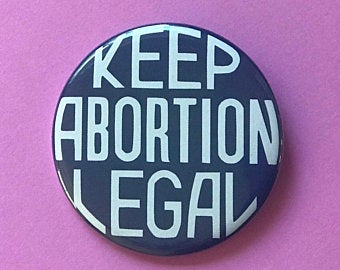
Given the status of reproductive rights throughout the U.S. right now, it seems appropriate to do something we don't usually do - post an additional frontpage article on an addition to our Resource Library.
The Repro Legal Helpline is a free, confidential helpline where you can get legal information or advice about self-managed abortion, young people's access to abortion or judicial bypass, and referrals to local resources.
The helpline and its staff are based in the United States and can only answer questions related to U.S. laws.
Additional information about Repro Legal Helpline and reproductive rights can be found in our Resource Library.

On January 21, 2013, Hadiya Pendleton, a high school student from the south side of Chicago, marched in President Obama’s second inaugural parade. One week later, Hadiya was shot and killed on a playground in Chicago. Soon after this tragedy, Hadiya’s childhood friends decided to commemorate her life by wearing orange, the color hunters wear in the woods to protect themselves and others.
Wear Orange originated on June 2, 2015—what would have been Hadiya’s 18th birthday. Now, it is observed nationally on the first Friday in June and the following weekend each year. In the years since, participation in Wear Orange has increased tenfold.
On June 3
- Wear Orange: On June 3, 2022, wear or hold anything Orange (a pin, a scarf, an orange, or be creative and hold up any Orange item in your home that strikes your fancy), take a selfie and share it via social media with the hashtag #WearOrange.
- Make a dedication: One of the most powerful parts of the campaign are the online dedications users post to share why they’re taking part. Examples include: “Today, I will #WearOrange…”
- “in honor of my beloved child, [XXX].”
- “because I’m a hunter, and I know gun safety saves lives.”
- “because organizations like [xxx] continue to make a difference and reduce gun violence in my community every day”
For other ways you can participate and additional information on this issue go to: EVERYTOWN

It has been almost six years since the National Institute of Justice reported the results of a study it funded which included sobering facts on the violence against American Indian and Alaska Native women. Six years and very little has been done to address the crisis.
The study looked at the prevalence of psychological aggression and physical violence by intimate partners, stalking, and sexual violence among American Indian and Alaska Native women. The results were profound.
- For American Indian and Alaska Native women, 4 in 5 (84.3%) have experienced violence in their lifetime. This includes:
- 56.1% have experienced sexual violence.
- 55.5% have endured physical intimate partner violence.
- 48.8% have experienced stalking.
- 96% of Native female victims of sexual violence experience violence at the hands of a non-Native perpetrator.
- 21% have experienced inter-racial violence.
The murder rate of Native women is more than 10 times the national average on some reservations.
Two 2020 laws have requirements that could help address aspects of the crisis, depending on how the Departments of Justice and Interior implement them. But the agencies have missed some of the requirements' deadlines. For example, they have not yet set up a joint commission to explore the issue.
The GAO was asked to review the federal response to the missing or murdered AI/AN women crisis. The report was to examine the extent to which (1) the number of missing or murdered AI/AN women in the U.S. is known and (2) what steps the DOJ and DOI have taken to address the crisis. GAO reviewed available data on missing persons and violent deaths, relevant reports, and agency documentation, including agency policies and procedures.
Among the recommendations made by the GOA were that the DOJ develop a plan for how it will accomplish ongoing analyses of missing or murdered AI/AN women data and that DOJ and DOI both develop plans to implement the requirements in Savanna's Act and the Not Invisible Act of 2019 that remain unfulfilled past their statutory deadlines.
For more information:
"Examining Violence Against American Indian and Alaska Women"