HomeYour VoiceHerStoryYour MultimediaResource LibraryAbout WVMCode of ConductRegisterLog in

  • Latest Post
  • Post index
  • Archives
  • Categories
  • Latest comments
  • Contact
  • About Your Voice
  • Raise Your Voice
  • 1
  • ...
  • 15
  • 16
  • 17
  • ...
  • 18
  • ...
  • 19
  • 20
  • 21
  • ...
  • 22
  • ...
  • 23
  • 24
  • 25
  • ...
  • 65

BURN THE BARBIES, PAUSE THE PINK

Posted by jj on Aug 04, 2023 in Economic Justice, Newsworthy, Intersectional Issues
BURN THE BARBIES, PAUSE THE PINK
BURN  THE  BARBIES,  PAUSE  THE  PINK

The highly anticipated live-action film starring Margot Robbie is an attempt to redeem the problematic toy. But it’s really just an expensive ad campaign for an outdated doll.

By Sonali Kolhatkar

A few months ago, my two sons, aged 10 and 15, told me they were excited to see the new Barbie film. I was surprised. They are not interested in dolls, and, in spite of Barbie being the top-selling doll in the world, they were not very familiar with the iconic toy until they saw an online trailer of the live-action feature film starring Margot Robbie and Ryan Gosling. Although I had played with a much-loved Barbie doll as a child, I had grown up to hate everything the doll stood for: dangerously unattainable beauty standards, the deliberate vapidity of femininity and feminism, and the centering of whiteness.

But, the clever marketing of the new film has people of all demographics eager to see it: “If you love Barbie, this movie is for you. If you hate the Barbie, this movie is for you,” proclaimed the trailer. There should have been an addendum: “If you’re indifferent because you have no idea who or what Barbie is, this movie is also for you.” Because, ultimately the film is a giant commercial for an outdated toy. Its interminably long marketing campaign helped generate breathless anticipation for months.

Launched in 1959 and conceived by Ruth Handler, one of the co-founders of Mattel, Barbie was modeled on a German doll named Bild Lilli, marketed to adult men as a sort of gag gift. According to Brennan Kilbane, writing in Allure, “Bild Lilli was a single-panel comic character in a German tabloid—a sweet, ditzy, curvy figment of the male imagination, frequently losing her clothes and enjoying the company of men. Each punch line hinged on Bild Lilli’s hotness, her horniness, or her lack of common sense. When a police officer informed Bild Lilli that the two-piece swimsuit she was wearing was in violation of decency laws, she responded earnestly, ‘Which piece do you want me to take off?’”

Handler wanted to market an “adult” doll to little girls because the prevalent dolls of her time were either baby dolls or else they had, in her words, “flat chests, big bellies, and squatty legs—they were built like overweight 6- or 8-year-olds.” Apparently, Handler, who appears in the film as a wise elderly grandmother played by Rhea Perlman, felt that a doll with impossibly frail wrists and a thin waist was a more suitable aspiration.

Vox’s Constance Grady put it best, saying, “The plastic body little girls are given to practice being grown-up with is the same as the plastic body grown men hang from the rearview mirrors of their cars as a dirty joke,” referring to the Bild Lilli dolls. This point is especially disturbing when, as Grady also pointed out, the first commercial for the doll featured a girl singing “Someday I’m gonna be exactly like you… Barbie, beautiful Barbie, I’ll make believe that I am you.”

The doll has always been tone-deaf. A few years after it was launched, just as second-wave feminism was gaining ground, Mattel released Slumber Party Barbie, who “came with pink pajamas, a pink scale set at 110 lbs, and a diet book on how to lose weight, with only one instruction: DON’T EAT!”

Since then, the doll’s history has been marked by a constant tug-of-war as it has attempted to market misogyny to a world whose women are tired of being trodden upon. The film is a similar mess of contradictions, and as Andi Zeisler wrote in a New York Times op-ed, it is “one that acknowledges and embraces that weirdness under the vigilant gaze of a corporate chaperone.” Zeisler admitted how she didn’t realize that “the film’s narrative would essentially serve as a Mattel redemption arc,” turning her as a viewer into, “an unwitting Barbie P.R. booster.”

Now, just as Mattel managed to reinvent a male fantasy as a girl’s toy, the new Barbie movie is reinventing the doll as a universally beloved character in our imagination. Forget product placement—the insidious insertion of branded products into films and television shows as a sly form of advertising—the Barbie movie is one giant advertisement, the inaugural creation of Mattel Films. Rather than creating new characters to tell a story and then milking the profits from the resulting merchandise—as is the traditional marketing ploy popularized by films such as Toy Story—Mattel has followed in the footsteps of companies such as Lego and its popular 2015 Lego Movie.

There has been little mention of this as problematic within the slew of glowing reviews of the film. Is this to be the future of film? Indeed, filmmaker J.J. Abrams is working on a new Hot Wheels film.

Audiences are supposed to overlook the ethical conundrums presented by the Barbie film in part because the film’s creator, Greta Gerwig, apparently identifies as a feminist. But, she’s hardly a critic of the doll and its regressive representation. According to the film’s costume designer Jacqueline Durran, “Greta really liked… [the outfits in the film that had an ’80s aesthetic because] they chimed with the date of the Barbies that she used to play with… She was a great Barbie fan.”

Additionally, because the film validates the various criticisms leveled at the doll over the years, audiences are expected to embrace this bizarre brand-turned-film as entertainment. “The role comes with a lot of baggage. But with that comes a lot of exciting ways to attack it,” said Robbie, who was one of the iniators of the project and who stars as the main (white/blond) Barbie protagonist  (there many other Barbies in supporting roles) in the film.  But the film doesn't truly attack Barbie’s baggage. The opening scene of the film, showcased in its first trailer, was a nod to the deeply problematic original Barbie, with Robbie appearing in the same black-and-white striped bathing suit worn by the first version of the dolls to hit store shelves in 1959.  

In spite of the film’s clever marketing as a universal project, it does not challenge Barbie’s main function as a dress-up doll. Durran told British Vogue, “Barbie really is interlinked with fashion, because how you play with her is by dressing her,” and that aspect remains central in the film.

Audiences are being encouraged to wear the doll’s signature Pepto-Bismol pink to theaters—the same color associated with gender stereotyping of girls from birth into adulthood. It’s not enough anymore for little girls to aspire to Barbie’s standards; “Barbie will certainly strike a chord with adult women—even more so than with young girls,” explained a Harper’s Bazaar shopping guide for what to wear to the film.

One “trend expert” explained the push to wear pink to People Magazine, saying, “[w]ith many nostalgic for simpler, sunnier, and more carefree times, it only makes sense that this ’80s-inspired, unapologetically pink aesthetic is taking center stage as the ‘it’ style of the summer.”


So effective is the film’s branding campaign that there is now a massive social media fashion trend called #Barbiecore on TikTok garnering hundreds of millions of views for posts created by young women influencers heavily caking their faces with makeup to look like the doll, wearing pink tulle, batting fake eyelashes, and pursing plump glittery lips coyly. Their posts are tagged with the recognizable Barbie logo, fulfilling Mattel’s wildest marketing dreams while setting women back decades. This is apparently the new face of feminism.

The criticism that the film is a blow to feminism is not overblown. The Barbie movie has popularized the horrific-sounding label of “bimbo feminism” (really!). “Instead of abandoning femininity to succeed in a patriarchal society, bimbo feminism embraces femininity while supporting women’s advancement,” wrote Harriet Fletcher in the Conversation. In other words, women are supposed to attain career success while also shaping themselves to fit the male gaze.

There persists a belief that Barbie is indeed a feminist icon in spite of Mattel steering clear of embracing the f-word. Robbie Brenner, head of Mattel Films, has decided that his company’s film is “the ultimate female-empowerment movie.” This disturbing state of discourse on feminism is the direct result of relying on corporate America to define women’s rights and status. While America Ferrera’s character as a real-life woman struggling with the pressures of patriarchy is the film’s most refreshing and powerful aspect, she remains relegated to a supporting role.

Even the ridiculous right-wing backlash to the film, casting it as “anti-man,” is being touted as a measure of the film’s feminism. If it’s pissing off the misogynist incels, surely it’s on the feminist track, claim the film’s defenders. “[I]t’s not a Barbie doll that threatens women’s rights, opportunities, and safety—it’s the patriarchy,” wrote Fletcher in the Conversation. Really, though, both are true, just to different extents.

When I was about 8 or 9, my immigrant parents bought me a Barbie doll. They were proud to be able to (barely) afford a pricey Western toy for their daughter. My Barbie was blonde and blue-eyed, and I happily played with her for years, well before I ever met a blond, blue-eyed person in real life. My doll set the standard for feminine beauty—one that was out of reach of a brown-skinned, dark-haired kid like me whose body type was chubby in contrast to my Barbie, but typical for my age and size. In 2016, Mattel attempted to diversify the doll’s body types. But “curvy” Barbie was still thinner than most real-life women.

Defenders of the film also point to its racially diverse casting and its embrace of varying body types. After all, Issa Rae plays a Black Barbie, Simu Liu is cast as an Asian Ken, and Nicola Coughlan is a gorgeous plus-size version of the doll. But, as Kilbane explained in Allure, “The Barbieverse distinguishes between two Barbies. There’s Barbie ‘the icon,’ or ‘brand,’ who can be blonde and short, or Black and svelte, or Frida Kahlo and white. There’s Barbie ‘the character,’ who is exactly who you’re thinking of, and will be played by Margot Robbie.”

Unlike Disney’s recent reboot of The Little Mermaid, which actually dared to reimagine the central character as a young Black woman played by Halle Bailey, Barbie—the “real” Barbie—will remain white, blonde, skinny, and conventionally pretty, the ultimate aspiration. The rest of us are part of the supporting cast, as per usual.

Even though Mattel CEO Ynon Kreiz said, “It’s not about making movies so that we can go and sell more toys,” that’s a misleading claim. Toy company executives are hoping that the movie renews interest in dolls to the tune of billions of dollars. It is an attempt to redeem Barbie and its problematic history so that people will go out and buy the doll. Ultimately the clearest description of the film—enjoyable and thought-provoking as it is—is that it is a $145 million ad campaign for a toy that should have faded away years ago.

Author: Sonali Kolhatkar is an award-winning multimedia journalist. She is the founder, host, and executive producer of “Rising Up With Sonali,” a weekly television and radio show that airs on Free Speech TV and Pacifica stations. Her most recent book is Rising Up: The Power of Narrative in Pursuing Racial Justice (City Lights Books, 2023). She is a writing fellow for the Economy for All project at the Independent Media Institute and the racial justice and civil liberties editor at Yes! Magazine. She serves as the co-director of the nonprofit solidarity organization the Afghan Women’s Mission and is a co-author of Bleeding Afghanistan. She also sits on the board of directors of Justice Action Center, an immigrant rights organization.

This article was produced by Economy for All, a project of the Independent Media Institute


T


1

"WE JUST DON'T HIRE WOMEN": In the construction industry, discrimination runs rampant

Posted by jj on Jul 24, 2023 in Economic Justice, Equal Representation, Newsworthy, Intersectional Issues
"WE JUST DON'T HIRE WOMEN": In the construction industry, discrimination runs rampant

A recent government report documents that women and people of color are being denied jobs, harassed and subjected to other workplace abuses.

By Jessica Kutz

As the construction industry booms, the longstanding issue of discrimination and sexual harassment is still running rampant on job sites. 

A recent report from the U.S. Equal Employment Opportunity Commission (EEOC) documents that women and people of color are being denied jobs, being harassed and subjected to other workplace abuses.

Charlotte Burrows, chair of the EEOC, the federal agency that investigates complaints of job discrimination, described some of the cases that have come before the agency as “egregious.”

The construction industry employs around 11.8 million people as of 2022, with trillions of federal dollars from recent legislation powering years of future job growth. In theory it should represent an opportunity for many Americans to move into the middle class.  

Most trades offer paid training through apprenticeships and don’t require a college degree. They also typically come with salaries much higher than the minimum wage — the median salary of a construction laborer is $42,970 and $59,300 for an electrician, according to the U.S. Bureau of Labor Statistics.

There is also a shortage of workers, leaving money on the table for companies that can’t fill contracts fast enough. As of 2021, 89 percent of contractors were having a hard time finding workers, according to the Associated General Contractors of America, an association for the construction industry. 

And yet: “This is an industry where we still have folks saying, ‘We just don’t hire women,’” Burrows told The 19th.

The report details several instances in which the EEOC found companies had discriminated against people because of their race or gender in the hiring process. In multiple cases, job applicants were told simply that companies they had applied to were not going to hire women. In other instances, apprenticeship programs denied opportunities to Black applicants. 

Women make up 4 percent of construction trades workers, and 11 percent of the workforce overall when accounting for administrative positions. Black workers account for 7 percent of workers. 

When women did get hired, harassment often drove them out, impacting their ability to earn better wages. 

“When we talk about the gender pay gap, it’s not just I’m going to pay you less in dollars and cents but also, what happens to your paycheck when you have to leave a job or an industry because you can’t take the harassment?” Burrows said.   

The report details cases that have come before the EEOC, including incidents of sexual harassment in which women were groped, or commonly subjected to jokes, comments and workplace graffiti that sexualized them. In 2021, the Institute for Women’s Policy Research surveyed workers who identified as women and found that 26.5 percent of respondents said they were ”always or frequently” harassed for being a woman. 

LGBTQ+ people also faced workplace abuses. In that same IWPR survey, 19 percent of LGBTQ+ respondents said they were always or frequently harassed due to their sexual orientation.

In response to the report’s findings, Sean McGarvey, president of the North America’s Building Trades Unions (NABTU), a labor organization that represents more than 3 million trades workers in the United States and Canada, issued a statement: “Harassment or discrimination in any form cannot be tolerated on construction sites, and, as we have said repeatedly, the construction industry can and must do more to prevent these terrible and pervasive workplace issues.”

Melissa Wells, special assistant to the president of NABTU, said the organization is undertaking several initiatives to make the trades more hospitable to women and people of color, including creating a voluntary project certification in collaboration with the federal government and other partners to incentivize a safe workplace culture. 

While still in the early stages of development, the national certification would be a way to encourage contractors to maintain a safe and welcoming workplace culture and ensure there are reporting protocols in place when an incident does occur. It would work similarly to the LEED certification process, which incentivizes and upholds green building standards. 

“Our goal is that this will have teeth,” Wells said. “We want there to be accountability measures.”

Reporting harassment on a jobsite is complicated in the construction industry, Burrows said. A worker may be unsure of who to report to when there are multiple contractors and companies involved for a single project, adding to the pervasiveness of the problem. 

“It’s terribly confusing for an employee who’s just trying to get some oversight and trying to get some relief,” she said. 

NABTU launched a tradeswomen committee program this year that would help address this issue as well. The first three committees formed in Chicago, Las Vegas and D.C., and are housed within local building trades councils. They are a way to empower and train women in the trades but will also work with local unions on initiatives to better recruit and retain women. The committees can also serve as a mechanism for informing a council about an incident of harassment. 

“In reality when these incidents happen … tradeswomen on the job maybe don’t know how to quite respond but they’ll usually go to trusted people to talk about it,” Wells said. 

Donna Hammond, interim executive director and founding member of Oregon Tradeswomen, a nonprofit that works to ensure women have access to the trades workforce, said she appreciates the research conducted by the EEOC. 

“We needed this report,” Hammond said. “ [Now] everyone gets to share this report that’s telling the truth about our industry, because everybody doesn’t feel the same.” 

She recounted how after the murder of George Floyd, the local chapter of her union, the International Brotherhood of Electrical Workers, distributed anti-racism stickers. She said a couple of White men sent their stickers back. 

When she asked why, they told her it was because they’d never witnessed racism — or sexism — on the job. To Hammond it was indicative of a bigger problem.  

“If you’re a White guy and you’ve never had any women or people of color on your job, you would never have seen any racism or sexism.” 

However, as the EEOC report points out, racism is pervasive on job sites. Between 2015-2022, alone, the agency received at least 64 charges related to nooses hung on construction sites. 

Hammond, a Black woman who worked for four decades as a union electrician, is adamant that there are also a lot of allies in the industry who want to do the right thing and who have helped her succeed in her own career. But still, she said, the report illustrates the need of highlighting the problem and finding solutions quickly. 

“How do we really use this report and who can we contact for the next steps to work with the EEOC as they try and implement?” she asked. “There are a lot of improvements that could happen, especially with what is happening with the mega projects. They need us, so how do we really work together?”

Burrows said it is a priority to work together with unions, trades women organizations, and civil rights groups on addressing this issue.

Jennifer Todd, president and founder of LMS General Contractors, a company that does demolition and remediation work in South Florida, points out that this issue of discrimination has been persistent for decades. She is skeptical around the motivations of tackling it now. 

“The reason why the problem is being highlighted at this point is not because of the continued injustice, it is because of the labor shortage.” 

Usually, change doesn’t happen unless it starts to impact the masses, Todd said, and in this case general contractors and construction companies are seeing what happens when a large percentage of the population has been left out for so long. Todd, like others interviewed for this piece, emphasized the need to focus on keeping women and people of color in the industry. 

“We see all of these apprenticeship programs and outreach and collaborative efforts. But you don’t hear much talk about retaining the existing workforce who continue to leave at a rapid rate because they don’t feel safe and welcomed,” she said. 

In 2019, Todd, who is a Black woman, started her own initiative, A Greener Tomorrow, which aims to recruit women and people of color into trade work. The initiative came out of her work on affordable housing projects, where she offered jobs to tenants to work on her construction projects. 

“What we found was that people want to work when given the opportunity,” she said. “If you train them, they will come to work, they will show up. They just need the tools, and they need the opportunity to do so.”

This story was originally published by The 19th, Friday, July 7, 2023.

Author:  Julie Kutz, Gender, climate and sustainability reporter.


Leave a comment

REPLACING the CAPITALIST DREAM of AI-DRIVEN PROFITS

Posted by jj on Jul 16, 2023 in Home Page, Economic Justice, Newsworthy
REPLACING the CAPITALIST DREAM of AI-DRIVEN PROFITS
When asked to share alternatives to capitalism, ChatGPT offered many options, none of which rely on the fantasy that money hoarding at the top can eventually benefit the rest of us.
 
By Sonali Kolhatkar

Artificial intelligence (AI) and how it’s going to change the world is a popular topic of conversation these days. There is concern that it will generate ever-more deceptive imagery that can upend people’s lives or create propaganda that can fuel mass fear. There’s the ultimate fear of human extinction from the increasingly sophisticated evolution of AI. These are valid worries.

Then there’s the seemingly more mundane threat that AI poses to employment. It is expressed in the form of countless stories that have some iteration of the headline: which jobs are at most risk of being lost to AI?

Most analysts predict that AI will replace graphic designers, copywriters, customer service agents, and telemarketers. Some of the most dystopian of these  focus on teachers and psychologists as being replaced by AI.

The stories are written with the intention of predicting the coming storm so that people can prepare themselves for the future. But the headlines are also intentionally designed as clickbait, likely fueling fear-based consumption of the stories by readers eager to find out if their own jobs are likely to be replaced by AI in the coming years. Indeed, I found several stories, like this one, where my own vocation of journalism was in the crosshairs of AI.

The framing of “Will AI replace your job?” obscures the bigger problem that has been at work for centuries: and that is how our jobs, and therefore our educations, careers, and livelihoods, are at the whims of a capitalist system intent on minimizing costs and maximizing profits.

Indeed, Mathias Doepfner, the CEO of the German media group that owns Politico, who warned that AI could replace journalism jobs, used Darwinian logic in saying, “Artificial intelligence has the potential to make independent journalism better than it ever was—or simply replace it,” and therefore, “Only those [publishing houses] who create the best original content will survive.”

And while critics of AI counter that it could never replace humans because of our innate creativity and curiosity, the point that often gets missed is that humans are the ones engaging in the great AI replacement of jobs—a small handful of humans. They hail from the rarified group of elites who sit in corporate board rooms and deliver presentations to shareholders about how they plan to maximize dividends by replacing humans with AI.

The question we should be asking isn’t whether AI can replace humans. It should be: why are some humans so intent on replacing the jobs that the rest of us hold, with AI? Even further, why do we live in a world where we lack so much control over our destinies in the first place?

AI, like other innovations that have automated jobs, is simply a tool that can make life easier. I can use a machine to wash my clothes and another one to wash my dishes instead of wasting my time with handwashing. Graphic designers already use software to digitally paint images instead of painting them by hand. If AI is a tool that can make certain jobs easier and free up our time for relaxation and leisure while we reap the same or greater compensation then so be it. But it ought not to be inevitable that corporate employers will cut our salaries or entirely replace our jobs with AI. That is a choice being made in a system that relies on profit motives rather than human well-being.

What we consider a vocation, big business treats as a cog in a giant wheel called “the labor market.” Dire predictions of AI “disruptions” to this market cast the entire trend as almost a natural phenomenon, whose trajectory is simply out of human hands.

But the reason that AI is booming is because it translates into a giant windfall for corporations. One economic prediction concludes that “the market for artificial intelligence (AI) is expected to show strong growth in the coming decade. Its value of nearly [$100 billion] is expected to grow twentyfold by 2030, up to nearly [$2 trillion].”

AI is big business, perhaps the biggest of them all. The dystopia it promises is a natural endpoint—of unregulated capitalism. If the “man behind the curtain” is eager to replace us, why can we not rip the curtain down and replace him?

So, I asked ChatGPT, the popular AI chatbot that is basically a smarter Google, the following question: “Does a capitalist economic model center human [well-being]?” The first sentence of a lengthy response was, “The capitalist economic model, in its purest form, does not explicitly center human well-being as its primary objective.”

ChatGPT proceeded to tell me that “Capitalism emphasizes individual economic freedom and the pursuit of self-interest, with the belief that this leads to overall economic growth and prosperity.”

“Belief” is the operative word here. It is a matter of faith that capitalism leads to prosperity for all. There is a religious fervor that was once popularly called “trickle-down economics,” underpinning a system where reality is at odds with the fantasy of capitalist wealth sharing.

When examining broad trends, the Congressional Budget Office (CBO) found that wealth inequality in the U.S. grew significantly between 1979 and 2019. The CBO report, which is based on a nonpartisan analysis, concluded that “Increases in market income at the top of the distribution drove much of the rise in income inequality over that time.” In other words, the rich got richer because they hoarded more wealth.

It also found that “transfers increasingly lessened income inequality when transfer rates grew among households in the lowest quintile.” This technical language simply means that when people accessed government benefits their incomes increased. It’s like saying, “People benefitted when given benefits.”

There is no need for belief or faith in a system where the government is designed to directly help the people it represents. Belief and faith are required only to prop up the great lie that a capitalist economy helps everyone prosper. If we want people to prosper, we can make it so. There are many forms this can take: renewing the child tax credit, replacing private health care with a tax-funded Medicare for All system, increasing Social Security benefits, paying reparations to Black people, and even guaranteeing a basic income. None of them rely on faith. They help people because they are designed to help people.

I asked ChatGPT, “What sort of economic system can replace capitalism and ensure the [well-being] and prosperity of the vast majority of humans?” The machine spat out five different options ranging from socialism to a “resource-based” economy “where the allocation of resources is based on careful assessment and sustainable management of Earth’s resources.”

Even AI knows that there are alternatives to the current system that rules our lives. If capitalism can replace us, surely, we can replace capitalism?

Author Bio:

Sonali Kolhatkar is an award-winning multimedia journalist. She is the founder, host, and executive producer of “Rising Up With Sonali,” a weekly television and radio show that airs on Free Speech TV and Pacifica stations. Her forthcoming book is Rising Up: The Power of Narrative in Pursuing Racial Justice (City Lights Books, 2023). She is a writing fellow for the Economy for All project at the Independent Media Institute and the racial justice and civil liberties editor at Yes! Magazine. She serves as the co-director of the nonprofit solidarity organization the Afghan Women’s Mission and is a co-author of Bleeding Afghanistan. She also sits on the board of directors of Justice Action Center, an immigrant rights organization.
 
Source:  The Independment Media Institute
Credit Line: This article was produced by Economy for All, a project of the Independment Media Institute


Leave a comment

MAINE MAKES HISTORY AS THE FIRST U.S. STATE TO ADOPT EQUALITY MODEL LAW

Posted by jj on Jul 13, 2023 in Violence, Newsworthy
MAINE MAKES HISTORY AS THE FIRST U.S. STATE TO ADOPT EQUALITY MODEL LAW

For Immediate Release: July 11, 2023    Rights4Girls      rights4girls.org

Maine joins growing list of nations around the world enacting law to protect sex trade survivors from arrest and criminalization while holding their exploiters accountable
 

(Augusta, Maine) – Today, Maine made history as the first U.S. state to enact legislation known as the “Equality Model”— which will protect sex trade survivors from arrest and criminalization, while still holding their exploiters to account. 

Survivors and advocates applaud Maine Governor Janet Mills for signing both “An Act to Reduce Commercial Sexual Exploitation” and “An Act to Provide Remedies for Survivors of Commercial Sexual Exploitation,” which together create an Equality Model framework that a.) protects people engaged in prostitution from criminal penalties, b.) seals records of their past prostitution convictions, and c.) holds accountable their exploiters for the devastating harm they cause.


The passage of these Acts makes Maine the first in the country to enact an Equality Model law—making it clear that those sold in prostitution ought not to be punished for the violence and exploitation they endure at the hands of sex buyers and other violent exploiters. First pioneered in Sweden, this legal approach has been shown to not only provide greater protection for the most vulnerable people in the sex trade, but also deter and prevent sex trafficking by targeting the demand for commercial sex.

“With this law, Maine becomes the first state to recognize that no one should be punished for their own exploitation,” said Yasmin Vafa, Executive Director of Rights4Girls. “Now, not only will sex trade survivors no longer be criminalized for prostitution, but their past records will be sealed, allowing them to rebuild their lives. We truly hope more states will follow Maine’s lead.”


These groundbreaking laws were championed by Rep. Lois Galgay-Reckitt on behalf of survivors throughout the state who together worked tirelessly to make these bills a reality.  “Today, I am so proud to live here in Maine,” said Tricia Grant, a survivor of sexual exploitation. “This legislation acknowledges that arresting and revictimizing people for their own exploitation is not the solution. Rather, holding the exploiters and abusers accountable is the answer.”

Research shows that the vast majority of individuals in the sex trade come from marginalized communities and experience long-term physical and psychological trauma. This harm is exacerbated when those in prostitution— and not their exploiters— are punished and criminalized.  

The Acts will help remedy these problems through enacting a partial decriminalization method— protecting those sold for prostitution and sealing their records, but not their exploiters. This model has already been successfully implemented in countries such as France, Sweden, Norway, Canada, Iceland, Ireland, and other jurisdictions. The Equality Model has proven to not only better support people in the sex trade and help them exit the industry, but is also an essential tool to prevent trafficking.
 **************
In addition to Gov. Mills and Rep. Reckitt, Rights4Girls expresses deep gratitude to the Maine and New England survivors who fought long and hard for this law over the last few years. We must also thank our partners at WorldWE, the National Center on Sexual Exploitation, and The Jensen Project for working with Rights4Girls and our survivor allies towards this transformative change. 


Leave a comment

HOW TO KEEP YOUR ABORTION PRIVATE

Posted by jj on Jul 09, 2023 in Reproductive Rights, Newsworthy
HOW TO KEEP YOUR ABORTION PRIVATE
HOW  TO  KEEP  YOUR  ABORTION  PRIVATE

11 Data Privacy and Security Tips 

By Tom Read, Cybersecurity Researcher and vpnMentor

Disclosure:The listings featured in this article are from companies from which vpnMentor receives compensation. This influences: Appearance, order, and manner in which these listings are presented.

Disclosure: Reference in this site to any specific commercial product, process, or service, or the use of any trade, firm or corporation name is for the information and convenience of the public, and does not constitute endorsement, recommendation, or favoring by womensvoicesmedia.org/

With the overturning of Roe v. Wade, protecting your privacy when planning an abortion has become more important than ever. Police in states with strict abortion laws or abortion bans could access phones and computers, and use surveillance technologies, to investigate people receiving, or helping others to receive, abortion care.

We’ve created the following guide to help you protect your privacy and avoid detection from authorities when planning or having an abortion. We’ll show you how to limit the sensitive information you share online, as well as how to control the way your abortion data links to your identity.

How Is Your Abortion Privacy at Risk?

Your personal devices – including your phone, tablet, and computer – and the apps and websites you use collect information about you. Companies often store this information so that their services function properly, but they may also sell your data to advertisers or share it with law enforcement during an investigation.

For example, Google Maps collects and stores your GPS data to know where you are and remember where you’ve been. Health, fitness, and period tracking apps also store your personal data, much of which could be considered sensitive. Advertisers can buy access to this information and store it themselves, building an entirely separate data set tracking your movements and personal habits.

Law enforcement can (and often does) request access to companies’ stored information or a suspect’s personal devices to find evidence for criminal investigations. Companies can’t protect you here; if they don’t comply with valid requests they may face prosecution themselves.

This means that, if you’re suspected of planning or having an abortion, you could be incriminated by data saved in your phone or stored by companies like Meta, Apple, or Google. Your GPS data, for example, could show that you’ve visited an abortion clinic, and health or fitness trackers could show important changes in your routines, schedules, and menstrual cycle.

A 2020 study highlighted the risks. The study’s authors showed how police and prosecutors were already using text messages, emails, search histories, and other digital data to bring criminal cases against women suspected of self-induced abortions.

With these risks in mind, limiting the data you share with companies, devices, websites, apps, and other actors is crucial.

11 Steps You Can Take to Keep Your Abortion Private
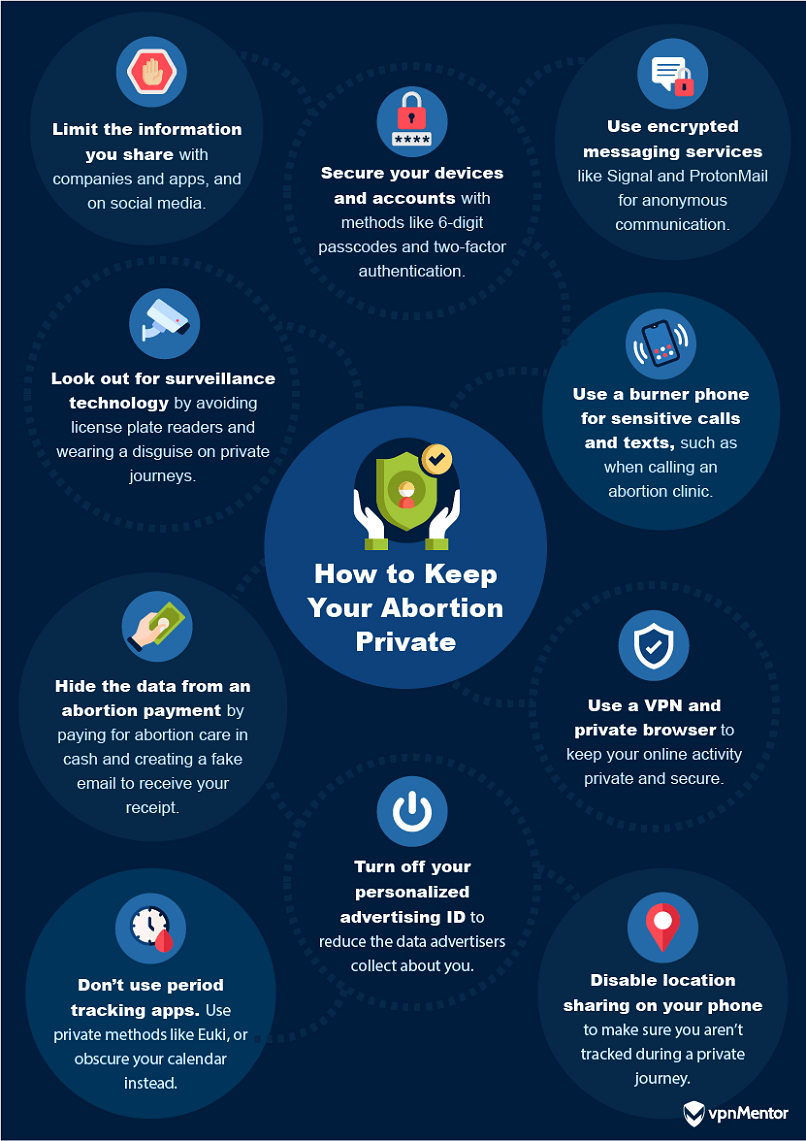
11 online privacy and security tips to keep your abortion private

By implementing these 11 steps, you can help avoid sharing data about your abortion care or plans, and ultimately prevent police from finding out about your abortion.

1. Limit the Information You Share

If you limit the abortion-related data you share, you can weaken any investigations into your healthcare.

You can edit your apps’ permissions on your phone to restrict their access to potentially incriminating data, like your medical data or location history. On iOS, you can edit app permissions in Settings > Privacy & Security. On Android, navigate to Settings > Permission Manager to restrict apps’ access to your data (we cover location settings in more detail in Step 7). Alternatively, you could steer clear of apps that request access to abortion-related data.

You may also want to avoid apps and services that collect information seemingly unrelated to their function (e.g., a flashlight app that accesses contact information). They could be excessively harvesting user data that might later be accessed in an investigation. Read companies' privacy agreements or contact them to find out how they use your data if you're unsure.

You ought to be very selective about the information you post online. You shouldn’t post about being pregnant or receiving abortion care, and you shouldn’t display your content to strangers, either. Posting anything while you’re waiting in or even near an abortion clinic is also off limits – metadata from your posts could reveal where you are.

2. Secure Your Devices and Accounts

Adopting strong authentication measures for your devices and online accounts can prevent someone – such as an anti-abortion protester, family member, or suspicious colleague – from looking through your device to expose data about your abortion.

Add a passcode, password, or lock to your devices if you haven’t already. Adopt the strongest security measures for extra protection, such as 6-digit passcodes.

Try not to use biometric authentication, such as face ID or fingerprint ID. With biometric authentication turned off, a person who’s trying to expose your abortion will find it harder to force you to open your device.

In addition to securing your device, you can turn on two-factor authentication to secure your email app, telehealth platform, messaging apps, and any other online accounts where possible. Rather than asking users for a single password, two-factor authentication strengthens account security by asking for two separate forms of identification to access accounts.

3. Use Encrypted Messaging Services

While unencrypted communication apps like Facebook Messenger might collect your messages, end-to-end encrypted messaging services can’t. End-to-end encryption keeps your messages secure by making them unreadable to anyone other than you and the person you message, in turn hiding them from interested parties (like law enforcement).

While end-to-end encryption prevents third parties from reading your messages, iPhone users should remember that their device’s iCloud Backup may negate this security feature on WhatsApp and iMessage, two popular encrypted messaging platforms. That’s because iCloud Backup may still access messages from these apps and store them in a readable format, which law enforcement could retrieve. WhatsApp is also unfavorable because it collects a significant amount of user data.

Signal is a better option that doesn’t collect users’ messages or contact data and has additional privacy features, including the ability to mask your phone number and IP address. If you’re using Signal, make sure to enable the app’s disappearing messages feature.
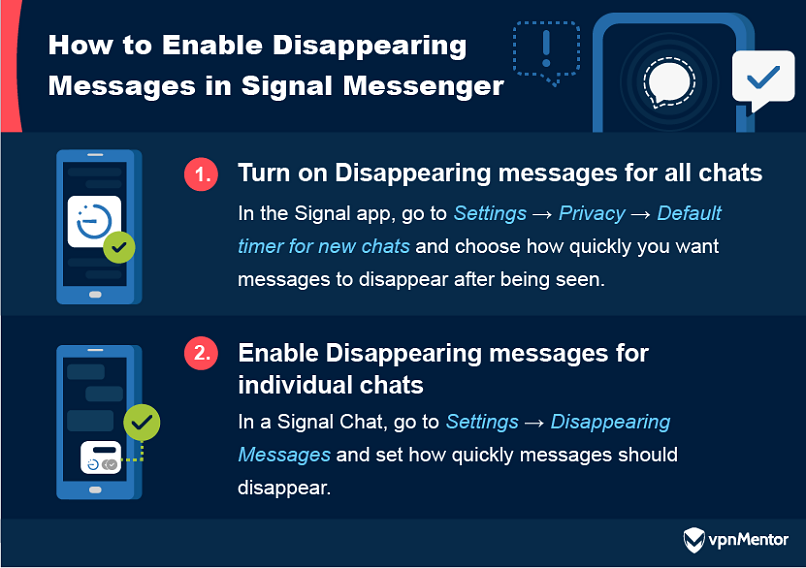
How to enable Disappearing messages in Signal Messenger

If you need to discuss your situation via email, ProtonMail’s encrypted mail service is a better option than popular platforms like Gmail, Outlook, or Apple Mail.

Encryption on these platforms may only work when your emails are in transit, or when they’re delivered to another mail application that supports the same cryptographic protocol (the set of rules used for secure communication). That means vendors and third parties could still read your emails and, at the very least, security features can be awkward to use.

Unlike many popular email service providers, ProtonMail’s password-protected feature lets you send end-to-end encrypted emails to any account. The platform also allows you to send anonymous and self-destructing emails, and doesn’t store your email content.

4. Use a Burner Phone for Sensitive Calls and Texts

A burner phone is a cheap, prepaid phone that you can buy anonymously and destroy after use. Your identity isn’t tied to a burner phone or any of the calls and texts a mobile provider collects from it. That means using a burner phone can help you avoid being detected by law enforcement when talking about your situation over the phone.

You can follow these best practices for purchasing and using a burner phone to maintain your anonymity:

  • Purchase a dumbphone and prepaid SIM from a convenience store using cash.
  • Don’t reveal any information that could identify you in messages and texts.
  • Don’t use your burner phone from your home or place of work; instead, make calls from random locations.
  • Don’t have your smartphone with you when using a burner phone.
  • Dispose of the battery, SIM, and phone separately when finished.

Burner apps, fake number apps, and anonymous texting services can add a layer of privacy to your communications. But remember that these services may still collect potentially incriminating messages that can be handed over to police.

5. Use a VPN

A VPN is a security tool that redirects your internet signal through a third-party host, which alters your IP address and helps mask your location. VPNs also encrypt the data you send and receive to keep it private and unreadable to others, such as ISPs, browsers, hackers, and law enforcement. This will help protect you when searching for information about abortion care online.

You can use a VPN with a no-logs policy and a kill switch to make sure your online activity is protected while you plan your abortion care. A no-logs policy means the VPN doesn’t collect data transmitted through its network, and a kill switch blocks your internet access if your connection to your VPN drops. This prevents your data from leaking online.

While a no-logs policy should help keep your data private, some VPNs have been known to save sensitive user data even with these policies in place.

As such, for extra peace of mind, you may also want to choose a VPN that isn’t registered in a nation within one of the Five, Nine, or Fourteen Eyes privacy agreements. US law enforcement could potentially request access to data passing through VPN providers based in these nations.

If you're interested in better securing your internet connection with a VPN, we have a list that highlights the features of some of the best.

6. Use Private Internet Browsers

Private internet browsers can keep your abortion-related data safer by hiding your online search history and by blocking cookies (the small files websites use to track you). The best options also increase your anonymity by masking details like your IP address and device.

Brave and DuckDuckGo are two browsers that offer better privacy than the incognito or private modes on services like Google Chrome, Microsoft Edge, and Mozilla Firefox. If you’re restricted to these services, DuckDuckGo also offers a browser extension that can boost their privacy credentials.

Neither Brave nor DuckDuckGo collect identifiable data about you, and both services completely mask your identity from websites, browsers, and ISPs. If you choose to use a private internet browser, consider pairing it with a VPN for additional security while browsing.

Tor Browser is another privacy-focused web browser that cloaks your identity and location as you search online. While Brave and DuckDuckGo block online trackers and avoid saving your data to keep you anonymous, Tor completely re-routes your web traffic through several random servers, hiding your IP address and browsing activity in the process.

Tor adds an extra layer of privacy and anonymity to your data. However, Tor is less user-friendly than other browsers and isn’t completely secure on its own. As such, pairing it with a VPN is crucial.

If you need to use a standard browser, you can still increase your privacy with browser extensions like:

  • Privacy Badger for blocking trackers
  • uBlock for blocking ads that could track you
  • DuckDuckGo for anonymous internet searching

7. Disable Location Sharing on Your Phone

A device or app with permission to monitor your location could track your visit to an abortion clinic, creating a pool of incriminating location data police or prosecutors could access. You can turn off your phone’s location-sharing settings to prevent companies from collecting this data.

On Apple, switch off Location Services and the Share My Location feature to block access to your location.
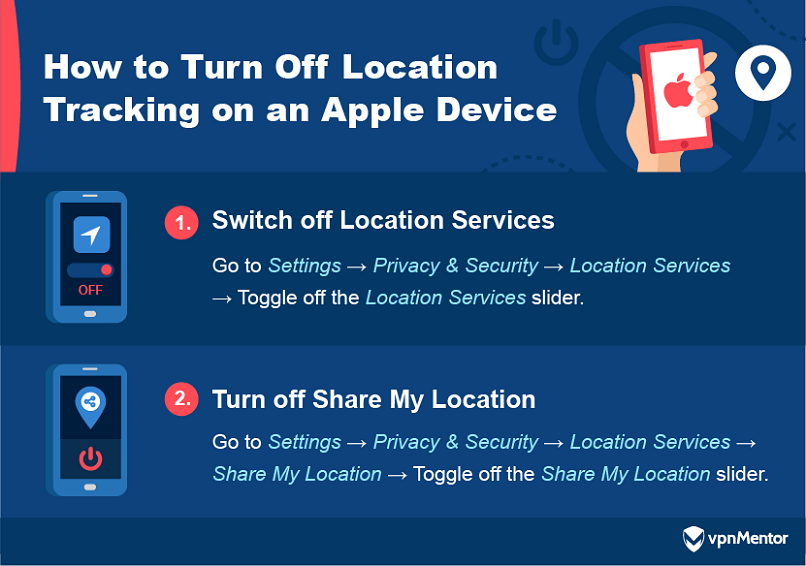
How to turn off location tracking on iOS

On Android, toggle off your phone’s Location slider and disable Location services.
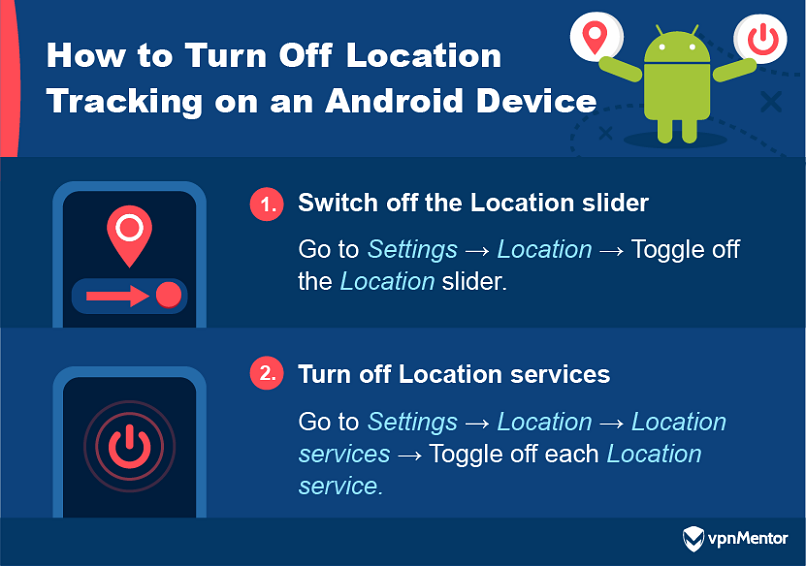
How to turn off location tracking on Android

Note: Turning off your phone’s location settings will prevent some apps and services from working.

In addition to switching off your phone’s location-sharing settings, you may also want to avoid connecting to public WiFi while visiting a sensitive location. Your device could leave behind a data trail that reveals your IP address and online activity. You may also be vulnerable to man-in-the-middle attacks when connected to public WiFi, where someone intercepts data sent to or from your device.

8. Turn Off Your Personalized Advertising ID

Your device has a unique ID that advertisers access to track the apps you use, the websites you visit, and the actions you take on your device (like making purchases).

While advertising IDs are technically anonymous, law enforcement can associate them with other available data (such as geolocation) to identify a suspect. You may want to turn off your advertising ID if you’re planning an abortion and are worried about your privacy.
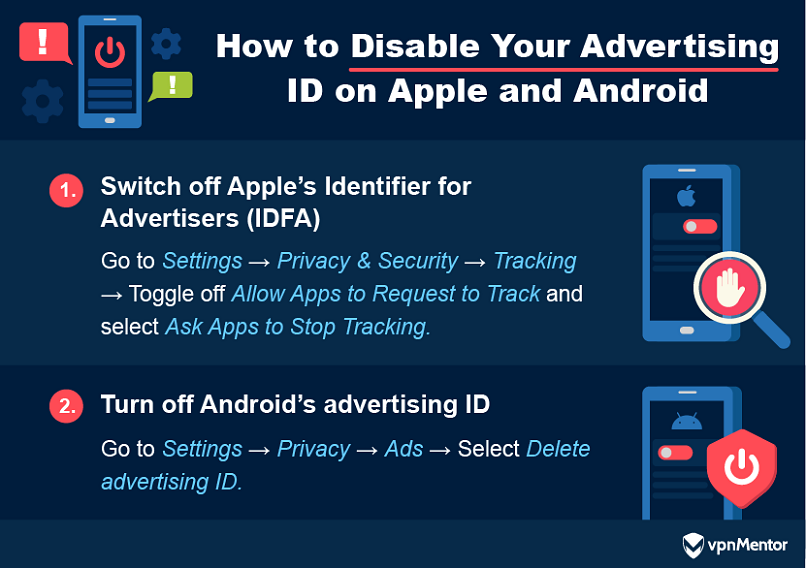
How to disable a phone's advertising ID

Advertisers may have already stored data associated with your advertising ID. Consider paying for a professional data deletion service, such as Incogni, to find these companies and ask them to delete your data.

9. Don’t Use Period Tracking Apps

Period tracking apps like Glow and Ovia are popular in part because of the personalized experience they offer. However, this personalization comes at a cost. Many of these apps share the highly sensitive personal information they collect with third parties – including data about users’ cycles, fertility, and activity during their period.

Since the overturning of Roe v. Wade, some fertility tracking apps have released updates to offer a more secure and private experience. Flo’s “anonymous mode,” for example, removes users’ names, email addresses, and other identifiers from their profiles when active.

While privacy experts have welcomed the update, they also warn that it may not be fully anonymous, and advise users to be careful about the information they input into the app.

For people concerned about their privacy who want to track their cycles, Euki is a much safer alternative to many of the more popular apps. Euki doesn’t collect or store any of your data (not even anonymized data), which means it has nothing to offer law enforcement. Plus, it features security measures like PIN protection and a false screen setting.

You could also use an encrypted calendar app like ProtonCalendar to track your cycle. If you use a calendar app, instead of writing what you’re tracking, consider placing random emojis on the first and last days of your cycles. This will help obscure the meaning of your notes, and keep your cycle private.

10. Hide the Data Trail from an Abortion Payment

Police and prosecutors could access proof-of-purchase data – such as bank statements and digital receipts – when gathering evidence about someone who’s paid for abortion care. If you’re concerned about your privacy and need to make a payment, there are a couple of simple steps you can take to hide your proof-of-purchase information.

First, pay for abortion care, any medication, and abortion aftercare using cash. Purchases made with your bank card show up on your bank statement, which police could read.

Second, create an anonymous email address using fake personal information and a burner number to receive any digital receipts from sensitive payments. Once you receive your digital receipt, immediately delete the email and your account.

11. Look Out for Physical Surveillance Technology

Your phone and computer aren’t the only devices that monitor your movements. Investigators can use facial recognition technology to identify you in security camera footage as you travel to an abortion clinic or visit a pharmacy. There’s also growing concern police will access license plate readers, which identify the owners of vehicles, to track the movements of someone traveling for an abortion.

Wearing a simple disguise can help you avoid identification by surveillance cameras. A scarf, mask, hat, and a pair of large dark sunglasses are enough to obscure your appearance. A disguise will also help protect your identity from the public or anti-abortion protestors.

You can’t obscure your car’s license plate without breaking the law, but you can take steps to avoid license plate readers altogether. Of course, swapping your car for a taxi, bus, or train creates an entirely separate data trail. But you can feasibly plan your route to avoid license plate readers using camera maps, or cycle through areas where you might otherwise get pictured, such as in cities.

Protect Yourself from Outdated Privacy Laws

America’s worst data privacy fears could be realized following the overturn of Roe v. Wade.

In recent decades, technologies and devices have encouraged us to share increasing amounts of our personal data, while the laws designed to protect our privacy have struggled to keep up. In fact, the Federal Law that protects your online data was passed in 1986 – which means it’s older than Facebook, Google, and even the World Wide Web.

The Dobbs v. Jackson ruling has highlighted the deficiencies in America’s outdated privacy regulations. 50 years ago, police would have had to search a person’s property or doctor’s office to gather evidence about an abortion. Now, investigators can gather detailed data about our private lives and family decisions from our personal devices, and the third-party technology companies we trust to manage our personal information.

Legislators need to draft federal laws that give greater protections to our information online. Big technology companies must take steps to protect users’ sensitive data – perhaps by not collecting it at all. Until we see widespread changes, however, people will need to protect their own data, especially when it comes to something as sensitive as abortion care.


Leave a comment
  • 1
  • ...
  • 15
  • 16
  • 17
  • ...
  • 18
  • ...
  • 19
  • 20
  • 21
  • ...
  • 22
  • ...
  • 23
  • 24
  • 25
  • ...
  • 65

Women's Voices Media - Newsletter

Powered by follow.it

Search

Act Now!

  • HAVE YOU CONTACTED YOUR SENATORS AND/OR YOUR HOUSE REP TODAY?

Recent Posts

  • YOUR ATTENTION PLEASE.
  • DESPITE THE OBSTACLES - A WOMAN FARMER SHE WAS DETERMINED TO BE!
  • UNITED AIRLINES, IT'S ABOUT TIME!
  • No , anorexia is not a pretty skelletton !
  • ATTENTION VOTERS of the COMMONWEALTH of VIRGINIA!
  • ARE YOU READY TO FACE THE TRUTH?
  • BLACK MATERNAL HEALTH AWARENESS WEEK
  • SENTIMENTS EXPRESSED ALL OVER THE COUNTRY MARCH 28, 2026
  • WORLD WATER DAY – ACCELERATING CHANGE
  • A POIGNANT ESSAY FROM HEIDI HENRY: THE NATIONAL DEBACLE
  • Renee Nicole Good
  • Trump’s War on Mail-In Voting Threatens the Foundations of Democracy Itself
  • The GOP Is About To Devour Its Own King
  • WOMEN'S JUSTICE
  • Civil Discourse with Joyce Vance
  • Why Are Men Still Considered the Default?
  • The Animal Feed Industry’s Impact on the Planet
  • How a 20th-Century Family Planning Agenda Fueled the Climate Crisis
  • CALL YOUR SENATORS:   TELL THEM TO VOTE “NO!”
  • WHAT THE BUDGET CUTS ARE REALLY ABOUT

Recent Comments

  • chandlerbaxter on BURN THE BARBIES, PAUSE THE PINK
  • dracorouge on FROM RI TO WI: MORE PRO-CHOICE AND PRO-ERA CANDIDATES
  • jj on OPINION: FEMINISM HAS BECOME TOO EXTREME
  • jj on OPINION: FEMINISM HAS BECOME TOO EXTREME
  • admin on THE 2ND IMPEACHMENT OF TRUMP!
  • andreajoy on VOTE!
  • marthaburk on STAND UP & SPEAK OUT!
  • admin on VOTE!
  • urbancat on VOTE!
  • marthaburk on Rep. Alexandria Ocasio-Cortez (D-NY) Responds to Rep. Ted Yoho (R-FL)
  • armandolibertad on Rep. Alexandria Ocasio-Cortez (D-NY) Responds to Rep. Ted Yoho (R-FL)
  • armandolibertad on DON'T EXPRESS OUTRAGE WITHOUT ACTION!
  • allegra22 on GET SMART AMERICA!
  • admin on My Personal Response To Trump by Lisa Wilson Berkowitz‎
  • admin on THE REAL “WELFARE QUEENS” ARE CORPORATE CEO’s

Wit & Wisdom

Women's history is an assential and indispensable part of the national narrative. By understanding the achievements,struggles, and contributions of women throughout history, we gain a fuller, more accurate. and more inclusive understanding of our collective past.
Hillary Clinton
June 2026
Sun Mon Tue Wed Thu Fri Sat
  1 2 3 4 5 6
7 8 9 10 11 12 13
14 15 16 17 18 19 20
21 22 23 24 25 26 27
28 29 30        
 << <   > >>

Search

XML Feeds

  • RSS 2.0: Posts
  • Atom: Posts
What is RSS?

Your Voice
This collection 2026 by Janice Jochum
Copyright 2019 United Activision Media, LLC
Creative Commons License
This work is licensed under a Creative Commons Attribution-NonCommercial 4.0 International License.
• Contact • Help • CMS + user community

b2
Cookies are required to enable core site functionality.