HomeYour VoiceHerStoryYour MultimediaResource LibraryAbout WVMCode of ConductRegisterLog in

  • Latest Post
  • Post index
  • Archives
  • Categories
  • Latest comments
  • Contact
  • About HerStory
  • Tell A HerStory
  • 1
  • 2
  • 3
  • 4
  • 5
  • ...
  • 6
  • ...
  • 7
  • 8
  • 9
  • 10
  • 11
  • 12
  • ...
  • 34

MOVING FORWARD TOGETHER! WOMEN EDUCATING & INSPIRING GENERATIONS.

MOVING FORWARD TOGETHER! WOMEN EDUCATING & INSPIRING GENERATIONS.

For 2025, the National Women’s History Alliance (NWHA) proudly presents the theme “Moving Forward Together! Women Educating & Inspiring Generations.”

This theme celebrates the collective strength and influence of women who have dedicated their lives to education, mentorship, and leadership. Through their efforts, they have served as an inspiration for all generations — both past and present.

In the past year, the values of equity, diversity and inclusion have  been increasingly challenged. Misinformation and disinformation make it more critical than ever to include all generations in the effort to promote these principles. Advocating for equity and inclusion requires courage, especially when faced with those who seek to misinterpret, exploit, or discredit these values.

In 2025, the theme "Moving Forward Together! Women Educating & Inspiring Generations" celebrates the collective strength, equality, and influence of women who have dedicated their lives to education, mentorship, and leadership, shaping the minds and futures of all generations. Importance and Relevance Education has always been a powerful catalyst for change, and women have been at the forefront, driving this transformation. From classrooms to boardrooms, and from grassroots movements to global initiatives, women educators and leaders have played a pivotal role in nurturing minds and inspiring action. This theme underscores the importance of acknowledging and celebrating these contributions, especially at a time when inclusive and equitable education is more critical than ever.

Goals and Objectives Honor: Recognize the achievements and contributions of women educators, mentors, and leaders.

Inspire: Motivate all generations to pursue education and leadership roles, and to work for equality and diversity.

Educate: Raise awareness about the importance of women's roles in influence and leadership.

Unite: Bring together communities to celebrate and support women's history and achievements, building awareness of the common issues and strengths that all women share.

Promote: Enhance the visibility of diverse women, their contributions, and their achievements.

Key Messages: Women have been instrumental in shaping societies, breaking barriers, and building bridges. Education and mentorship by women have a lasting impact, fostering leaders and change-makers.

Celebrating women is essential for promoting gender equality and inspiring future generations.

For more stories of remarkable women, see HERSTORY on womensvoicesmedia.org

Leave a comment

Helen A. Cook 1837-1913

Helen A. Cook 1837-1913
Helen A. Cook   1837-1913

Helen Appo Cook was born in the state of New York in 1837, and died in Washington, D.C. of pneumonia and heart failure in 1913. She was born to William Appo and Elizabeth Brady Appo, both African American. Her father was a musician, who taught both music and French when he was not performing, and her mother owned a millinery business. Not much is known concerning Cook's upbringing. It is believed that she was well-educated, as she came from a prominent family, and it has been reported that she could speak French and play the organ with great skill. Through her mother, Helen Appo Cook became familiar with the cause of women's rights. In a letter to Susan B. Anthony in 1898, Cook describes accompanying her mother at a young age to the home of Lucretia Mott where she listened to several speakers discuss human freedom and women's rights. These experiences led her to attend the first suffrage conference held in Washington D.C., which she describes as a disappointment in that women's suffrage was completely ignored, and the suffrage of newly emancipated slaves was the main topic of concern.

In 1864, Helen Appo married John Francis Cook, Jr. and moved to Washington, D.C. where her husband was an educator and tax collector. Together they had five children. The Cook family was one of the most prominent and wealthy black families in the nation's capital at the time. Her in-laws were known for their work in education, religion, politics, and community service.

Upon moving to Washington, D.C., Helen Appo Cook took an interest in the situation of black women. Though some sources report Helen Cook to have been a mere housewife, she was actually a key leader in the women's club movement. In 1892, Cook began working with the Colored Women's League and became its first president, a role that she would continue to fill until 1903. The purpose of the Colored Women's League was to collect facts regarding the moral, social and intellectual development of blacks, to foster unity, to encourage progress, and to determine how best to promote the interests of blacks. The League also held sewing classes, mothers' meetings, held garden parties to raise funds for day nurseries, and offered night classes to black mothers.

In 1895, Cook traveled to Boston where she attended the First National Conference of Colored Women of America. The conference was called in response to an assault on the character of black women by the Missouri Press Association, and lasted for three days. Cook was elected vice president of the conference, and on July 29th addressed her peers calling for unity among black women through the creation of a national league. As a result of the conference, the National Federation of Afro-American Women was created with the goal of restoring the reputation of all black women across the country. A year later, in 1896, Cook's vision of a national league came to fruition when the Colored Women's League and the National Federation of Afro-American Women consolidated under the National Association of Colored Women. The consolidation was the result of much negotiation between the two clubs concerning leadership. The NACW was placed under the leadership of elite and well-educated women (including Helen Cook), who viewed racial uplift as a means of maintaining their own social status. However, Cook has been documented as being genuinely concerned with the welfare of black women and children.

In 1898, Cook joined W.E.B. Du Bois at the Congress of Mothers Conference. In her speech "We Have Been Hindered: How Can We Be Help?" (See p. 50 of Proceedings of the Second Annual Convention of the National Congress of Mothers) Cook denounced the tendency for whites to identify negative behavior traits as inherent among blacks. Instead, Cook explained that such traits were the effects of poverty and prejudice, to which blacks had disproportionately fallen victim. In 1906 at the age of sixty-nine, Cook continued her reform efforts by joining the Niagara Movement. Led by Du Bois, the Niagara Movement explicitly and forcefully condemned racial discrimination and segregation. Its members, like Helen Cook, demanded economic and educational opportunities, as well as the right to vote for both black men and women.

Helen Appo Cook's spirit as a leader is best captured in an article from the Washington Colored Women, which noted "Under her intelligent, tactful and energetic leadership a magnificent organization has been perfected, and many reforms helpful to our women, have been instituted."

By Ciara VanCour, undergraduate student: SUNY Potsdam, Potsdam, NY

https://documents.alexahttps://documents.alexanderstreet.com/d/1009623892nderstreet.com/d/1009623892

Sources:

Wikipedia sketch of Helen A. Cook. Accessed online at https://en.wikipedia.org/wiki/Helen_Appo_Cook.

Report of the Proceedings of the Second Annual Convention of the National Congress of Mothers, Held in the City of Washington, D.C., May 2nd-7th, 1898, by The National Congress of Mothers. (Philadelphia, PA: Geo F. Lasher, 1899).

Carle, Susan D. Defining the Struggle: National Organizing for Racial Justice, 1880-1915. Oxford, U.K.: Oxford U.P., 2015.

Gordon, Ann D. The Selected Papers of Elizabeth Cady Stanton and Susan B. Anthony: An Awful Hush, 1895 to 1906. New Brunswick, N.J.: Rutgers U.P., 2013

Moore, Jacqueline M. Leading the Race: The Transformation of the Black Elite in the Nation's Capital, 1880-1920. Charlottesville, Va: U of Virginia P, 1999.

Smith, Jessie Carney. Notable Black American Women. Detroit: Gale Research, 1992.

Washington Colored American (Washington), May 27, 1899, quoted in Jessie Carney Smith, Notable Black American Women, Book II (Detroit: Gale Research, 1992), 139.

"We Have Been Hindered" speech can be found at:

"Congress of Mothers . . . Mrs. Helen A. Cook's Eloquent Defense of Negro Character—the Spirit of Imitation and Environment Responsible for Alleged Race Traits and Tendencies." Washington Colored American, June 4, 1898.

Find-a-grave death record at https://www.findagrave.com/memorial/220040598/helen-cook.


Leave a comment

HONORING THREE GREAT WOMEN DURING BLACK HISTORY MONTH

HONORING THREE GREAT WOMEN DURING BLACK HISTORY MONTH

Helen Appo Cook    (1837-1913) 

Helen A. Cook was a leader for African American women's clubs and an advocate for universal suffrage and education.  Cook attended the first convention for universal suffrage in Washington, DC, but was a critic of Susan B. Anthony's lack of support for Black men's suffrage. 

She was president of the Colored Women's League and a co-founder of the National Association of Colored Women in 1896.  

Georgia Douglas Johnson      (1877-1966)   

Johnson was a poet, playwright, muscian, teacher, and part of the Harlem Renaissance.  She protested racial inequities and lynching through her poetry and plays. 

Her S Street home in Washington, DC, was a gathering place for African American writers and intellectuals for more than forty years.  

Johnson's work, published in "The Crisis" was said to have influenced Maya Angelou.

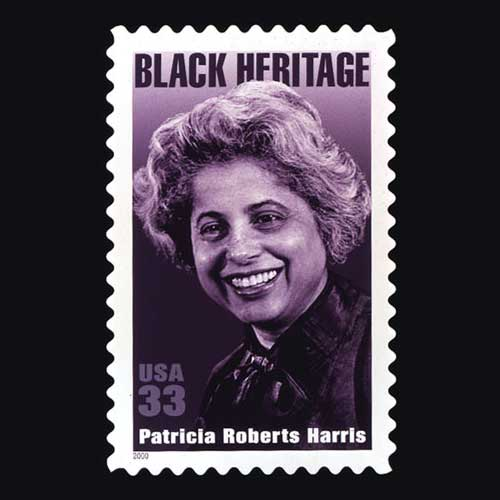
Patricia Harris      (1924-1985)   

Harris, a lawyer, educator, and public servant, broke many barriers for African American women.

She was the first to be a U.S. Ambassador; first to be a member of the President's Cabinet as Secretary of Housing and Urban Developement; and the first member of the board of a Fortune 500 company - IBM.

Learn more about these these three and many more remarkable women at https://womensvoicesmedia.org/index.php?blog=8   You will enjoy the reading and it will make you proud.

Leave a comment

Commemorating Native American Heritage Month

Commemorating Native American Heritage Month

From the Pueblo Revolt of 1680 to the Battle of the Little Bighorn in 1876 to the Occupation of Wounded Knee of 1973 to the election of the first Native women to Congress in 2018 to recent struggles to protect salmon, we will never stop the long walk towards sovereignty and the fulfillment of our treaties. We have persevered during many attempts to eradicate and silence us, and we will continue to fulfill our ancestors’ hopes and dreams.

Please read a brief history of Native resistance to honor Native American Heritage Month and power our continued struggle for our lands, our cultures, our values, and for racial justice.

1680: The Pueblo Revolt

A collective rebellion against Spanish colonialism which kept Spanish settlers out of the area (now known as New Mexico) for over a decade, allowing the Pueblos to continue stewarding their land and practicing their traditional culture.

1876: Battle of the Greasy Grass (Battle of the Little Bighorn)

While wrongly popularized as ‘Custer’s Last Stand,’ the Battle of the Greasy Grass, also known as the Battle of Little Bighorn, took place in June 1876. Colonel George Custer had moved to the Plains to extract gold and control Tribes. Crazy Horse and Sitting Bull led an assembled group of Lakota, Northern Cheyenne, and Arapaho warriors who fought back against Custer, who was outnumbered and defeated.

1900: Native Hawaiians oppose U.S. illegal annexation

Since the first U.S. settlers in the 1820s, Native Hawaiians led organized resistance against U.S. attempts to annex their lands. When President McKinley signed a treaty of annexation in the 1890s, 95% of the Indigenous peoples in Hawai’i signed petitions which were delivered to Washington D.C., killing the annexation legislation.

1958: Lumbee drive off KKK in The Battle of Hayes Pond

A Ku Klux Klan meeting was set to take place near Maxton, North Carolina, but several hundred Lumbee men arrived at the cornfield near Hayes Pond during the KKK meeting. They circled around and while an altercation took place, the only damage was a single light bulb. The KKK member who had arranged the event was arrested and the Lumbee men were praised around the country. There has not been another attempt to hold a KKK meeting in that county since.

1961: Fish-ins

In the 1960s and 1970s, Native fishermen in the Pacific Northwest were inspired by the Civil Rights sit-ins, utilizing similar tactics with fishing in order to bring attention to treaty rights outlined in the 1854 Treaty of Medicine Creek. This led to a victory in 1974 when a court decision affirmed that, according to the treaty, Native fisherpeople must have an equal voice in the management of the fishery and have a right to take up to 50% of all potential fishing harvests.

1969: Occupation of Alcatraz Island

After the Alcatraz prison closed and the island had been deemed surplus federal lands, Natives cited a federal treaty that called to return out-of-use federal lands to Indigenous people. For nearly two years, hundreds of Native protesters lived on Alcatraz Island, running a popular radio station and working with groups like the Black Panthers and the Brown Berets on supplies and security. The land had been used by Natives since long before European settlers arrived, and its reclamation inspired people around the world.

1973: Occupation of Wounded Knee

Beginning in February 1973 and lasting 71 days, 2,000 Native activists joined AIM (American Indian Movement) protestors at the site of the 1890 Wounded Knee massacre in opposition to collusion with paramilitary federal police. Native participants faced federal charges, including Leonard Peltier, who is now the longest-serving political prisoner in the United States.

1996: Diné traditional activists win suit against multinational energy company and owner of Peabody Coal Company

In response to previous mines that had destroyed the health, land, and groundwater of the Diné people, 500 people successfully petitioned the federal government to deny a permanent operating permit for this multinational energy company. Their victory prevented further degradation of Native land.

2016: Protests at Standing Rock against the Dakota Access Pipeline

Thousands of people from around the United States joined the Standing Rock Sioux Tribe to block construction of the Dakota Access Pipeline. Their efforts succeeded under the Obama administration until Trump took office in 2017, and the fight continues in the courts.

2017: Indigenous Women Rise: Women's March on Washington

On January 21, Indigenous women joined the largest single-day protest in U.S. history, led by LaDonna Harris (Comanche) who was appointed as an honorary co-chair for the Women’s March. While many women wore pink, Indigenous women wore turquoise scarves or shawls in a visual show of force.

2020: Deb Haaland becomes Secretary of the Interior

U.S. Representative Deb Haaland (Laguna Pueblo) was nominated by President-elect Joe Biden to become the first Native member of a presidential cabinet. Haaland was later confirmed as the Secretary of the Interior, where she oversaw a record number of Tribal-federal co-stewardship agreements and an investigation into horrors perpetrated on Native children and families through boarding schools, which led to a history-making apology from President Biden.

2021: Biden restores protections for Bears Ears

After his predecessor Donald Trump reduced the size of the Bears Ears National Monument by 85%, President Biden restored protections for Bears Ears, re-establishing Tribal Nations as collaborative managers of this sacred landscape. Responding to the movement led by Tribal Nations, President Biden also rescinded the Keystone XL pipeline’s permit and designated monuments like the Baaj Nwaavjo I’tahttps Bh Kukveni National Monument.


Through time immemorial, Indigenous people have stood up for our rights, our lands, and our cultures. That struggle continues today, whether it is protecting against modern-day land grabs by the federal government or defending sacred places from corporate polluters.

Native Organizers Alliance Action Fund         https://nativeorganizing.org/


Leave a comment

Nina Otero-Warren (1881 -1965 }

Nina Otero-Warren (1881 -1965 }
Nina Otero-Warren  (1881 -1965 }

Deftly negotiating between Hispano, Anglo, and American Indian worlds throughout her life, Adelina Isabel Emilia Luna Otero was born on October 23, 1881 on her family’s hacienda near Los Lunas, New Mexico.

The Otero family were wealthy and politically powerful in the Rio Abajo (Lower River) region of what is now New Mexico. The family of her mother, Eloisa Luna Otero, were descended from some of the earliest colonists in New Mexico; the family of her father, Manuel B. Otero, traced his lineage to the Spanish occupation of the area in the 1700s. As a child, she was known as Adelina Otero; as an adult, friends and family called her Nina.

Once railroads arrived in the region in 1881, white immigrants (known as Anglos) began traveling west in large numbers, actively displacing the Native American, Spanish, and Mexican populations who were already there (though the Spanish had already displaced many of the Indigenous people of the area). When Nina was not quite two years old, her father was shot and killed by an Anglo squatter who had moved on to the family’s land. A few years later, in 1886, her mother remarried. Alfred Maurice Bergere, who had family roots in Italy, was an Englishman who immigrated to the United States when he was sixteen years old. An Anglo, he was among those who moved west, arriving in New Mexico in 1880. Nina grew up in a household of twelve children, including her two younger brothers and her nine half siblings.

All of the Bergere children were educated. Nina attended St. Vincent’s Academy in Albuquerque until she was eleven years old, when she went to St. Louis Missouri to attend Maryville College of the Sacred Heart (now Maryville University) for two more years. She returned home to her family’s hacienda when she was 13. She helped educate her siblings and contributed to the work on the family ranch -- experiences she recorded in her book, Old Spain in Our Southwest.

The family moved to Santa Fe in the New Mexico Territory when Nina was sixteen, after Alfred Bergere was hired as a judicial clerk.[1] Nina became a regular fixture in the social life of the Santa Fe elite, described as “a graceful, intelligent young woman with an indomitable disposition,” and “high spirited and independent.” She met her husband, Rawson D. Warren, in 1907. Thirty five years old, he was the commanding officer of the Fifth US Cavalry stationed at Fort Wingate, near Gallup, New Mexico.[2] Nina, who was 26 at the time, married Warren on June 25, 1908 becoming Nina Otero-Warren.  After their Santa Fe wedding, Nina and Rawson moved back to Fort Wingate. Unhappy in her marriage, Nina divorced her husband after only two years, and returned to Santa Fe.

Since divorce was strongly frowned upon in both Anglo and Hispano cultures, Nina described herself as a widow, and kept Otero-Warren as her last name. She became active in New Mexico politics, and worked towards women’s suffrage. In 1912 she moved to New York City to keep house for her younger half-brother, Luna Bergere, who was studying at Columbia University. While in New York City, Nina volunteered at a settlement house in the city.[3] When Nina’s mother died in 1914, she -- the eldest daughter -- moved back to Santa Fe, and as was expected of her, took over the household duties, which she took up as well as her activist work. Her suffrage work caught the attention of Alice Paul, who tapped Nina in 1917 to head the New Mexico chapter of the Congressional Union (precursor to the National Woman’s Party). Paul and other suffragists had realized that the support of Hispano’s in New Mexico was crucial to winning suffrage; Nina was an ideal choice. She insisted that suffrage literature be published in both English and Spanish, in order to reach the widest audience.

Nina certainly had enough family money that she did not have to work. And yet, in 1918, while still working for suffrage and taking care of her family, Otero-Warren took the job as Superintendent of Public Schools in Santa Fe County -- a job she held until 1929, working to improve the conditions in rural Hispano and Native American communities. During this time, the federal government was pressuring for assimilation of non-whites, including Native American and Hispano people, into white America. This assimilation meant loss of traditional language, customs, and often family ties. As Superintendent of Public Schools, Nina worked to balance the demands of the federal government and her pride in her Spanish cultural heritage. For example, she argued that both Spanish and English be allowed in schools, despite the federal mandate of English-only. For a few years beginning in 1923, she was also appointed Santa Fe County’s Inspector of Indian Schools. She was angered by what she observed in the schools, and criticized the federal government’s Indian school system for the terrible conditions she observed.
 
In 1921, Otero-Warren ran for federal office, campaigning to be the Republican Party nominee for New Mexico to the US House of Representatives. She won the nomination, but lost the election by less than nine percent. She remained politically and socially active, and served as the Chairman of New Mexico’s Board of Health; an executive board member of the American Red Cross; and director of an adult literacy program in New Mexico for the Works Projects Administration.

Throughout her life, Nina was known both for her proper, mannered expectations of others and her unconventional personal life. Nina never remarried or had children of her own, but served as “La Nina” or godmother to her siblings, nieces and nephews, and arguably to her community. In the early 1930s, she and her partner Mamie Meadors  -- whom she had met in the 1920s -- homesteaded, establishing a ranch called “Las Dos” (The Two Women) twelve miles outside of Santa Fe. They paid $67.40 for two homestead applications, and agreed to spend an average of five months a year living on their homestead, and to improve the land by building two houses, fencing the property (1,257 acres), cultivating the land, and maintaining the road for five years. Meeting these homesteading requirements, spelled out in the Homesteading Act of 1862, meant that they received title to the land. In 1947, Nina and Mamie established a real estate and insurance company, also called “Las Dos” in Santa Fe. When Mamie died in 1951, Nina continued running the business until her death. Whether their relationship was intimate is unknown, but they lived and worked together for over twenty years. Later in life, Nina was as a “regular annual apparition” at Santa Fe’s Hysterical/Historical parade with openly-gay poet, Witter Bynner.
 
It was in the 1930s that Nina took to writing. In May 1931, she wrote “My People” for an issue of Survey Graphic with the theme of “Mexicans in Our Midst: Newest and Oldest Settlers of the Southwest.” Other contributors to this issue included D.H. Lawrence, Ansel Adams, Diego Rivera, and Georgia O’Keeffe. Her book, Old Spain in Our Southwest was published in 1936.

Nina died on January 3, 1965 in the Santa Fe home she grew up in. She had been administering the property after the death of her brother two years’ prior.

The National Park Service https://www.nps.gov/
Notes:
[1] New Mexico did not become a state until 1910. The Alfred M. Bergere House, 135 Grant Ave, Santa Fe, New Mexico was listed on the National Register of Historic Places on October 1, 1975.

[2] Fort Wingate Historic District was added to the National Register of Historic Places on May 26, 1978.

[3] Settlement houses were established by middle-class women in low-income urban areas. Settlement workers would live in the houses, with the goal of sharing knowledge and culture with their working class and poor neighbors. Settlement houses provided services like education, daycare, and health care for the communities in which they were located. One of the best known settlement houses in America was Jane Addams’ Hull House in Chicago.

Sources:
Historic Santa Fe Foundation. “A.M. Bergere House,” Historic Santa Fe Foundation.

Las Dos, New Mexico. “The Homestead Legacy: Luna Bergere Otero Family.”

Las Dos, New Mexico. “Las Dos: Two Women Homesteaders.”

Massmann, Ann M. “Adelina ‘Nina’ Otero-Warren: A Spanish-American Cultural Broker.” Journal of the Southwest, Vol. 42, no. 4 (2000): 877-896.

Morningstar, Amadea. “Nina Otero-Warren: A Graceful Non-Conformist.” The Santa Fe New Mexican, August 20, 1995.

New Mexico Historic Women Marker Initiative. “Nina Otero-Warren.”

Ybarra, Priscilla Solis. “Nina Otero,” New Mexico History.

Leave a comment
  • 1
  • 2
  • 3
  • 4
  • 5
  • ...
  • 6
  • ...
  • 7
  • 8
  • 9
  • 10
  • 11
  • 12
  • ...
  • 34

Women's Voices Media - Newsletter

Powered by follow.it

Search

Wit & Wisdom

The only time to eat diet food is while you are waiting for the steak to cook.
Julia Child
May 2025
Sun Mon Tue Wed Thu Fri Sat
        1 2 3
4 5 6 7 8 9 10
11 12 13 14 15 16 17
18 19 20 21 22 23 24
25 26 27 28 29 30 31
 << < Current> >>

XML Feeds

  • RSS 2.0: Posts
  • Atom: Posts
More on RSS

HerStory
This collection 2026 by Janice Jochum
Copyright 2019 United Activision Media, LLC
Creative Commons License
This work is licensed under a Creative Commons Attribution-NonCommercial 4.0 International License.
• Contact • Help

b2
Cookies are required to enable core site functionality.