HomeYour VoiceHerStoryYour MultimediaResource LibraryAbout WVMCode of ConductRegisterLog in

  • Latest Post
  • Post index
  • Archives
  • Categories
  • Latest comments
  • Contact
  • About HerStory
  • Tell A HerStory
  • 1
  • ...
  • 8
  • 9
  • 10
  • ...
  • 11
  • ...
  • 12
  • 13
  • 14
  • ...
  • 15
  • ...
  • 16
  • 17
  • 18
  • ...
  • 34

We'wha - "Two Spirit" (1849-1896)

We'wha - "Two Spirit" (1849-1896)
We'wha - "Two Spirit"  (1849-1896)

We’wha, a Lhamana (Zuni Two Spirit) individual, took on both male and female tasks as a Zuni cultural ambassador and pottery and textile artist. Also a spiritual leader, We’wha endeavored to preserve the history, traditions, and knowledge of the Zuni people.

We’wha was born into the Zuni tribe around 1849 in what is today New Mexico. We’wha’s mother was a member of the donashi:kwe clan (Badger People) and We’wha’s father was part of the bichi:kwe clan (Dogwood People). Orphaned as an infant (possibly the result of a smallpox epidemic) We’wha and their brother were adopted by a paternal aunt. We’wha remained part of their mother’s clan but maintained lifelong ceremonial ties their father’s clan. We’wha’s adopted family was wealthy and influential among the Zuni. Their position gave We’wha opportunities to gain special ceremonial knowledge and take part in revered cultural rituals.

Though born a male-bodied person, community members recognized that We’wha demonstrated traits associated with the lhamana as early as age three or four. In Zuni culture, lhamana (now more often described with the pan-Indian term “Two Spirit”) were male-bodied individuals who took on social and ceremonial roles generally performed by women. They usually, though not exclusively, wore women’s clothing and mostly took up labors associated with women. Lhamana constituted a socially-recognized third gender role within the tribe and often held positions of honor in the community.

We’wha received some instruction specific to men, but largely trained under their female relatives, learning critical skills for domestic tasks, such as how to grind and prepare corn. We’wha also studied crafts. Taught by a kinswoman who was an expert in ceramics, We’wha trained for years to master the elements of the pottery, many of which held ceremonial importance. We’wha became a skilled weaver (usually a male role), learning different looms in order to make blankets, belts, and sashes. We’wha became known for their talent as a craftsperson, during a period (approximately 1848-1880) in which Pueblo textiles, particularly those in the distinctive Zuni style, flourished. We’wha was among the first Zuni to sell their pottery and textiles, helping to bolster Indian arts more widely.

We’wha was a member of the men’s kachina society, which performed ritual masked dances. We’wha also joined the medicine society, beshatsilo:kwe (Bedbug People) after a shaman cured them of an ailment. Membership in these societies enabled We’wha to further their knowledge of Zuni lore and ceremonies. We’wha mastered the demanding memorization as well as the improvisational skills necessary to impart the tribal tales and stories that were part of Zuni rituals.

During We’wha’s childhood, the Zuni lived under threat of Navajo and Apache raids. As a result, they relied heavily on diplomacy, allying themselves with the Americans through the 1850s and 1860s for security purposes. However, the Zuni remained culturally and socially isolated from Americans until the 1870s. At that time, Anglo and Hispanic herders began to encroach on Zuni lands and Protestant missionaries arrived, determined to convert the Zuni to Christianity.

In 1879, the U.S. government’s newly created Bureau of Ethnology sent an expedition to collect artifacts and record the customs of the Zuni people. Anthropologist Matilda Coxe Stevenson, the wife of expedition leader James Stevenson, was immediately taken with We’wha, after encountering them working for the local missionaries. Stevenson was impressed by We’wha’s extensive knowledge of Zuni history and culture, describing them as “the most intelligent person in the pueblo.” 

Stevenson visited the Zuni numerous times between 1879 and 1897 and formed a deep friendship with We’wha. In late 1885, the Stevensons brought We’wha back with them to Washington, D.C. for six months. Like other Indian delegations to the nation’s capital, the Stevensons intended the visit to foster cultural exchange and generate interest in further anthropological research. Everyone in Washington believed We’wha to be a (cisgender) woman, so the visit garnered a great deal of attention because women rarely participated in delegations. We’wha mingled with Washington’s high society, even calling on President Grover Cleveland at the White House, where they presented Cleveland and his new wife, Frances, with a handcrafted wedding gift. Newspapers covered We’wha’s activities closely, reporting with great interest on the “Indian princess.” We’wha also assisted Stevenson with ethnographic research for the Smithsonian National Museum – they explained the significance of Zuni artifacts, posed for photographs to document Zuni weaving, and donated crafts to the museum’s collections.

We’wha may have intended to raise awareness about the Zuni in an effort to secure government assistance against squatters and other encroachers on their land. We’wha’s headline-making visit ensured the Zuni were one of the most well-known Indian tribes among Americans in the 1880s. But name recognition did not stop the U.S. Office of Indian Affairs from extending its policy of assimilation to the Zuni and other Pueblo Indians in the years following We’wha’s return. Such policies furthered the dismantling of tribal culture – including pressure to abandon the recognition of lhamana individuals – and the absorption of Indians into Anglo society.

We’wha crossed over in 1896, at the age of 49, as a result of heart disease. We’wha’s early death was considered a “calamity” among the Zuni. The two-spirit We’wha left a profound legacy as a ceremonial leader, cultural ambassador, and artist who worked to preserve the Zuni way of life.

*A note on pronouns: Various records and scholarship concerning We’wha use male and female pronouns. As Lhamana/Zuni Two Spirit individuals were recognized socially and culturally distinct from men and women during We’wha’s lifetime, the NWHM determined the singular “they” to be most appropriate.

Published June 2021.

MLA – Brandman, Mariana. “We’wha.” National Women’s History Museum, 2021. Date accessed.

Chicago – Brandman, Mariana. “We'wha.” National Women’s History Museum. 2021. www.womenshistory.org/education-resources/biographies/wewha

Leave a comment

A WOMEN’S RIGHTS HISTORY MOMENT

A WOMEN’S RIGHTS HISTORY MOMENT
A  WOMEN’S  RIGHTS  HISTORY  MOMENT

Helen Hulick was called to court as a burglary witness in November, 1938. The 29-year-old kindergarten teacher arrived in her usual attire of a top and slacks. But seeing slacks on a woman so greatly offended Judge Arthur S. Guerin that he would not allow Hulick to testify. Instead, he rescheduled her testimony and ordered her to wear a dress at her next appearance.

She refused. As the Nov. 10, 1938 issue of the L.A. Times reported, she stated: “You tell the judge I will stand on my rights. If he orders me to change into a dress I won’t do it. I like slacks. They’re comfortable.

When she appeared in slacks once more, the judge chastised her for both attire and what he perceived as problems with her demeanor. “The last time you were in this court dressed as you are now and reclining on your neck on the back of your chair, you drew more attention from spectators, prisoners and court attaches than the legal business at hand,” Guerin said. “You were requested to return in garb acceptable to courtroom procedure. Today you come back dressed in pants and openly defying the court (…)

“The court hereby orders and directs you to return tomorrow in accepted dress. If you insist on wearing slacks again you will be prevented from testifying (…)   But be prepared to be punished according to law for contempt of court.”

The Times quoted her response as follows: “Listen, I’ve worn slacks since I was 15. I don’t own a dress except a formal. If he wants me to appear in a formal gown that’s okay with me. I’ll come back in slacks and if he puts me in jail I hope it will help to free women forever of anti-slackism.”

Hulick returned wearing slacks, but this time, she also brought with her Attorney William Katz. Katz was armed with citations supporting her argument that she had the right to appear in the attire of her choice.

Judge Guerin held her in contempt of court nevertheless, sentencing her to five days in jail. There, she was forced to wear a denim prisoners’ dress. She was quickly released on her own recognizance, however, after her attorney declared they would be appealing the sentence.

As Hulick’s story garnered attention, hundreds of supporters sent letters of protest to the courthouse.

Finally, the Appellate Division overturned Judge Guerin’s contempt citation.

By taking this stand, Helen launched a national discussion that helped to free women of “anti-slackism.”


Rebecca Hains, Author

Rebecca Hains is a media and communication professor, author, and speaker whose work takes an intersectional approach to understanding children, media, and marketing. She has authored and edited five books, including Growing Up With Girl Power, The Princess Problem, and Cultural Studies of LEGO, and she is often quoted in the media. Follow this page to read posts that reflect her interests, with feminist and pop culture humor in the mix!


Leave a comment

WHAT DOES IT MEAN TO CALL SOMEONE A "MALE CHAUVINIST PIG?"

WHAT DOES IT MEAN TO CALL SOMEONE A "MALE CHAUVINIST PIG?"
WHAT  DOES  IT  MEAN  TO  CALL  SOMEONE  A  "MALE  CHAUVINIST  PIG?"

The three jabs in quick succession—male, chauvinist, pig—are part of a larger feminist history.

  • JULIE WILLETT
  •  

It would be hard to deny today that the male chauvinist pig is still alive and kicking, running amok in his own filth. The election of Donald Trump and his “grab ’em by the pussy” regime mixed misogyny, mockery, and race privilege with delight. Andrew Cuomo’s domineering behavior in politics echoed his sexually belittling actions in private. Both were proud of being jerks, personally and professionally, and both got called “male chauvinist pigs.”

Calling someone a male chauvinist pig offers sweet revenge, a chance to dehumanize those who dehumanized you. But the insult contains more than a laugh. The three jabs in quick succession—male, chauvinist, pig—are part of feminist attempts to place men’s sexism within a broader American political milieu. The phrase is also a prime example of how men respond to being called sexist: They think it’s funny.

Named after the (probably apocryphal) French soldier Nicolas Chauvin, who kept trumpeting Napoleon’s greatness no matter the ill treatment doled out to him, the term stands for jingoism coded as false honor.

Within the American Communist Party in the early 20th century, chauvinism was a common insult. It called out a tribal attachment—to one’s race, gender, or nationality—that distracted from class solidarity. Questions of how identity intersected with class played out among chauvinisms. Purges to rid the party of racists were discussed as ending “white chauvinism.” In complaining about sexism to Vivian Gornick in her book on American communism, one woman wondered how “not one goddamned Communist was ever thrown out for male chauvinism.” In the 1960s, as feminists—many of them red-diaper babies—created their own networks, they adopted the language to name patriarchy.

Pig was an obvious addition, an old insult for those holding corrupt power. Its historical links to racialized policing perhaps led to “pig” as a moniker for white police terror. In the post-Reconstruction South, Black Codes in some states included “pig laws,” which attempted to turn former slaves into captive laborers by penalizing minor infractions—like stealing a $3 pig—with long terms of incarceration. But Huey Newton of the Black Panther Party said it was simpler: “Pig” was chosen to show “grotesque qualities” and create a “detestable” picture “that takes away the image of omnipotence” of the white power structure.

The male chauvinist pig thus captured feminist fury as intertwined with other movements on the left: against nationalism, against racism, against capitalism, and against cops. As activist Robin Morgan explained in the underground newspaper Rat in 1968, women wanted to target “all the good old American values.” The insult did just that.

Still, there were limits to such a moniker. As feminists “quickly adopted slogans and symbols of the Black liberation movement like ‘Right On!’ and the clenched fist,” wrote Helen H. King in Ebony magazine at the time, “pig” was another battle cry that felt like appropriation. And rather than shy away from it, men began to embrace the MCP epithet as a badge of honor. Wasn’t it funny they were such assholes?

This joke’s-on-you position could be private. “You know, you’re a male chauvinist pig,” President Richard Nixon joked to his attorney general, John Mitchell, in 1971, in a secret tape, as discussions of how to nominate a woman to the Supreme Court drifted into casual sexism. Or it could be public. Like the buffoonery of tennis champ Bobby Riggs, whose iconic battle of the sexes with Billie Jean King pitted a fun-loving playboy against the all-too-serious feminist: “I don’t mind being called a male chauvinist pig,” Riggs said, “as long as I’m the No. 1 male chauvinist pig.” This embrace of what was meant to be derogatory rendered the real complaints of women unserious. By the 1990s, Rush Limbaugh proudly called himself a pig. He could take a joke; why couldn’t the women he called “feminazis”?

Cuomo similarly dismissed his female accusers as humorless, allowing him to frame his own actions as benign. Cuomo’s political demise may indicate that this tactic no longer works, that the chauvinist pig has been put in his place. But then again, they say Trump could run in 2024.

Julie Willett is a professor of history at Texas Tech University and author of The Male Chauvinist Pig: A History.

Mother Jones Magazine   November-December 2021 Issue

*******************************************************************************

A piece of history that, perhaps should be revived, given the current assault on women’s rights.

Leave a comment

OUTSTANDING CHAMPION FOR DISABILITY RIGHTS

OUTSTANDING CHAMPION FOR DISABILITY RIGHTS

Stephanie Ortoleva is an accomplished human rights lawyer and prominent feminist leader, scholar and activist, and herself a woman with a disability, who established Women Enabled International (WEI), in 2012 the first and still only international organization dedicated to advancing human rights at the intersection of gender and disability.

Prior to founding WEI in 2012, Stephanie served as an attorney and human rights officer at the U.S. Department of State, where she was honored with the prestigious Franklin Award in 2009 in recognition of her outstanding achievements. Additional awards for her prolific contributions to civil rights and social justice include Hofstra University School of Law ‘Outstanding Women in Law’ awardee in 2017, and Women’s E-News recognition in 2016 as a leader for women’s rights for the 21st Century.

Stephanie is the former founding Co-Chair of the American Society of International Law’s International Disability Rights Interest Group, served on the American Bar Association’s Commission on Disability Rights, is a member of the Board of Directors of Disability Rights International and the U.S. International Council on Disability. She graduated from Hofstra University School of Law with outstanding honors.

Her ground-breaking research and writings framed the core intersectional human rights issues that define WEI’s ongoing work and have influenced scholars and activists around the world to explore gender and disability and related intersections. Those prominent papers addressed issues such as violence against women with disabilities, access to justice, women with disabilities in conflict and humanitarian settings and peacebuilding processes.

The following is the introduction to an interview of Ortoleva by Mekiya Walters for ABILITY Magazine.  The interview is well worth reading. See for yourself at   https://abilitymagazine.com/stephanie-ortoleva/

With a resume spanning decades, Stephanie Ortoleva, Esq. has founded, headed or sat on the boards of more groups and organizations than one could hope to shake the proverbial stick at. A civil rights attorney and scholar by training, she served in the US Department of State from 2004 to 2009 as a Human Rights Officer and as the Disability Coordinator. During that time, she represented the US government at the negotiations of the United Nations Convention on the Rights of Persons with Disabilities (CRPD), worked in partnership with the UN and the Organization of American States, and advanced the participation of women and persons with disabilities in areas including peace-building and post-conflict resolution, economic development, violence prevention, environmental preservation and fighting infectious disease. In 2009, she received the prestigious Franklin Award for her work on human rights and was the State Department’s featured employee for Women’s History Month. And yet, as far as Stephanie was concerned, she was only getting started. Frustrated by the absence of intersectional initiatives for women with disabilities, she founded her own organization.  Women Enabled International (WEI), incorporated in 2011, partners with grassroots organizations around the world to provide support and resources to women with disabilities and arm them with international expertise and legal tools. After serving for 10 years as WEI’s executive director and heading up projects around the globe, in 2021 Stephanie decided the time had come to pass the torch to the next generation.  ABILITY Magazine’s Mekiya Walters spoke with her about making the world a little bit better for women with disabilities than it was the day before.

stephanieortoleva.com

Leave a comment

FIRST KNOWN DEAF AFRICAN-AMERICAN WOMAN TO EARN A LAW DEGREE

FIRST KNOWN DEAF AFRICAN-AMERICAN WOMAN TO EARN A LAW DEGREE

CLAUDIA L. GORDON  (1972 - )

Claudia Gordon is Special Assistant to the Director of the Office of Federal Contract Compliance Programs (OFCCP) in the Department of Labor. Her responsibility: to ensure that contractors doing business with the Federal government don’t discriminate on the basis of color, gender, religion or nonbelief, age, race, ethnic background, national origin, disability, or veteran’s status, and so forth.

She personally experienced the worst sort of discrimination during her early years, but also had a strong foundation of love and support that enabled her to withstand it. She was born in rural Jamaica. Her mother, who had only an eighth-grade education, worked as a domestic servant and laundress to support her three children. She immigrated to the South Bronx so she could earn a better living, and planned to reunite with the children as soon as she could. They were left in the capable care of her eldest sister, Mildred Taylor, a schoolteacher.

When Claudia was 8, she suddenly developed severe pain in her middle ears—possibly otitis media. Mildred took her to a small clinic; there were no hospitals nearby, and, in the clinic, no doctor on duty. The nurse on duty couldn’t figure out what was wrong, only that Claudia was going deaf. Otitis media is treated with antibiotics for the infection and analgesics for the pain. She didn’t receive any treatment.

As she later told a reporter, “My life changed overnight.” Although she had been “the brightest and most outgoing kid in my class,” she was pulled out of school, lost her friends, stayed home, and became an object of ridicule.“I thought I was the only deaf person in the world.” In Jamaica, deaf and disabled persons are stigmatized. Gordon recalls that a deaf woman who lived in the area was called “dummy,” and that the children threw stones at her. Later, she recognized that “the life of this woman . . . almost became my own but for my mother’s triumph in successfully bringing me to America by the time I was 11 years old.”

Freer a frustrating start in public school, she was transferred to Lexington School for the Deaf, learned sign language, participated in sports, and became a top student—valedictorian of her junior-high and senior-high classes. By the time she reached her junior year in high school, she knew that she wanted to become a lawyer. She was strong enough to shrug off those who doubted that she could do it, or considered it an impossible goal.

She earned a degree in Political Science at Howard University, and studied disability-rights law and policy at American University’s Washington College of Law. When she graduated in 2000, she became the first known deaf African-American woman to earn a Juris Doctor (law degree).

She then won a Skadden Fellowship (which has been described as the “legal Peace Corps”) for 2000-2002, and worked as a staff attorney at the NAD Law and Advocacy Center and a consulting attorney with the National Council on Disability. Working with impoverished and minority deaf people, she became intrigued by the prospect of working in a Federal office. Passing legislation to safeguard the rights of disabled persons was one thing. Implementing these laws was a different challenge entirely. She wanted to have direct involvement in the enforcement of the Rehabilitation Act of 1973 and the American with Disabilities Act of 1990, combating “the blatant discrimination that people with disabilities continue to face.”

Gordon has been actively involved with the National Black Deaf Advocates. She was Miss Black Deaf America in 1990, and NBDA Vice President from 2002 to 2005.

She participated in the Ralph Lauren Polo Jeans G.I.V.E. (“Get Involved, Volunteer, Exceed”) ad campaign promoting volunteerism, launched in 2003. She was featured on posters in malls across the country, including one opposite Macy’s on 34th Street in Manhattan, making an ILY sign, beaming, confident, and beautiful. The NBDA was a beneficiary of this campaign.

In 2004, she became Senior Policy Advisor for the Department of Homeland Security, Office for Civil Rights and Civil Liberties. She assisted in the implementation of the Individuals with Disabilities in Emergency Preparedness, monitoring how Federal agencies worked together to ensure that deaf and disabled persons were included in emergency-preparedness plans.

The Obama Administration appointed her to her current post at the OFCCP. Even though “it’s not as well-known as its sister agencies like the Equal Employment Opportunity Commission and the Civil Rights Division of the Department of Justice, OFCCP has powerful investigative and regulatory authorities for protecting workers, promoting diversity, and enforcing the law.” She enjoys the challenges of working with OFCCP Director Patricia Shiu, her colleagues, and a nationwide staff of “nearly 750 dedicated public servants.” She doesn’t have much of a personal life, but does credit the love and support she’s received from her family.

“I am motivated by knowing that although progress is being made towards inclusion and access, there is still a great deal more work to be done.”

February 9, 2022 Independence Now

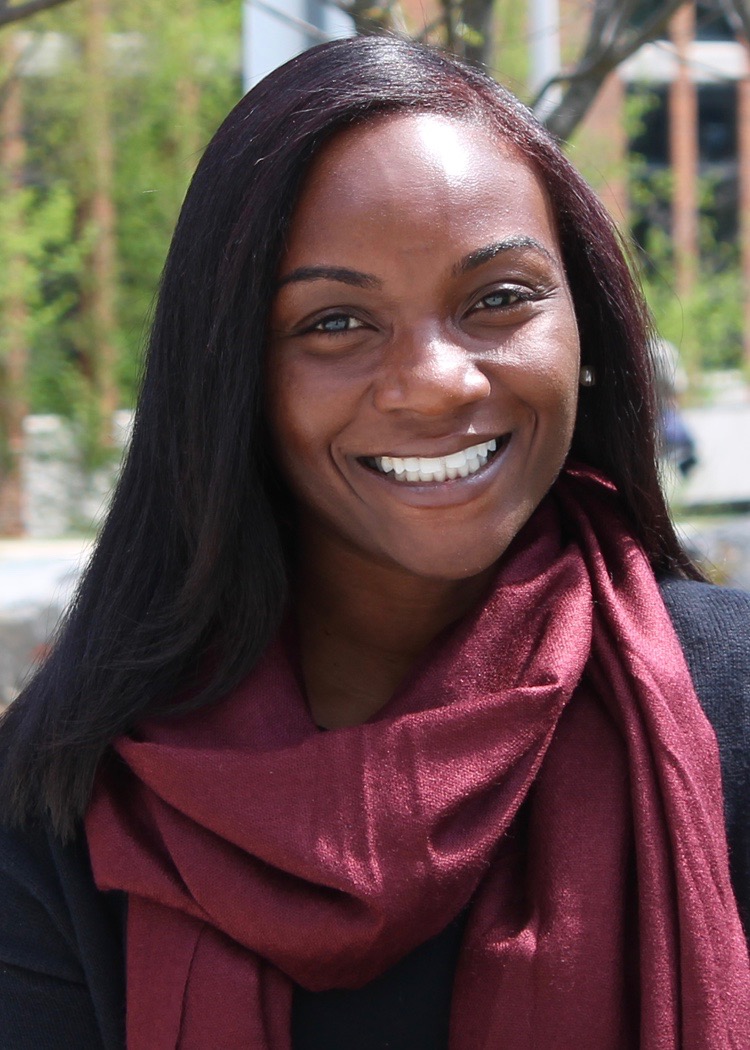
Official Federal Photograph of Claudia Gordon

Information for this post was collected by Independence Now Board Member, Sandra Sermons, and originally appeared on www.DeafPeople.com, a site that “celebrates the achievements of deaf people in history, and those who are still active in their careers.” Each month, they highlight a contemporary newsmaker.

Leave a comment
  • 1
  • ...
  • 8
  • 9
  • 10
  • ...
  • 11
  • ...
  • 12
  • 13
  • 14
  • ...
  • 15
  • ...
  • 16
  • 17
  • 18
  • ...
  • 34

Women's Voices Media - Newsletter

Powered by follow.it

Search

Wit & Wisdom

The only time to eat diet food is while you are waiting for the steak to cook.
Julia Child
2006
Jan Feb Mar Apr
May Jun Jul Aug
Sep Oct Nov Dec
 << Current>>

XML Feeds

  • RSS 2.0: Posts
  • Atom: Posts
What is RSS?

HerStory
This collection 2026 by Janice Jochum
Copyright 2019 United Activision Media, LLC
Creative Commons License
This work is licensed under a Creative Commons Attribution-NonCommercial 4.0 International License.
• Contact • Help

b2
Cookies are required to enable core site functionality.