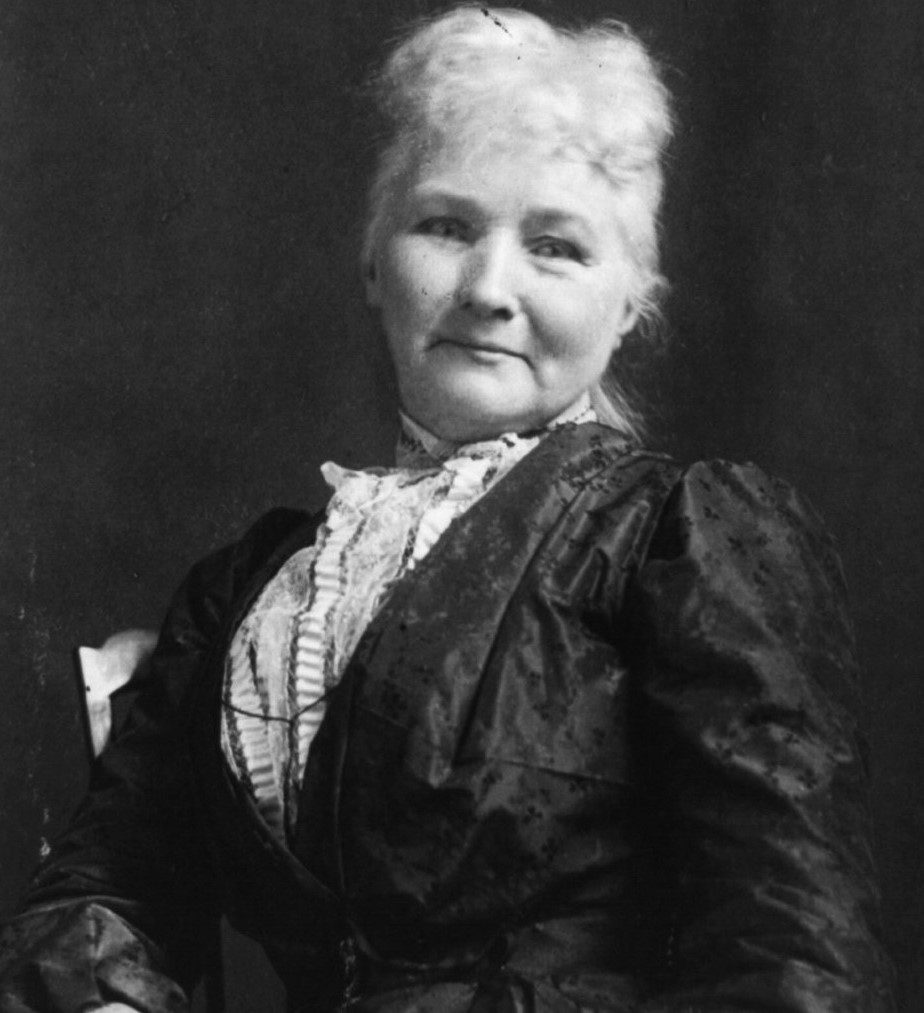
After teaching an evening typewriting class, Mary E. Jones Parrish was losing herself in a good book when her daughter Florence Mary noticed something strange outside. “Mother,” Florence said, “I see men with guns.” It was May 31, 1921, in Tulsa. A large group of armed Black men had congregated below Parrish’s apartment, situated in the city’s thriving Black business district, known as Greenwood. Stepping outside, Parrish learned that a Black teen-ager named Dick Rowland had been arrested on a false allegation of attempted rape, and that her neighbors were planning to march to the courthouse to try to protect him.
The thirty-one-year-old was an eyewitness to the Tulsa Race Massacre, which left as many as three hundred people dead and more than a thousand homes destroyed. Though Parrish had previously found success in Tulsa as an educator and entrepreneur, the massacre compelled her to become a journalist and author, writing down her own experiences and collecting the accounts of many others. Her book “Events of the Tulsa Disaster,” published in 1923, was the first and most visceral long-form account of how Greenwood residents experienced the massacre.
When the attack faded into obscurity in the ensuing decades, so did Parrish and her small red book. But, since the nineteen-seventies, as the event slowly gained national attention, Parrish’s work became a vital primary source for other people’s writings. Yet her life remained unknown, even as the facts that she had gathered—such as several firsthand accounts of airplanes being used to surveil or attack Greenwood—became foundational to the nation’s understanding of the massacre. She was, quite literally, relegated to the footnotes of history.
As the centennial of the race massacre approaches, a raft of documentaries, along with a new thirty-million-dollar museum, are poised to make the story of Greenwood more widely known—and financially lucrative—than it has ever been. But the Black Tulsans who preserved the community’s history risk being forgotten, particularly the women who did the foundational heavy lifting. It’s not just Parrish—Eddie Faye Gates, an Oklahoma native and longtime Tulsa educator, continued Parrish’s work by interviewing massacre survivors more than seventy years later, recording their perspectives in books and video testimonials.
History lessons draw power from their perceived objective authority, but if you drill to the core of almost any narrative you will find a conversation between an interviewer and a subject. In Greenwood, Black women such as Parrish and Gates were the ones having those conversations. Now descendants of both women are working to insure that their legacies are recognized. “She was a Black woman in a patriarchal, racist society, and I think bringing all those elements together tells you exactly how she’s been erased,” Anneliese Bruner, a great-granddaughter of Parrish, said. “It’s convenient to use her work, but not to magnify and amplify her person.”
In 1921, Mary E. Jones Parrish was a relative newcomer to Tulsa. Born Mary Elizabeth Jones in Mississippi in 1890, she spent some time in Oklahoma in her early adulthood, giving birth to her daughter Florence in the all-Black town of Boley, in 1914. (In 1912, she had married Simon Parrish.) Soon after having Florence, Parrish migrated to Rochester, New York, where she studied shorthand at the Rochester Business Institute.
Parrish was called back to Oklahoma, where her mother was ailing in the town of McAlester. Six months after Parrish arrived, her mother passed away. Around 1919,
Parrish settled in Tulsa, attracted by the friendly faces and collaborative enterprises in Greenwood. The neighborhood was home to two movie theatres, a jeweller, a small garment factory, a hospital, a public library, and many restaurants, dance halls, and corner dives. In her book, Parrish describes the thrill of stepping off the Frisco railroad and into a world of Black-owned businesses and well-kept homes. She dubbed the community the “Negro’s Wall Street,” one of the first documeted uses of a now iconic phrase. “I came not to Tulsa as many came, lured by the dream of making money and bettering myself in the financial world,” she wrote, “but because of the wonderful co-operation I observed among our people.”
She opened the Mary Jones Parrish School of Natural Education on the neighborhood’s most popular thoroughfare, Greenwood Avenue, and offered classes in typewriting and shorthand. She was one of many female entrepreneurs in the neighborhood who never received the same level of renown as their male counterparts. “When we talk about Greenwood, it usually is a very male-focussed story,” Brandy Thomas Wells, a professor at Oklahoma State University who specializes in Black women’s history, told me. “The day-to-day activities of those businesses depended upon the invisible labor of women.”
During the massacre, Parrish lost everything. But, instead of leaving town, she remained in Greenwood. As the neighborhood smoldered, she immediately realized how important it was to bear witness to what had happened to her community. The attack destroyed the offices of Tulsa’s two Black-owned newspapers, the Tulsa Star and the Oklahoma Sun; the former never resumed publishing. The city also had two white-owned newspapers—the Tulsa World and the Tulsa Tribune—which published stories blaming Black people for their own community’s destruction. There was little space in the city for Black residents to explain what had happened to them in their own words.
Several days after the massacre, Parrish was approached by Henry T. S. Johnson, a Black pastor who also served on a statewide interracial commission aimed at improving race relations. At the commission’s behest, he asked Parrish to interview survivors and write down what they had endured. Parrish was intrigued. “This proved to be an interesting occupation,” she wrote, “for it helped me forget my trouble in sympathy for the people with whom I daily came in contact.”
Parrish collected first-person accounts from about twenty massacre survivors. Collectively, their stories captured every major phase of the attack and its aftermath. Some had fled northward in the middle of the night, amid torrents of gunfire. Others were snatched from their houses by members of the white mob and taken to internment camps situated around the city. Nearly all returned to find their homes either burned or looted. “I feel this damnable affair has ruined us all,” Carrie Kinlaw, a survivor who rescued her bedridden mother during the shooting, told Parrish.
Parrish’s book challenged many of the false narratives that Tulsa city officials had spread about the massacre. The planes that circled above Greenwood, the authorities claimed, were used only for reconnaissance. Parrish and her sources said that they witnessed men with rifles climb aboard the aircraft and fire down on Greenwood residents. The white-owned newspapers cast the massacre as an aberration caused by supposedly mounting lawlessness in the city. Parrish said that the violence fit a broad pattern, and she connected it to recent attacks on Black communities in Chicago and Washington, D.C., during the Red Summer of 1919. She also proposed policy solutions that might help prevent such disastrous events in the future, including the passage of a federal anti-lynching measure. Parrish’s work placed her in the tradition of other pioneering Black female journalists, including Ida B. Wells, an anti-lynching
crusader, and Mary Church Terrell, who criticized the convict-lease system prevalent in the Deep South. “Just as this horde of evil men swept down on the Colored section of Tulsa,” Parrish wrote, “so will they, some future day, sweep down on the homes and business places of their own race.”
Parrish’s hundred-and-twelve-page book was published in 1923, two years after the massacre, thanks in part to the nine hundred dollars that Greenwood residents raised to help cover the printing costs. It was greeted with little fanfare. Few copies were printed, and the publication appeared to garner no mention at all in Tulsa’s white newspapers. (The Oklahoma Sun probably discussed it, but few issues of the paper from those years exist today.) Copies of the book sat in the closets and chests of local historians and massacre survivors, dug out on occasion as proof of what had happened.
Parrish left Tulsa in the mid-nineteen-twenties, to become the head of the commerce department at a high school in Muskogee, Oklahoma. She returned in the mid-nineteen-thirties, but then seems to have disappeared from the public record. According to Bruner, her great-granddaughter, Parrish died in Oklahoma in the early nineteen-seventies. During her lifetime, Parrish did not receive the recognition for her writing that she deserved. “The onus is not on Parrish,” said Wells, the Oklahoma State University professor. “The act of forgetting has little to do with Black people, because the story of the massacre in Greenwood was very much alive.” Decades after the massacre, another Black female writer would recognize the importance of Parrish’s work and expand on it.
*****************************************************
As a teen-ager, Eddie Faye Gates spent her summers in the rebuilt Greenwood of the nineteen-forties, when the community proudly promoted itself as “a symbol of racial prominence and progress.” She enjoyed gazing at the downtown skyline from the swing on an aunt’s grand front porch and drinking free sodas at a drugstore on Greenwood Avenue owned by an older cousin. In 1954, Gates and her husband honeymooned at the nearby Small Hotel, where celebrities such as Louis Armstrong were regular guests.
Gates’s affection for Greenwood and the North Tulsa area dovetailed with her long-standing interest in history. Born in 1934 to a family of sharecroppers in rural Oklahoma, she decided at the age of five that she wanted to be an educator. When her family moved to North Tulsa, in 1968, Gates became the second Black teacher at Edison Senior High School. At the time, her children were not allowed to attend the school because of lingering segregation policies. As Gates taught history, she experienced the effects of society’s resistance to learning from it. “There is no need for any person to waste another ounce of energy in denying that racism exists in this country, and in the world,” she wrote in her memoir, “Miz Lucy’s Cookies: And Other Links in My Black Family Support System.” “Let’s get on with this recognition process.”
In the late nineteen-nineties, Gates was appointed to the Tulsa Race Riot Commission, a state-sanctioned task force charged with investigating the 1921 massacre. She spearheaded a nationwide campaign to identify massacre survivors scattered around the country. The commission ultimately located a hundred and eighteen of them, living as far away as California and Florida. Having retired from teaching, Gates made it her mission to interview as many survivors as possible. The work became all-consuming, filling multiple books that she authored and dominating family conversation every Sunday evening around the dinner table. “It really got into her soul,” Gates’s son, Derek Gates, told me.
Gates conducted video interviews with dozens of current and former Greenwood residents, asking them to recall the most traumatic event of their lives. Some of the interviews took place in people’s living rooms, others at nursing homes. Parrish’s subjects had been as old as ninety-two during the massacre; Gates’s were children or teen-agers at the time, but their memories remained vivid. “Some of them had never talked about what had happened, not even to their own families—but they opened up to her,” Derek Gates said. George Monroe, who was only five years old in 1921, told Gates that four white men with torches burst into his family’s home and set the curtains aflame, as he and his siblings hid beneath a bed. “Everything in and around was burning,” Monroe said. “That’s what I remember more than anything else.”
Many of Gates’s interviews are now available on YouTube, where they’ve collectively been viewed more than seven hundred thousand times. Kavin Ross, a longtime family friend who grew up in Tulsa, helped her record the testimonials. “You can read all the books you want to—to hear it firsthand, like I did and Ms. Gates did, it’s even more powerful,” Ross said.
Like Parrish, Gates advocated for policies that would provide justice for the people she interviewed. She supported reparations for massacre victims and pushed the riot commission to do the same. After the panel called for reparations, the state of Oklahoma rejected its own commission’s recommendation. When massacre survivors travelled to Washington, D.C., in 2005, to petition the Supreme Court to hear a reparations lawsuit, Gates was with them. The Supreme Court declined to hear the group’s case. After those setbacks, the story of the race massacre again lay dormant for years.
Today, the work done by Parrish in the nineteen-twenties and Gates in the nineteen-nineties forms the bedrock for books, documentaries, and a renewed reparations push that, a century after the massacre, is experiencing a groundswell of support. But, in Greenwood, that support never wavered. Ross’s father, Don Ross, a former state representative, lobbied the Oklahoma legislature to launch the riot commission, which provided Gates with the resources she needed to conduct her many interviews. The interviews, along with a series of elegant portraits of massacre survivors, are preserved in the Greenwood Cultural Center, which was built after years of advocacy by Don Ross and the former state senator Maxine Horner. Kavin Ross noted that, as national-news crews and documentarians descend on Greenwood for the centennial, many local historians and community leaders are not getting the credit they deserve. “I’m seeing all these folks that’s coming from out of nowhere telling the story, but they are not acknowledging their source,” Ross told me, referring to his father, Gates, and others. “Those were the true fighters who kept this story alive all this time.”
Last year, Gates’s family donated much of her research to the Gilcrease Museum, in North Tulsa. (Gates, now in her eighties and in deteriorating health, declined to be interviewed.) The museum’s Gates collection includes over six hundred photographs, over fifty hours of video footage, and handwritten notes from her time on the riot commission. Interviews between Gates and the Greenwood elders, which transport viewers to an earlier time, are the highlight. “She wanted to give these people dignity and allow their stories to matter,” Derek Gates said. “Her whole deal was, ‘It matters what you had to live through.’ ”
Though the Gates collection is anchored by the massacre, it also includes images and oral histories about daily life in North Tulsa across decades. Gates dedicated much of her later years to investigating Greenwood’s darkest days, but she was just as passionate about preserving the history of the thriving mid-century community of her youth. “She did this out of a passion to tell North Tulsa’s story,” Autumn Brown, the lead researcher for the Gilcrease’s Gates collection, said. “She saw a need to document this history and, because of that passion, she embarked on such a laborious task. That’s no small feat.”
Anneliese Bruner, Mary E. Jones Parrish’s great-granddaughter, has been striving to make her ancestor’s work more widely known since her father handed her his copy of “Events of the Tulsa Disaster,” in 1994. Bruner’s father, she recalled, told her, “Now you’re the matriarch of the family.” She said that work became more urgent after she saw the parallels between the Tulsa Race Massacre and the riot at the U.S. Capitol on January 6th, which Gates wrote about for the Washington Post. She has partnered with Trinity University Press to publish a new edition of Parrish’s book, under the title “The Nation Must Awake,” a line taken from the volume. On Memorial Day weekend, Bruner, who wrote a new afterword to the book, will return to the city where Parrish’s life was upended, to mark the centennial of the massacre. “Here is my opportunity to reiterate what my great-grandmother has said, to resurrect her memory,” Bruner told me. “I think my ancestors were speaking to me, and I had prepared myself and was ready to heed the call.”
The parallels Bruner noted between the world that Parrish described and the country today include mob violence and public displays of racism endorsed by those in power. The continued resonance of Parrish’s work speaks to the keenness of her insight in the aftermath of one of America’s darkest chapters. “What I’d like for people to understand is the cyclical nature of history unless we do something about it,” Bruner told me. “And that’s why I think she said, ‘The nation must awake’ to these influences, these forces, these recurring themes in human interaction.”
THE NEW YORKER May 28, 2021
AUTHOR: Victor Luckerson is a journalist in Tulsa who is writing a book about the city’s Greenwood district, and a newsletter about neglected Black history called Run it Back.