
Are you listening? Are you ready to speak truth to power?
Are you listening? Are you ready to speak truth to power?


By Maxine Gordon Harvard Radcliffe Institute
Quartette: Stories from the Lives of Four Women Jazz Musicians—Maxine Sullivan, Velma Middleton, Melba Liston, and Shirley Scott
Maxine Gordon is an independent scholar with a lifetime career working with jazz musicians. She is an oral historian and archivist in the fields of jazz and African American cultural history whose book Sophisticated Giant: The Life and Legacy of Dexter Gordon (University of California Press, 2018) fulfills the promise she made to her late husband, the jazz saxophonist and Academy Award–nominated actor Dexter Gordon, to complete his biography. Gordon is currently working on her next book, “Quartette: Four Women in Jazz, Stories from the Lives of Maxine Sullivan, Velma Middleton, Melba Liston, and Shirley Scott.” The book will be presented in a context that is described as “jazz geography,” using a close look at the element of place as a factor in the artists’ lives. Gordon will pursue archival research, searching all interviews in order to incorporate the artists’ voices in the work. Find out more at https://www.radcliffe.harvard.edu/peo.... For information about Harvard Radcliffe Institute and its many public programs, visit https://www.radcliffe.harvard.edu/. Facebook: https://www.facebook.com/RadcliffeIns... Instagram: https://www.instagram.com/radcliffe.i... LinkedIn: https://www.linkedin.com/company/radc... Twitter: http://www.twitter.com/RadInstitute

They block workers from seeking out higher wages or better conditions. Meanwhile, they sabotage the economy by depriving growing businesses of needed talent. They serve one thing only: corporate monopolies who want to kill off their competition.
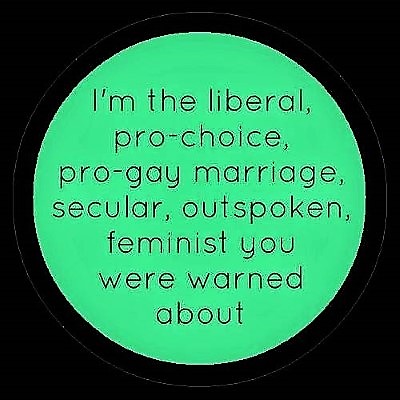
Part of the failures of the Civil Rights Movement and the Women’s Rights Movement is our failure to recognize the “intersectionality” of our various oppression, marginalization, and issues.
Early last year womensvoicesmedia.org posted a video explaining in detail the importance of understanding “intersectionality” and using it as a framework for our collective efforts.
Quoting from that previous post: “Intersectionality helps us to understand that while all women are subject to the wage gap, some women are affected even more harshly due to their race. Another instance where intersectionality applies is cases of LGBTQ murders - people of color and transgender people are more likely to be victims than cisgender people. These are just two examples of why intersectionality matters. To truly bring about change that is meaningful for all, everyone's voice needs to be at the table.”
Occasionally, we are questioned as to why the subject of a particular post would be considered a “feminist” issue. My answer to this is twofold.
Please, avail yourself of the opportunity to look at the aforementioned video at https://womensvoicesmedia.org/index.php/intersectionality?blog=11
I believe it will open your eyes to understanding the importance of “intersectionality”. It most certainly opened my eyes.