

Chief Justice Burger left no doubt about what the 2nd Amendment does and does not mean. It's time we applied it appropriately and stop the gun violence that is happening daily.
How many more deaths and injuries are we going to allow to happen because sensible gun laws are not passed?
This is an election year. Make your opinions count by voting out any local, state or Congressional candidate who is supported by and who caters to the lies of The National Rifle Association.
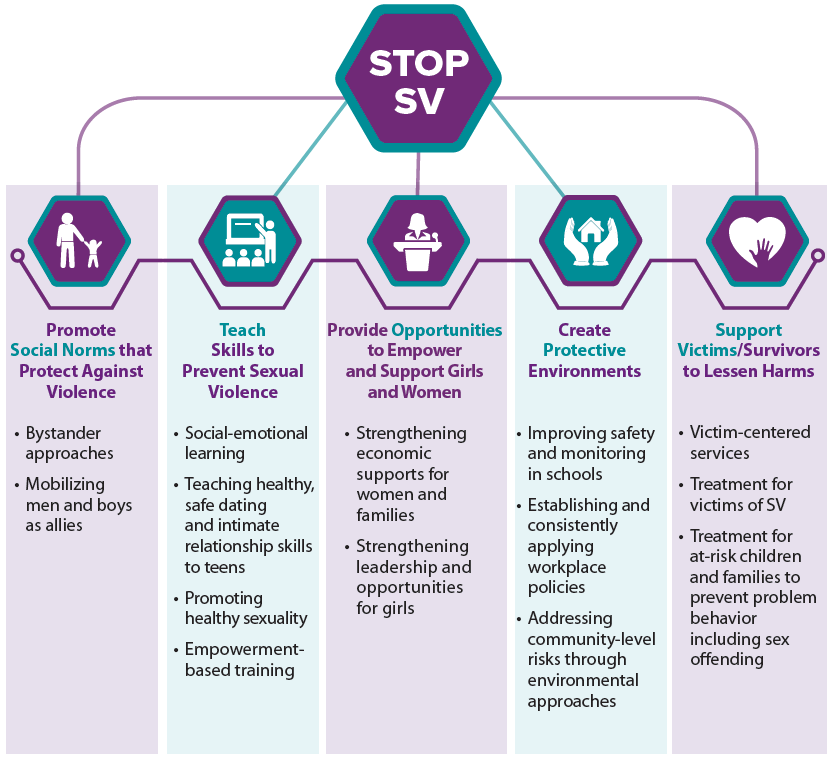
Recently the Violence Against Women Act (VAWA) was finally passed by the Congress and signed into law by President Biden. The provisions of the bill are a good start for dealing with the problem but there is so much more that needs to be done. April is National Sexual Assault Prevention Awareness Month. It is particularly important to focus on this problem this year because the numbers of sexual assault and domestic violence have increased during the pandemic. Please read this graphic to familiarize yourself with the ways in which this violence can be dealt with.
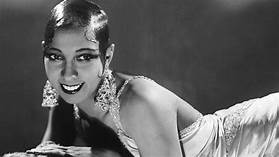
Josephine Baker (1906-1975)
World renowned performer, World War II spy, and activist are few of the titles used to describe Josephine Baker. One of the most successful African American performers in French history, Baker’s career illustrates the ways entertainers can use their platforms to change the world.
On June 3, 1906, Freda Josephine McDonald was born in St. Louis, Missouri. Her parents, both entertainers, performed throughout the segregated Midwest often bringing her on stage during their shows. Unfortunately, their careers never took off, forcing the young Baker to look for odd jobs to survive. If she was unable to find work she would often dance on the streets, collecting money from onlookers. Eventually, her routine caught the attention of an African American theatre troupe. At the age of 15, Baker ran off and began to perform with the group. She also married during this time, taking her husband’s last name and dropping her first name, becoming Josephine Baker.
Baker flourished as a dancer in several Vaudeville shows, which was a popular theatre genre in the 20th century. She eventually moved to New York City and participated in the celebration of black life and art now known as the Harlem Renaissance. A few years later her success took her to Paris. Baker became one of the most sought-after performers due to her distinct dancing style and unique costumes. Although her audiences were mostly white, Baker’s performances followed African themes and style. In her famed show Danse Sauvage she danced across stage in a banana skirt. Baker was multitalented, known for her dancing and singing she even played in several successful major motion pictures released in Europe.
When Adolf Hitler and the German army invaded France during World War II, Baker joined the fight against the Nazi regime. She aided French military officials by passing on secrets she heard while performing in front of the enemy. She transported the confidential information by writing with invisible ink on music sheets. After many years of performing in Paris, Baker returned to the United States.
Her return home forced Baker to confront segregation and discrimination that she had not experienced since she was a child in St. Louis. She often refused to perform to segregated audiences, which usually forced club owners to integrate for her shows. Her opposition against segregation and discrimination was recognized by the National Association for the Advancement of Colored People (NAACP). In 1963, she was one of the few women allowed to speak at the March on Washington for Jobs and Freedom. Her speech detailed her life as a black woman in the United States and abroad:
"You know, friends, that I do not lie to you when I tell you I have walked into the palaces of kings and queens and into the houses of presidents. And much more. But I could not walk into a hotel in America and get a cup of coffee, and that made me mad.”
Baker continued to fight racial injustices into the 1970s. Her personal life was a testament to her political agenda. Throughout her career, she adopted 13 children from various countries. She called her family “the rainbow tribe” and took her children on the road in an effort to show that racial and cultural harmony could exist. Baker remained on stage late into her life and in 1975 she performed for the last time. The show was sold out and she received a standing ovation. Baker passed away on April 12, 1975.
By Arlisha R. Norwood, NWHM Fellow | 2017
-
MLA – Norwood, Arlisha. "Josephine Baker." National Women's History Museum. National Women's History Museum, 2017. Date accessed.
Chicago- Norwood, Arlisha. "Josephine Baker." National Women's History Museum. 2017. www.womenshistory.org/education-resources/biographies/josphine-baker.
Works Cited
- “The Official Site of Josephine Baker.” Accessed March 20, 2017.
- Caravantes, Peggy. The Many Faces of Josephine Baker: Dancer, Singer, Activist, Spy. Chicago, Chicago Review Press, 2015.
- Dudziak, Mary. “Josephine Baker, Racial Protest and the Cold War.” The Journal of American History, 81 no 2. (September 1994):543-570
- “The State Historical Society of Missouri, Historic Missourians.” Accessed March 20, 2017.
-

Feminism and Intersectionality
The issues that divided early suffragettes still plague women today. For all the progress that has been made, women's rights activists have also taken steps backwards. Feminism, as a movement, has not done a good job at being inclusive of minorities. Women of color have been left on the peripheries while feminism largely caters to white viewpoints.
Feminism is discussed in terms of waves. First wave feminism encompasses the nineteenth century and early twentieth century suffragettes who fought for the right to vote. Second wave feminism generally encapsulates the period from the 1960s to the 1990s. This period runs concurrent with anti-war and civil rights movements and the dominant issues for feminists in this time period revolved around sexuality and reproductive rights. Third wave feminism is generally seen as starting in the mid-1990s and is sometimes referred to as girlie-feminism or "grrrl" feminism. Its adherents often confounded followers of second wave feminism because many third wavers rejected the notion that lip-stick, high-heels, and cleavage proudly exposed by low cut necklines identified with male oppression. The third wave celebrated ambiguity and refused to adopt "us versus them" ideology. As a result, most third-wavers rejected the word "feminists" because they found it limiting and exclusionary.
The fourth wave of feminism is still crystallizing. Feminism is now back in the realm of public discourse. Issues that were central to the earliest waves of the women’s movement are receiving national and international attention by mainstream press and politicians: problems like sexual abuse, rape, violence against women, unequal pay, slut-shaming, the pressure to conform to an unrealistic body-type, and the fact that gains in female representation in politics and business are minimal. At the same time, reproductive rights that had been won by second wavers are now under attack. It is no longer considered “extreme" to talk about societal abuse of women, rape on college campus, unfair pay and work conditions, discrimination against LGBTQIA+ friends and colleagues, and the fact that the U.S. has one of the worst records for legally-mandated parental leave and maternity benefits in the world.
With the rise of fourth wave feminism, the concepts of privilege and intersectionality have gained widespread traction amongst younger feminists. The term intersectionality was first introduced in 1989 by critical race theorist Kimberlé Crenshaw, who provided a framework that must be applied to all situations women face, recognizing that all the aspects of identity enrich women's lived experiences and compound and complicate the various oppressions and marginalizations women face. It means that women cannot separate out numerous injustices because women experience them intersectionally.
Intersectionality helps us to understand that while all women are subject to the wage gap, some women are affected even more harshly due to their race. Another instance where intersectionality applies is cases of LGBTQ murders - people of color and transgender people are more likely to be victims than cisgender people. These are just two examples of why intersectionality matters. To truly bring about change that is meaningful for all, everyone's voice needs to be at the table.
Selected Library Resources:
- Cynthia Grant Bowman et al., Feminist Jurisprudence: Cases and Materials, KE478.A4 B43 2011
- Gabriella Gutiérrez y Muhs et al., eds., Presumed Incompetent: The Intersections of Race and Class for Women in Academia, LB2332.3 .P74 2012
- Women and the Law Collection - HeinOnline
- Women and Social Movements in the United States, 1600-2000
- Lisa A. Crooms, Indivisible Rights and Intersectional Identities or, What Do Women's Human Rights Have to Do with the Race Convention, 40 Howard L.J. 619 (1997), available on HeinOnline
- Lisa A. Crooms, A Stone' Throw to Justice: Liberty, Equality, and Women's Rights in the Supreme Court Opinions of Justice Thurgood Marshall, 52 Howard L.J. 559 (2009), available on HeinOnline
Additional Resources:
- 10 Landmark Court Cases in Women's Rights
- Timeline of Major Supreme Court Decisions On Women's Rights
- Documents from the Women's Liberation Movement
- Black Women and the Suffrage Movement: 1848-1923
- The Root: How Racism Tainted Women's Suffrage
Retrieved from https://library.law.howard.edu/civilrightshistory/women/intersectionality
February 6, 2022