If supposedly corporations are suffering from inflation the same way all of us are, why then are they getting richer by the minute?
Category: "Background"
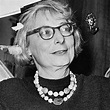
Jane Jacobs (1916-2006)
American and Canadian writer and activist Jane Jacobs transformed the field of urban planning with her writing about American cities and her grass-roots organizing. She led resistance to the wholesale replacement of urban communities with high rise buildings and the loss of community to expressways. Along with Lewis Mumford, she is considered a founder of the New Urbanist movement.
Jacobs saw cities as living ecosystems. She took a systemic look at all the elements of a city, looking at them not just individually, but as parts of an interconnected system. She supported bottom-up community planning, relying on the wisdom of those who lived in the neighborhoods to know what would best suit the location. She preferred mixed-use neighborhoods to separate residential and commercial functions and fought conventional wisdom against high-density building, believing that well-planned high density did not necessarily mean overcrowding. She also believed in preserving or transforming old buildings where possible, rather than tearing them down and replacing them.
Early Life
Jane Jacobs was born Jane Butzner on May 4, 1916. Her mother, Bess Robison Butzner, was a teacher and nurse. Her father, John Decker Butzner, was a physician. They were a Jewish family in the predominantly Roman Catholic city of Scranton, Pennsylvania.
Jane attended Scranton High School and, after graduation, worked for a local newspaper.
New York
In 1935, Jane and her sister Betty moved to Brooklyn, New York. But Jane was endlessly attracted to the streets of Greenwich Village and moved to the neighborhood, with her sister, shortly after.
When she moved to New York City, Jane began working as a secretary and writer, with a particular interest in writing about the city itself. She studied at Columbia for two years and then left for a job with Iron Age magazine. Her other places of employment included the Office of War Information and the U.S. State Department.
In 1944, she married Robert Hyde Jacobs, Jr, an architect working on airplane design during the war. After the war, he returned to his career in architecture, and she to writing. They bought a house in Greenwich Village and started a backyard garden.
Still working for the U.S. State Department, Jane Jacobs became a target of suspicion in the McCarthyism purge of communists in the department. Though she had been actively anti-communist, her support of unions brought her under suspicion. Her written response to the Loyalty Security Board defended free speech and the protection of extremist ideas.
Challenging the Consensus on Urban Planning
In 1952, Jane Jacobs began working at Architectural Forum, after the publication she’d been writing for before moving to Washington. She continued to write articles about urban planning projects and later served as the associate editor. After investigating and reporting on several urban development projects in Philadelphia and East Harlem, she came to believe that much of the common consensus on urban planning exhibited little compassion for the people involved, especially African Americans. She observed that “revitalization” often came at the expense of the community.
In 1956, Jacobs was asked to substitute for another Architectural Forum writer and give a lecture at Harvard. She talked about her observations on East Harlem, and the importance of “strips of chaos” over “our concept of urban order.”
The speech was well-received, and she was asked to write for Fortune magazine. She used that occasion to write “Downtown Is for People” criticizing Parks Commissioner Robert Moses for his approach to redevelopment in New York City, which she believed neglected the needs of the community by focusing too heavily on concepts like scale, order, and efficiency.
In 1958, Jacobs received a large grant from The Rockefeller Foundation to study city planning. She linked up with the New School in New York, and after three years, published the book for which she is most renowned, The Death and Life of Great American Cities.
She was denounced for this by many who were in the city planning field, often with gender-specific insults, minimizing her credibility. She was criticized for not including an analysis of race, and for not opposing all gentrification.
Greenwich Village
Jacobs became an activist working against the plans from Robert Moses to tear down existing buildings in Greenwich Village and build high rises. She generally opposed top-down decision-making, as practiced by "master builders" like Moses. She warned against overexpansion of New York University. She opposed the proposed expressway that would have connected two bridges to Brooklyn with the Holland Tunnel, displacing much housing and many businesses in Washington Square Park and the West Village. This would have destroyed Washington Square Park, and preserving the park became a focus of activism. She was arrested during one demonstration. These campaigns were turnaround points in removing Moses from power and changing the direction of city planning.
Toronto
After her arrest, the Jacobs family moved to Toronto in 1968 and received Canadian citizenship. There, she became involved in stopping an expressway and rebuilding neighborhoods on a more community-friendly plan. She became a Canadian citizen and continued her work in lobbying and activism to question conventional city planning ideas.
Jane Jacobs died in 2006 in Toronto. Her family asked that she be remembered “by reading her books and implementing her ideas.”
Summary of Ideas in The Death and Life of Great American Cities
In the introduction, Jacobs makes quite clear her intention:
"This book is an attack on current city planning and rebuilding. It is also, and mostly, an attempt to introduce new principles of city planning and rebuilding, different and even opposite from those now taught in everything from schools of architecture and planning to Sunday supplements and women's magazines. My attack is not based on quibbles about rebuilding methods or hair-splitting about fashions in design. It is an attack, rather, on the principles and aims that have shaped modern, orthodox city planning and rebuilding."
Jacobs observes such commonplace realities about cities as the functions of sidewalks to tease out the answers to questions, including what makes for safety and what does not, what distinguishes parks that are "marvelous" from those that attract vice, why slums resist change, how downtowns shift their centers. She also makes clear that her focus is "great cities" and especially their "inner areas" and that her principles may not apply to suburbs or towns or small cities.
She outlines the history of city planning and how America got to the principles in place with those charged with making change in cities, especially after World War II. She particularly argued against Decentrists who sought to decentralize populations and against followers of architect Le Corbusier, whose "Radiant City" idea favored high-rise buildings surrounded by parks -- high-rise buildings for commercial purposes, high-rise buildings for luxury living, and high-rise low-income projects.
Jacobs argues that conventional urban renewal has harmed city life. Many theories of "urban renewal" seemed to assume that living in the city was undesirable. Jacobs argues that these planners ignored the intuition and experience of those actually living in the cities, who were often the most vocal opponents of the "evisceration" of their neighborhoods. Planners put expressways through neighborhoods, ruining their natural ecosystems. The way that low-income housing was introduced was, she showed, often creating even more unsafe neighborhoods where hopelessness ruled.
A key principle for Jacobs is diversity, what she calls "a most intricate and close-grained diversity of uses." The benefit of diversity is mutual economic and social support. She advocated that there were four principles to create diversity:
- The neighborhood should include a mixture of uses or functions. Rather than separating into separate areas the commercial, industrial, residential, and cultural spaces, Jacobs advocated for intermixing these.
- Blocks should be short. This would make promote walking to get to other parts of the neighborhood (and buildings with other functions), and it would also promote people interacting.
- Neighborhoods should contain a mixture of older and newer buildings. Older buildings might need renovation and renewal, but should not simply be razed to make room for new buildings, as old buildings made for a more continuous character of the neighborhood. Her work led to more focus on historical preservation.
- A sufficiently dense population, she argued, contrary to the conventional wisdom, created safety and creativity, and also created more opportunities for human interaction. Denser neighborhoods created "eyes on the street" more than separating and isolating people would.
All four conditions, she argued, must be present, for adequate diversity. Each city might have different ways of expressing the principles, but all were needed.
Jane Jacobs' Later Writings
Jane Jacobs wrote six other books, but her first book remained the center of her reputation and her ideas. Her later works were:
- The Economy of Cities. 1969.
- The Question of Separatism: Quebec and the Struggle Over Sovereignty. 1980.
- Cities and the Wealth of Nations. 1984.
- Systems of Survival. 1992.
- The Nature of Economies. 2000.
- Dark Age Ahead. 2004.
Selected Quotes
“We expect too much of new buildings, and too little of ourselves.”
“…that the sight of people attracts still other people, is something that city planners and city architectural designers seem to find incomprehensible. They operate on the premise that city people seek the sight of emptiness, obvious order and quiet. Nothing could be less true. The presences of great numbers of people gathered together in cities should not only be frankly accepted as a physical fact – they should also be enjoyed as an asset and their presence celebrated.”
“To seek "causes" of poverty in this way is to enter an intellectual dead end because poverty has no causes. Only prosperity has causes.”
“There is no logic that can be superimposed on the city; people make it, and it is to them, not buildings, that we must fit our plans.”
By Jone Johnson Lewis ThoughtCo..
- Updated on August 14, 2019
CITATION
Lewis, Jone Johnson. "Jane Jacobs: New Urbanist Who Transformed City Planning." ThoughtCo, Aug. 27, 2020, thoughtco.com/jane-jacobs-biography-4154171.
RACHEL LELAND LEVINE, M.D. (1958 - ) is the Assistant Secretary for Health for the U.S. Department of Health, having been appointed by President Biden and confirmed by the U.S. Senate. She previously served as Pennsylvania Department of Health Secretary and the head of the U.S. Public Health Service Commissioned Corp., becoming the first transgender four-star officer. She has also as professor of pediatrics and psychiatry at the Penn State Milton S. Hershey Medical Center and the chief of the Division of Adolescent Medicine and Eating Disorders.
Dr. Levine was born October 28, 1957, in Wakefield, Massachusetts with the birth name of Richard L. Levine. Levine has one sister.
She grew up attending Hebrew School. Then graduated from Harvard College and Tulane University School of Medicine. Levine completed her residency in pediatrics and a fellowship in adolescent medicine at Mount Sinai Medical Center. It was during this period that Dr. Levine married Martha Peaslee Levine with whom she has two children. The couple was divorced in 2013.
Dr. Levine describes her transition as slow, deliberate and filled with research. The transition began when she started seeing a therapist in 2001. She announced herself as transgender in 2011. Levine took the step of attending voice lessons so she would sound more like a woman.
In a statement at the time of her appointment to Assistant Secretary of Health President Bien said “Dr. Levine will bring the steady leadership and essential expertise we need to get people through this pandemic – no matter their zip code, race, religion, sexual orientation, gender identity, or disability – and meet the public health needs of our country in this critical moment and beyond.” “She is a historic and deeply qualified choice to help lead our administration’s health effort.”
********************
For more stories of remarkable women, see HERSTORY on womensvoicesmedia.org
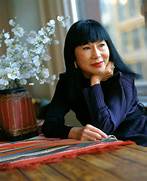
Amy Tan didn’t set out to write a bestseller. In fact, she found solace in the fact that she was able to write The Joy Luck Club with “no expectations.” “I had been told that the typical first book by an unknown writer might sell five thousand copies — if you were lucky,” she told Penguin Random House Books. “I heard that it might last on the bookstore shelves six weeks — if you were lucky.”
But Tan got more than lucky. Her 1989 book ended up on The New York Times bestseller list for more than six months and spawned a 1993 movie — which Tan co-wrote — that brought in $32 million worldwide. “I wrote The Joy Luck Club without the self-consciousness I would later feel when the book landed on the bestseller list,” she continued. “No one had predicted the book’s trajectory, and I was stunned, as if I had won the lottery without having ever bought a ticket.”
Not only was the book a personal achievement for Tan as an author, but it also was seen as a watershed moment, proving that a fictional book featuring intertwined multigenerational stories about Asian Americans could find mainstream success both on bookshelves and the silver screen. Tan was a freelance business writer working 90 hours a week when she decided to bring balance into her life by channeling a more creative form of writing in 1985. “I decided to attend a writers’ workshop, read certain books, and write a short story within the next year,” she told Publishers Weekly in 1989. To apply for the program, she wrote a short story about a girl who was a chess champion and her Chinese mother.
That got her wheels turning in the fiction world. But it was a very real event that launched her journey toward The Joy Luck Club. One day, she had to suddenly go to the hospital since her mother was thought to have had a heart attack. It was on the way there that she realized how little she knew about her family’s Chinese roots, and promised to herself that if her mom survived, she’d go with her to China and soak everything up, Publishers Weekly explained. While her mom’s diagnosis turned out not to be a heart attack, Tan did go with her mother to China in 1987.
Soon she had penned the book about a group of Chinese American women who play together in a mahjong group and their Americanized daughters. “The book exists for me in its own time capsule,” she told Penguin Random House. “It contains the circumstances that led me to write it. In many ways, it is an intimate diary of my ordinary thoughts and strange obsessions, all of which were absorbed into the writing of the book.”
For audiences, there was the relatability of family love and drama woven into the multiple perspectives of different generations throughout time. But for Asian Americans, it was a breakthrough. An actual story about the culture that was so rare on American bookshelves. “When I read the book, it was the first time I felt someone was writing about my life,” actress Ming-Na Wen, who later starred in the films, told The New York Times..
Despite the success in its written pages, the book didn’t find a quick road into the film world. At the time, Asian American roles largely succumbed to stereotypes, be it martial arts action stars or those with exaggerated characteristics. Some of the actresses who were later in The Joy Luck Club described their acting experiences before the movie as being stereotypes without any real depth. “Asian American women were objectified,” Rosalind Chao, who had played a Korean bride in M*A*S*H and laundry man's daughter on a Lucille Ball series, told The New York Times. “Pretty was really all that they cared about.” The last major film that had Asian American characters in the lead was way back in 1961 with Flower Drum Song, but that also had the music of Richard Rodgers and Oscar Hammerstein II behind it.
Most studios quickly passed on the project. “There was a perception that Americans — and that especially Americans in movies — had to be white,” Janet Yang, who was an executive producer for the film, told NPR. “But the selling point was the script… If you put aside the biases about it being an all-Asian cast...it was hard not to be moved. Many other studio executives — in fact, all the other studios that we approached could not put aside those concerns. But it took somebody who was willing to take a leap of faith.”
Finally, they found that somebody in Walt Disney Studios’ Jeffrey Katzenberg, who offered a $10 million budget and full creative control, The New York Times reported.
Yang says the studio was 'nervous' to put the all-Asian cast on display in promotions
Though they got the green light, it didn’t mean that it was smooth sailing. Yang recalled to NPR an incident where director Wanye Wang realized that despite the movie being a completely Asian American story, that very fact was going to be swept under the rug. “I do remember Wayne, who has the most lovely personality… he lost his temper one day in a marketing meeting,” she said. “We were going there to look at posters that they were going to consider for marketing Joy Luck Club and each and every one somehow managed to avoid showing full-on an Asian face.”
She believes that one was a woodcut and very abstract and angular, while another only used the backs of the women. “They clearly were nervous about showing an Asian face in, you know, a larger-than-life image,” Yang continued. “And it was ironic because we thought, well, they went and greenlit this movie. We just shot the whole thing. They say they love the movie, and now they're afraid to sell it.”
Ultimately, the box office success spoke for itself, as the film found success among a broad range of American audiences.
As further proof, some of the actors were quickly cast in big studio and mainstream roles, like Lauren Tom playing Ross Geller’s love interest Julie on Friends and Wen voicing the title character in the animated version of Mulan. Director Wang also got his next film Smoke financed quickly. “I always say that The Joy Luck Club was my green card to Hollywood,” Wen told The New York Times.
However, what seemed to be a shift in Hollywood standards, was short-lived. It took a shockingly long 25 years before another Asian American major studio film was made — Crazy Rich Asians, starring Constance Wu, Henry Golding and Michelle Yeoh, in 2018. That, also, translated into big bucks in its time, bringing in $238.5 million worldwide.
That gap in the timeline was noticeable. “It took a really long time before another feature film came out with characters in the United States by a writer in the United States,” Tan told the San Francisco Chronicle. “The difference between what happened then and what’s happening now — it’s money, it’s money, and it has to make a ton of money at the box office.”
But the author is also a fan of the film that found success thanks to the road her film paved. “I loved Crazy Rich Asians and laughed like crazy!” she added. “It’s over the top, but that’s the point, it’s meant to be funny. The part that is true — that doesn’t matter what your income is — is introducing your girlfriend or boyfriend to your parents, and their reaction, and how much you will endure for that love.”
After all, a good story is universal and the more diverse ones there are, the more it captures the much-needed representation that is lacking on screen. “I have had a number of people say to me that they and their mother read this book together when their mother was dying, and that was the last thing they did together,” Tan reveals. “That is so incredibly touching. I’m grateful. It wasn’t through my intention, but this book, in the hands of readers, gets overlaid with their own experiences and emotions, and it becomes their book.”
BY RACHEL CHANG
Rachel Chang is a journalist and editor specializing in pop culture and travel.
Yoshiko Uchida was born on November 24, 1921, in Alameda, California, to parents Dwight Takashi Uchida (1884–1971) and Iku Umegaki Uchida (1893–1966). She had an older sister, Keiko ("Kay," 1918-2008).
Yoshiko and Keiko enjoyed a relatively privileged upbringing. The family lived in a rented home in an area of Berkeley. The girls took piano lessons and the family went to concerts and museums, while also taking vacations to the East Coast and to Japan. As leaders in the Bay Area Japanese community, their parents often hosted visitors from Japan.
Despite being sickly as a child, Yoshiko graduated from high school in 2-1/2 years and enrolled at the University of California, Berkeley, at age 16. She majored in English, history and philosophy.
World War II brought dramatic changes for the Uchida family. As a community leader who often hosted Japanese visitors, Takashi was immediately suspect in the eyes of authorities and was arrested on Pearl Harbor day, held first in the Immigration Detention Quarters in San Francisco, then moved to the Missoula, Montana, internment camp.
The rest of the family was forced to leave their home and were sent to the Tanforan Assembly Center where they lived in a former horse stall. About a week into their stay, they learned that Takashi had been "paroled," and he joined them shortly thereafter. After helping her sister establish a nursery school in camp, Yoshiko became a second grade teacher. Finding that she enjoyed teaching, she decided to seek teaching credentials, having received her Berkeley diploma through the mail. She also took first aid and art classes and joined the church choir.
After five months, the family moved to an interment camp in Utah, where they lived for almost three years. Yoshiko first worked as a secretary before getting another teaching job. Her father became the board chairman of the camp co-op. In the camps Yoshida had the chance to see and experience the injustices and ill-treatment Americans perpetrated against the Japanese/Americans. These experiences would provide the basis for many of her books, both autobiographical and fiction. Many of her other books deal with issues of ethnicity, citizenship, identity, and cross-cultural relationships. The years she was incarcerated left a deep impression. Her 1971 novel, Journey to Topaz, is fiction, but closely follows her own experiences.
In describing her experiences during those years, Yoshiko wrote: “I worked hard to be a good teacher; I went to meetings, wrote long letters to my friends, knitted sweaters and socks, devoured any books I could find, listened to the radio, went to art school and to church and to lectures by outside visitors. I spent time socializing with friends and I saw occasional movies at the Coop. I also had a wisdom tooth removes at the hospital and suffered a swollen face for three days. I caught one cold after another; I fell on unpaved roads; I lost my voice from the dust; I got homesick and angry and despondent. And sometimes I cried.”
In May of 1943, she received a full scholarship to graduate school at Smith College in Massachusetts. At the same time, Keiko received a job offer at nearby Mt. Holyoke College. The sisters left camp on the same day in June. A few months later, their parents left camp to resettle in Salt Lake City, due in part to threats Takashi had received because of his position with the co-op.
Uchida graduated with a M.Ed. from Smith College in 1944, first and took a teaching job at the Frankford Friends' School in Philadelphia. But the demands of teaching made it difficult for her to pursue her interest in writing—and having contracted mononucleosis—she moved to New York where Keiko had settled and took a job as a secretary. She worked first for the Institute of Pacific Relations (1946–47), then for the United Student Christian Council (1947–52). In her off hours, she wrote short stories, submitting them to publications like the New Yorker and Atlantic Monthly and generating piles of rejection slips. After taking a class on writing for children at Columbia University, her instructor encouraged her to submit a manuscript she had written of Japanese folk tales she had learned from her mother and adapted for American audiences. The Dancing Kettle, and Other Japanese Folk Tales was published by Harcourt, Brace in 1949 to great acclaim, setting Uchida on the road to a successful career as a writer of children's books. Her second book, New Friends for Susan (1951), was her first with Japanese American characters and was set in prewar Berkeley.
Over the course of her career, Uchida published more than thirty books, including non-fiction for adults, and fiction for children and teenagers. She is best known for her books on the concentration camp experience, the first such books for children written by a Japanese American author. In speaking about her children’s nooks She said, “ I try to stress the positive aspects of life that I want children to value and cherish. I hope they can be caring human beings who don't think in terms of labels—foreigners or Asians or whatever—but think of people as human beings. If that comes across, then I've accomplished my purpose.”
Yoshiko continued to write into her last years. Plagued by health problems in later years, she passed away at the age of seventy on June 21, 1992
For more information including a list of her books go to Wikipedia.
Also see Densho Encyclopedia